
Employer Needs and Student Preferences

What if you create programs to meet employer needs and nobody enrolls in them?
Among other things, it puts the whole “students just want jobs” story in question.
It’s one thing to offer, say, a machining program aligned with local employers’ expressed needs. It’s another to get students to sign up for it. We’ve had to cancel sections because the enrollments were unsustainably low.
This is frustrating, in one sense, but heartening in another.
The frustrating part is obvious: We’ve put effort and resources into acquiring the faculty and equipment to run some very specialized high-tech programs. As with other programs, they require a critical mass of students to be economically viable. When nobody signs up, all the effort that went into the program is wasted. That’s frustrating.
But it’s also a reminder that students have agency. Sometimes policymakers forget that.
Community colleges prepare students for jobs, but that’s not all they do. They aren’t just job-training centers. They’re colleges; they provide education to adults in order to enable those adults to go where they want to go, both occupationally and personally.
Sometimes students don’t want to go to employer X or do job Y. And there’s no draft by which students are assigned majors. Students choose their own. (For that matter, students choose whether to go to college at all.) Students are not widgets, and colleges are not personnel offices for the economy.
If students only wanted jobs, they’d sort into majors according to data on salaries and openings. And some of that happens. But we still get students who want to work in, say, early childhood education, where salaries tend to be scandalously low. We have students who major in art, even knowing the odds of being able to make a living as artists. And the social benefits of higher education go beyond salaries: voting rates, health outcomes and even divorce rates improve with education.
I don’t see student agency as a problem to solve. I see it as a college fulfilling its mission.
None of this is to deny that some fields are more predictably employable than others. Several of the allied health fields are like that. But sometimes those who play it safe get caught short when the economy changes. Remember when “learn to code” was the quick-fire response to anyone complaining about their job? I haven’t heard much about coding boot camps since AI displaced so many coders. And although the discourse doesn’t like to acknowledge it, even liberal arts grads tend to do better occupationally than people who didn’t go to college at all.
All this may seem obvious to those of us in the field, but it tends to evaporate when policymakers discuss what college is for. They reduce it, unapologetically, to a private good, not realizing that seeing it as a private good was the root of many of our issues in the first place. In my darker moments, I wonder how much it’s actually a public service to allow employers to offload training costs onto students through us. There was a time when businesses trained their own. Colleges educated and employers trained. We’ve moved away from that model, saving money for employers by passing the cost on to everyone else. I don’t know that we ever had that debate as a society; it happened incrementally until it seemed normal.
So, yes, we run programs in response to employer requests. But we can’t make students take them. Making those jobs more desirable might help, but ultimately, that has to be done by employers themselves. That’s a social challenge worth tackling.
You may be interested
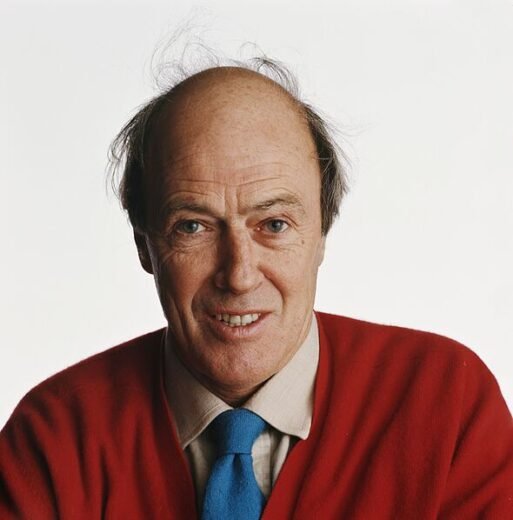
4 Roald Dahl books will remain relevant forever thanks to 1 key reason
new admin - Sep 13, 2026Roald Dahl's books, I believe, are timeless classics unlikely to go anywhere soon, as generations and generations of kids have…
Wisconsin Congressman Tom Tiffany suffers minor injuries after emergency landing in a lake
new admin - Sep 13, 2026Wisconsin Congressman Tom Tiffany said Sunday he sustained minor injuries after the plane he was traveling in made an emergency…

The 20 murders that shaped modern Britain
new admin - Sep 13, 2026Top criminologist Professor David Wilson has examined the crimes that gripped the nation from Victorian times to the modern day…