
Democrats’ Confidence in Higher Ed Hits Record Low


The survey revealed 38 percent of American adults have “a great deal” or “quite a lot” of confidence in higher ed.
Photo illustration by Justin Morrison/Inside Higher Ed | zhaojiankang/iStock/Getty Images | Stockbyte/Getty Images
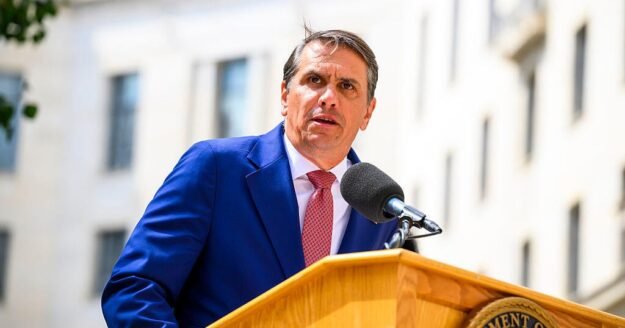
Democrats’ confidence in higher education has hit a record low, with just 50 percent expressing confidence, according to the latest Lumina Foundation–Gallup Confidence in Higher Education survey published Tuesday.
That’s down from 61 percent last year who said they had “a great deal” or “quite a lot” of confidence in higher ed, and 68 percent who said the same in 2015, when Gallup first began collecting such data.
For Courtney Brown, Lumina’s vice president of impact and planning, Democrats’ declining confidence in higher ed is driven by their concern over college affordability and outcomes. Democrats are asking themselves, “Is somebody going to get a good job?” she said. “If they’re going to invest this amount of money and time, we want to make sure there’s a good job on the other side.”
Still, Republicans have expressed a steeper long-term decline in confidence in higher education, down 33 percentage points since 2015, from 56 percent then to 23 percent in the latest survey.
The data was collected during phone interviews with 1,001 adults in the first 15 days of June.
All told, 38 percent of American adults said they have “a great deal” or “quite a lot” of confidence in higher ed, down from 42 percent last year. The survey also revealed that 37 percent of Americans have “some” confidence in higher ed, while 25 percent expressed “very little” or “none.” Last year, 23 percent had very little or no confidence.
“Confidence in higher education remains fragile, but the story is more complicated than it has been in the past,” Brown told Inside Higher Ed.
She said there used to be a political divide, where mostly Republicans expressed low confidence in higher ed. This year, Democrats are asking more questions about higher ed’s value, affordability and whether it’s preparing students for the economy, leading to their record-low confidence levels. “Those questions aren’t going away, and higher ed really is going to have to answer them,” Brown said.
‘Damning’ Data About Higher Ed
Among those without a college degree, only 35 percent expressed confidence in higher ed—the lowest share of any group surveyed. But that number is not far off from the share of bachelor’s degree holders who have confidence: 36 percent.
Those with the highest levels of confidence are Americans with a postgraduate education, of whom 49 percent expressed confidence.
Jeremy Young, senior adviser for strategic initiatives at the American Association of Colleges and Universities, said it’s “very damning” that only Americans with postgraduate degrees have a better perception of higher ed, while those with only bachelor’s degrees expressed similar levels of confidence to those without a degree. “That experience of getting bachelor’s degrees has not made them any more sympathetic to higher ed,” Young said. “It’s only the people with advanced degrees who feel that way. So that I think is something higher ed really has to answer for.”
To ensure colleges continue to attract students, Young said, they have to prove higher education’s value.
“We have to be able to make the case that higher ed can change and adapt to the needs of the 21st century, that it can support students in getting jobs, that it can address challenges of affordability and that it has tangible value in the community even if you never attend college,” Young told Inside Higher Ed.
The survey revealed three key reasons among those who indicated lack of confidence in higher education: perceived political agendas on college campuses (31 percent), the high cost of a college education (30 percent) and colleges’ failure in preparing students well for the workforce (25 percent).
Respondents also attributed their lack of confidence in higher ed to poor college administration, poor quality of education and the Trump administration’s interference; all were mentioned by 8 percent. Two percent of respondents cited AI’s disruptive effect on education and the workforce as a reason for not having confidence in higher ed.
Those with confidence in postsecondary education noted that college provides good training for students in critical thinking and other skills (33 percent), makes students informed and knowledgeable (30 percent), and provides them with better job opportunities (19 percent).
This year’s survey also asked a new question regarding whether college degrees will grow more or less important over the next five years as AI becomes more widely used. Forty-six percent of respondents predicted AI will make college degrees “somewhat less” or “much less” important, while 20 percent said college degrees will become “somewhat more” or “much more” important. About one-third said they don’t think the importance of a college degree will change because of AI.
“They are assuming that higher ed will not change over the next five years, that it will not adapt to this reality, that it will not provide AI literacy in ways that are important for students and employers,” Young said. “We’re seeing evidence that that is actually happening, but we should stop and think about why the public assumes that higher ed simply won’t adapt, because that is, in fact, the reality in a lot of other issues.”
You may be interested
Clarks' £89 trainers with 'soft cushioning' have price drop in six colours with deal
new admin - Sep 13, 2026A money-saving offer means shoppers can save on the Clarks Code C Lace trainers Source link

Can you pass the official UK citizenship test? You need 18 out of 24 to pass
new admin - Sep 13, 2026The questions are taken from the official Life in the United Kingdom handbook - and they're harder than you think.…

Search underway after Indonesian passenger ship carrying more than 240 people loses contact
new admin - Sep 13, 2026Indonesian rescuers launched a search operation Sunday local time after authorities lost contact with a passenger ship carrying more than…