
How Olivia Rodrigo’s Daisy Chain Fields Festival Made History

F
or decades, fans have been asking Sarah McLachlan the same question: “When are you going to revive Lilith Fair?” The traveling all-women festival, which took place in the summers of 1997 through 1999, was McLachlan’s direct response to the sexism of the music industry, and the promoters who told her that multiple women couldn’t be featured on the same concert lineup (or played consecutively on radio, for that matter). And for nearly 30 years, the singer-songwriter gave the same answer: Lilith Fair was in the past. “I’m too old,” she told Rolling Stone last year. “If it were to [happen], it should be someone young spearheading it, who’d let it be something different.”

That someone turned out to be Olivia Rodrigo, who just started her own all-women festival: Daisy Chain Fields, held Aug. 29 at Great Park in Irvine, California. The lineup featured powerhouse artists across genres and generations, including Chappell Roan, Doechii, Bikini Kill, Garbage, the Breeders, Mitski, and Not for Radio. Rodrigo headlined the event — which drew a crowd of 45,000 jubilant fans — while she tore through tracks from her fantastic new album, You Seem Pretty Sad for a Girl So in Love. She also brought out her heroes onstage: Alanis Morissette for “Ironic,” Stevie Nicks for “Landslide,” and McLachlan herself. “I feel like I’m dreaming,” Rodrigo told the crowd. “This is the best day of my fuckin’” life!”
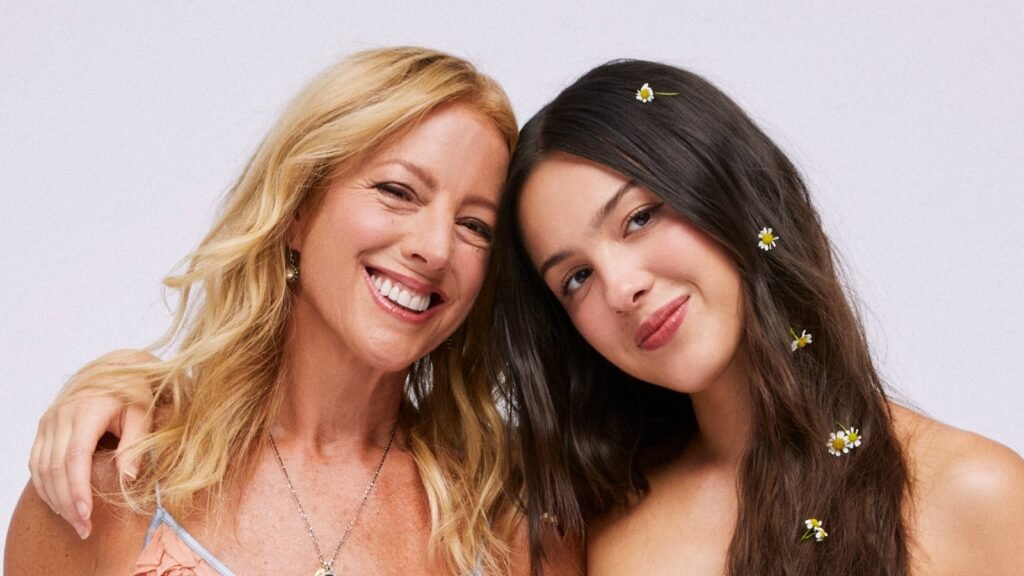
As it turns out, McLachlan was the first person Rodrigo called when she was planning Daisy Chain. “I have a snapshot memory,” she tells McLachlan, in a video interview for Rolling Stone. “I was so nervous to call you, and I was really cold, huddling by my fireplace in my house. I was like, ‘Just do it! Just do it! She’s going to be really nice!’ I was so over the moon to receive your blessing and to get advice and support from you. That meant the world.” As McLachlan tells it, it was an immediate yes. “Joy and elation in an instant,” she says. “I was like, ‘Hallelujah! Someone is finally taking the torch and carrying it forward.’”
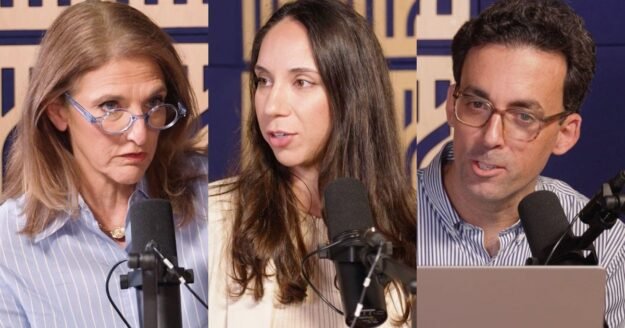
Rodrigo, McLachlan, Roan, and Doechii are featured on our new Rolling Stone digital cover commemorating Daisy Chain. The groundbreaking festival raised $10 million in donations that will go to nonprofit organizations benefitting women and girls, including the Center for Reproductive Rights and Planned Parenthood. That donation was then doubled by philanthropist Melinda French Gates, making it $20 million. In our video interview — filmed in Los Angeles a few days before Daisy Chain — Rodrigo and McLachlan joined Rolling Stone’s co-editor-in-chief Shirley Halperin and senior writer Angie Martoccio. They discussed starting both Daisy Chain and Lilith Fair, sexism in the industry, what they love about each other’s music, and the power an all-women festival can have. “Music was the first medium where the way I felt was really accepted,” Rodrigo says. “Growing up, that was my safe space. So if girls can come to Daisy Chain and feel a little sliver of that, that would be a dream.”
Watch the video interview below
Martoccio: Olivia, tell us how Daisy Chain Fields came together. I understand you’ve wanted to do this for some time now.
Rodrigo: I’d had the idea for a few years, but it was kind of one of those things where it felt so important to me I was nervous to say it out loud. It’s an intersection of all of my favorite things. Whenever I play a show and I look out into the audience and I see young girls and women connecting with each other and crying — or experiencing their emotions or having some sort of catharsis — I’ve always been so acutely aware of the power of that. And also I’ve always been really passionate about women’s rights and reproductive healthcare, and so it just felt like a perfect thing to do. And obviously, I was so inspired by Sarah’s Lilith Fair. I remember hearing about it when I was a teenager, and my immediate reaction was just envy of all of the people who got to go and perform. [Turns to McLachlan.] I just thought it was the coolest thing ever. Reading about all of the barriers and obstacles that you guys faced was so inspiring, and I definitely would not be here without you. I’m so grateful for you and so happy that you’re here. Yeah.
McLachlan: Thank you. I’m super happy and proud of you, and proud to be part of this.
Halperin: Did you guys know each other at all? Have you met before?
Rodrigo: No.


McLachlan: No. This is actually—
Rodrigo: I know, our first time meeting in person!
Halperin: This is your first time meeting?
McLachlan: In person.
Rodrigo: We’ve talked on the phone.
Halperin: Oh wow! Olivia, when did you first become aware of Sarah’s music?
Rodrigo: I think the first song of yours I heard was in Toy Story [“When She Loved Me,” from Toy Story 2]. I remember being a little kid and not really understanding the concept of artists or albums, but hearing that song and being like, “Oh, my God, that is the most moving, beautiful song ever.” As all of your songs are.
McLachlan: Thank you, Randy Newman.
Rodrigo: And when I was a teenager, I discovered Surfacing and obviously fell in love with that. I’m just very inspired by you, and very moved by all that you do.
Halperin: Sarah, can you tell us about first hearing her music and what you thought of it?
McLachlan: I first heard “Drivers License.” And I’m like, “Who is this? This is an amazing voice, this is an amazing song.” And of course it was my daughter who’s like, “You’ve got to hear this.” And we listened to your whole record. It was on repeat because I was still driving her to school every day. So you were the soundtrack to my mornings for a year and a half.

Rodrigo: That’s so sweet. That’s really important though. I remember my school drive with my mom and the CD that was playing. That really made a huge impact on me.
Halperin: What CD was that?
Rodrigo: Gosh, my mom has really great taste in music. She introduced me to No Doubt’s Return of Saturn, which is one of my favorite records to this day. My mom loves riot grrrl punk music. She’s a Babes in Toyland fan, and that’s how I found them. Weezer, Green Day. That was my jam growing up.
Halperin: Olivia, the festival sold out within 30 minutes. Did that surprise you at all?
Rodrigo: I mean, I was so excited, but I feel like looking at this lineup of all these incredible women — Sarah, Doechii, Chappell, Rachel Chinouriri, Bikini Kill — it is seriously just all of my favorite artists. So I was so happy that everyone was as excited as I was about seeing it.
McLachlan: How could it fail?
“[To Rodrigo] I think you’re brave to be at the forefront of something that is going to anger a lot of people. But fuck that, and good for you for standing up for it.”
Sarah McLachlan
Martoccio: Let’s talk about the title Daisy Chain, because obviously there’s this imagery of a daisy chain, but there’s symbolism to it. One component is part of this chain that’s so much stronger than the individual. How did you come up with that?
Rodrigo: That’s exactly it — that was the metaphor. It’s that we’re all so much stronger when we come together, these individual pieces coming together and forming something that’s unbreakable. You know, I think about it often; I think that the people who want to keep us down rely on us feeling overwhelmed and alone. So I think an event where we can cultivate this community that’s full of hope and togetherness, I think that’s a really, really powerful thing these days.
Halperin: The concept of a chain as a generational thing is very powerful in this sense. Like Sarah started Lilith Fair, it had an amazing run, and then we had nothing for a while. And then here we are back in this chain, and Brandi Carlile’s Girls Just Wanna Weekend, and [Joni Mitchell’s] Joni Jams. All of these women who are carrying the torch are now coming back to this moment, which I think is really great. The blending of the generations is awesome.
Rodrigo: One hundred percent. It sort of feels like we’re all linking arms and doing something together, you know what I mean?
Halperin: And there’s not that division between one person’s scene or this age’s scene. Was that important to you, to bring in that elder?
Rodrigo: Looking at this bill, it’s just seriously all of my favorite artists. I didn’t really think about when they were born or whatever. They’re just truly women that inspire me. That was the nexus of all of it. Also, I want to add that all of these artists are doing it completely for free. One hundred percent of the proceeds go to charity, which is incredible. So along with being inspiring musicians, they’re also really great people who care about the world, which is very heartening.
Martoccio: Sarah, what does it mean to you to see generations like Olivia’s carrying the spirit of Lilith?
McLachlan: It’s really heartening. It’s incredibly important, especially now, to show that women working together and coming together for a common goal of good can be really, really powerful. We all as humanity right now need opportunities to be part of those things because everything in this world is trying to divide us right now and pull us apart, keep us apart, keep us small. We need opportunities to celebrate, and to celebrate each other, and also to have these opportunities to lift up really important messages that we all believe in.
Rodrigo: Totally. Couldn’t have said it better.


Martoccio: Shirley was actually at Lilith Fair, which I think is so cool.
Halperin: Yes. Camden, New Jersey. Probably not your favorite venue of that tour.
McLachlan: But New Jersey are amazing fans.
Halperin: Yes, they are. I don’t remember all that much about it, but I do remember tank tops, sweat, and an oddly not strange feeling about being in a mostly female crowd, which I don’t think I’d ever really experienced. And dare I say, it felt very safe. I think that was part of the intention with Daisy Chain as well, right? The idea that it’s a safe space for women to come together and celebrate music?
McLachlan: For everybody to come together and celebrate music actually, and not just women. It wasn’t meant to be just for women. It was certainly lifting women up, but everybody should get to be involved in that and be able to participate in that joy and in that safe space.
Rodrigo: Totally. I think that’s what’s so special about live music. In a world that’s becoming increasingly more digital, concerts are so important. I just feel like it’s a place where people can feel free to express emotions that are hard for them to express in everyday life. I see so many stories online of girls meeting other girls — or people just meeting other people — in line, and they become lifelong friends. That real human connection is so important, and that’s why live music is more important than ever.
McLachlan: And AI cannot take it away.
Rodrigo: No.
Halperin: Or your cellphone, which I was thinking as I was watching the Lilith documentary [2025’s Lilith Fair: Building a Mystery], there was such an attentiveness of the audience to what was happening onstage. Some of the acts they didn’t even really know. Some of them are just so powerful. Tracy Chapman, she opens her mouth, you listen. But I think not having the distraction of a phone made them more engaged in what was happening live. I’m kind of curious for your take, Sarah. I’m sure at your shows people are, ” ‘Angel’ is on, time to bring out the phone.” And Olivia, you deal with this all the time. How is that experience for you guys?

McLachlan: I mean, it’s changed, obviously. To your point, I never had to deal with that early on, but it is just part of people’s appendages now, and they want to document everything. And who am I to judge? I know some artists say no cellphones, and I understand that, but I’m a very “live and let live” individual. I’m just like, “You’re going to experience it the way you want to experience it.” [To Rodrigo] I mean, you’ve grown up in a very digital world, so you can probably speak more eloquently to it.
Rodrigo: No. I don’t really know anything different, really, but I think it’s beautiful to be having such a great time somewhere that you want to pull out your phone and take a picture to remember it. There’s something that’s kind of gorgeous about that. But I don’t know, I’ve just been at concerts sometimes, and the person in front of me will be videotaping the entire concert. I’m like, “Are you really going to go back and watch that?” But some people do, I guess.
McLachlan: They do. My daughter does that.
Rodrigo: Wow.
McLachlan: I mean, she does just snippets, but she goes back and watches incessantly, and remembers it and revels in the joy of that moment, so that part’s sweet.
Rodrigo: It is sweet.
Martoccio: Sarah, do you ever think about what it would’ve been like kicking your career off in such a digital age?
McLachlan: I don’t know if I would’ve done very well with it.
Rodrigo: That’s not true.
McLachlan: I just want to say I’m really thankful that I came of age when I did and I got to bumble through my early years in a quiet way. Not that they were anything colossal or terribly bad, but I didn’t have to get defined by those. That’s one of the many pressures of young artists today. Any misstep in this society, you’re going to get canceled if you say something wrong. [To Rodrigo] I mean, that’s why I think you’re so very brave to be at the forefront of something like this that is essentially going to anger a lot of people. But fuck that, and good for you for standing up for it.

Halperin: When Lilith Fair came about, it was a direct response to the sexism in the industry that was happening at the time. I certainly covered the realities of radio back then, when they wouldn’t play female artists back-to-back or sometimes even in the same ad block.
McLachlan: In the same hour.
Halperin: Exactly. I remember assigning a column to Kay Hanley from Letters to Cleo. I wrote it down because it was such an incredible line: “The groundbreaking, revolutionary [women], who leapt nearly impossible hurdles to break through the boys’ club scrum of Nineties rock radio.” Thirty years later, she still feels that anger, because here’s a band, had a huge hot hit, and couldn’t really get a second one because they had a female singer, and there was too much competition for the airtime at the time.
So Sarah, what was it like dealing with that pushback as you were putting this together? Because in the doc, there’s a lot of marveling like, “We can do this? Oh, people will come? People will pay money?” Everything seemed like it was so novel.
“I feel like Daisy Chain is a celebration of how far we’ve come as women in music.”
Olivia Rodrigo
McLachlan: Yes and no. I had no doubt. [To Rodrigo] Just like you and this amazing lineup you put together. That was that fake-it-if-you-make-it attitude that I had. And the behavior in the industry was so normalized, and we were so used to it. It didn’t mean we liked it, but it was just the common rules, which I thought were ridiculous and certainly pushed against as best I could, and I think putting on Lilith was a reaction to that. When someone says no to me, I just push back even harder to prove them wrong when it seems so simple and so ridiculous.
Rodrigo: I love that about you.
McLachlan: Stubborn as hell.
Rodrigo: Me too. I think that’s something that’s definitely not lost on me is how much times have changed. Watching the Lilith documentary and hearing about how two women can be played back-to-back on a radio or two women can be on a festival bill. I was so shocked because I feel like in today’s world, I haven’t experienced a lot of that. And I think that’s in large part to the way that you broke down barriers, Sarah, and people of your generation, who really fought to be taken seriously and fought to have the same microphone and the same stage. I’m just endlessly grateful for that. I also feel like Daisy Chain is a celebration of how far we’ve come as women in music.
Martoccio: Sarah, do you think we’ve improved a lot since then, or do we still have a long way to go?
McLachlan: Both. I think we have made, as you said, incredible advances, and there is such a great space for women artists now, and there’s women holding so much power within the music industry, both behind the scenes and in front of the scenes. Yet the counterattack to that is what’s going on politically and socially in the world today, which is the clawing back of women’s rights, of human rights. Not just in America, but all over the world. I think it’s really, really important to continue to use the platforms that we have and use the voice that we have, which is powerful, and we have influence. And it makes sense to use that influence to try and create positive social change and do something powerful. It feels like a responsibility. Always has.
Rodrigo: It’s a little bit of a double-edged sword. Women in music have so many more opportunities and are taken so seriously and are headlining festivals and doing all of this stuff. But women had more reproductive rights in America when Lilith Fair was going on than they do now. So it’s a little bit of a strange dichotomy there.


McLachlan: Which is why it’s so important to continue to speak up and to shine light on these issues.
Martoccio: Olivia, you’re working with all these amazing nonprofits for Daisy Chain, from Planned Parenthood to Baby2Baby. Can you talk a little bit about how you chose these, and what that was like?
Rodrigo: I got to meet with all the heads of these incredible organizations. I got to go to most of their offices too, and meet the lobbyists and volunteers and lawyers who are doing such incredible work. The issues span from an organization like Planned Parenthood, that’s obviously offering abortion and birth control, or Johns Hopkins Center for Indigenous Health, which is helping indigenous mothers in low-income communities, and so I got to learn a lot about these issues.
Another thing that I’m really proud of at the festival is — in addition to the music — there’s a section called Daisy Chain Reaction, where you can meet all of the founders of these 10 organizations and learn about what they’re doing and learn about how you can help, and I really hope that people go in there and explore and come away with some new info. So that was really fun to put together.
Halperin: That’s excellent. Sarah, one of the things that really surprised me about the Lilith doc was the bomb threats and the protests. You said you forgot that that had even happened—
McLachlan: Well, I tend to glaze over …
Rodrigo: [Laughs]. That’s a great technique.
McLachlan: I had a tiny bit of PTSD. Just that, “Oh, I forgot about some of these things,” and I just tend to focus on the positive bits. It was really challenging to navigate all that stuff. My career was quite quiet. I didn’t do anything too crazy, so I had a lovely, slow rising, and Lilith was sort of my indoctrination into what it is to be thrust into the spotlight and really have to defend something, and I was so very green. And because there wasn’t the really direct intentionality that you have with this one, it was kind of like, “I just want to have fun and go play some shows, and wouldn’t it be great if I get all these women together who I love and respect, because why aren’t they being lifted up? Well, let’s just do it ourselves.” It was honestly that simple, and then everything else just tumbled along with it.
Halperin: Olivia, have there been any similar concerns on the Daisy Chain?

Rodrigo: For sure. I’m a very anxious person, I think about all of that stuff all the time. I think when I set out to make this festival, I was really daunted by the task. I mean, it’s a large undertaking. Find the venue, find the promoter, find all these artists, and it’s a huge ordeal. And I actually was really shocked at the ease of which it all happened. I think I attribute that to everyone really needing something like this. You know what I mean? Every artist that I called was so excited and enthusiastic, I didn’t have to convince anyone. I think deep down people also just really want to help. That was one of my main takeaways from putting this festival together.
Martoccio: I’d love to know more about curating the lineup. Who did you immediately reach out to? I know obviously you’ve been friends with Chappell for many years now.
Rodrigo: Curating this festival was so much fun. I love music that’s made by women; that’s my forte. I had a whiteboard in my bedroom of all the artists that I wanted to call, and obviously some of them weren’t available. But, I’m so proud of this lineup.
“When someone says no to me, I push back even harder to prove them wrong.”
Sarah McLachlan
McLachlan: It’s a bonkers lineup.
Rodrigo: I’m just so excited to go to the festival just as a concert viewer and see all of these incredible artists. Chappell, who’s a friend and such a feminist and advocate for queer people, I really appreciate her. Kathleen Hanna, that was maybe the second or third call that I made. Getting her blessing felt like such a huge thing because she’s such a trailblazer and such an inspiration behind this festival as well. So, yeah, I can’t wait.
Martoccio: You even have Stevie Nicks coming.
Rodrigo: That one I really can’t actually wrap my head around. I’ll believe that one when I see it, but that is so wild. I’ve met Stevie a few times and gotten to talk to her, and she’s just absolutely the loveliest, and getting her to agree to sing a song was wild. It feels like I’m at Disneyland every day planning this festival. It’s just like, “OK, what can make this day more awesome? What could we possibly do?” It’s so rad.
Martoccio: Was there any artist that you wish you had gotten but couldn’t for scheduling reasons or anything?
Rodrigo: Definitely, definitely. But there’s always next year.
Halperin: Take it on the road. Sarah knows all about that.
McLachlan: [Whispers] Don’t do that.
Halperin: OK, so hypothetically, if you guys were to perform together at Daisy Chain —
Rodrigo: Well, we can’t give that away. You’re just going to have to come.
Halperin: But this doesn’t come out till after.
Rodrigo: Oh, OK. Yeah, honestly, singing “Angel” in rehearsals, everyone is in tears the whole time. No joke, everyone just shows me their arm and their hair is just standing up every single time.
McLachlan: [Olivia was] like, “Oh, well, you should do that by yourself.” Like, “Are you kidding me? No!”
Rodrigo: I just didn’t want to impose. I’m like, “This is the most beautiful song ever.”

McLachlan: Oh, you’re going to kill it. Sorry, you killed it. [Laughs.]
Rodrigo: I killed it! It was so good!
Halperin: I was also thinking “Ice Cream” is a good Olivia-Sarah song.
McLachlan: Oh, that would be cute too. I mean, honestly, I’d be happy to do anything.
Martoccio: We’ve been talking about the importance of women in music, and I wanted to acknowledge Dolly Parton, who we lost yesterday. I’m still kind of processing that, but what did she mean to you guys, her music?
Rodrigo: Gosh. She’s a saint, seriously. Talk about a pen, talk about a voice, talk about a heart. I am so saddened by her loss. I really appreciate how she never spoke badly about anyone. I really always appreciated that about her and wanted to be more like that myself. She even spoke about some crazy sort of bad individuals with just so much generosity and love, and I think we just need so much more of that in today’s world, and she’s just the best of us.
McLachlan: Yeah, she’s a great teacher and OG, and, yeah, always led with kindness.
Martoccio: Olivia, can you tell me about the Daisy Chain Fund? One hundred percent of the festival’s proceeds are going towards that.
Rodrigo: All the ticket sales go there, and I also made a song called “Serena Joy,” and a portion of proceeds of that song will go to Daisy Chain Fund. I’m really excited to expand that in future years. It’s been a really interesting challenge to learn about all these organizations and learn about philanthropy in general, and I can’t wait to keep learning and keep giving.
Martoccio: Do you think you’ll do a Serena Joy-type song every year for Daisy Chain? I would love that.
Rodrigo: Ooh, I didn’t think about that.
McLachlan: No pressure.
Rodrigo: Challenge, but, yeah, I’ll think about it.
McLachlan: Are there opportunities at the festival for fans to not only engage but to be part of the fund as far as monetarily wise and to give back?
Rodrigo: Oh, my God, honestly, we had this program where people could volunteer for a chance to win Daisy Chain tickets. And I think it was like, “If you reach 1,000 hours, then we would give away these tickets,” and people volunteered 3,000 hours in their local communities for Daisy Chain. It just moved me so much. I saw this story the other day of these two teenage girls who started volunteering in their community, and they were doing it for Daisy Chain tickets — and they got them, yay! — but they made friends with one another and they’ve continued to volunteer together. It’s just stories like that that really give me so much hope, and it’s really what Daisy Chain is about. So yeah, just more of that going forward; I feel like we need more of that.


Halperin: Sarah, what was your first festival that you attended? Do you remember?
McLachlan: Lilith Fair.
Halperin: Really? You’ve never been to a festival before? Do they not have festivals in Canada?
McLachlan: No, most festivals pass by Canada actually, and I was always on the road. I started making records when I was 19, and I was on the road constantly, so we were always sort of in cycles, moving around. I would miss a lot of it. So the only opportunity I got to see my peers was typically at award shows. It’s a lonely job being out on the road. I mean, you have your band and crew, but it can feel pretty isolating. And I was mostly with men. They were all great guys, but I missed the company of my girlfriends, of women, and other peers, and so having those opportunities, like the award shows, to actually get to connect with other musicians was really powerful. So that was just another thing about Lilith, wanting to actually get to spend time with other women in particular who were doing this weird job that I was doing.
Martoccio: And, Olivia, what about you? Do you remember your first festival?
Rodrigo: My first festival was Glastonbury that I played [in 2022].
McLachlan: That’s a hell of a start.
Rodrigo: Yeah. It was crazy though. It was super emotional, because Roe v. Wade got overturned the day before, and I was going to sing with Lily Allen. We’d always planned on singing her song “Fuck You,” and we’re like, “Well, this is perfect.”
McLachlan: Yep. This is perfect timing.
Rodrigo: Like, “I know who we’re dedicating this song to tonight.” But it was a really special experience, and honestly I think it informed Daisy Chain a little bit. I just remember singing that song, dedicating it to the Supreme Court, who had just stripped us of our rights, and looking out into the crowd and seeing people who were so angry and who really needed that sort of release, and I needed that sort of release. It has informed my journey, that one performance, for sure.
Halperin: Last year, I was in London when you played Glastonbury, and I was already in bed during your set, so we called it Glastonbeddy. But your set was monumental.
Rodrigo: Thank you.
Halperin: Robert Smith came out onstage. What I think I love about you the most is that you bridge these different generations of music and don’t make it feel weird. When I was growing up, people would say, “Don’t listen to music from 30 years ago,” because it would’ve been the Forties or the Fifties. It’s not anything that you would connect with, but I feel like today it’s very different. And all of those early influences are not seen as dated, and I think you’re partly the reason for that, by bringing someone like a Robert Smith up onstage.

Rodrigo: Oh, gosh. It’s funny, people always say that to me as if it’s some sort of calculated thing that I’ve been doing, but I just seriously love music from all eras and of all generations. And, yeah, I obviously love the Cure. Who doesn’t love the Cure? Best band ever.
I’m honestly honored that someone like Robert or someone like Sarah supports me in the way that they do because you guys don’t have to. And it means the world to get support from people who I’ve grown up being inspired by, so I definitely don’t take that for granted. I feel very lucky and very blessed for that.
Halperin: Another thing that surprised me about the Lilith doc is how incredible all the women look. Liz Phair and Jewel and yourself, everyone’s aged beautifully, don’t they?
McLachlan: That’s because we have music. Keeps us young. I don’t know. I think being happy and being fulfilled is beautiful. The fact that I get to be part of this as a sort of matriarch, and then I look at someone like Stevie Nicks, who is the matriarch to me, it’s beautiful. I imagine we all share this joy that you are carrying this torch forward, and it’s an honor to be invited and to still be vital to participate in it and to feel like we have something to offer.
“It feels like I’m at Disneyland every day planning this festival.”
Olivia Rodrigo
Rodrigo: Oh my gosh. It’s an honor for me, truly.
McLachlan: Music flows now, and it doesn’t matter that it’s music from 30 or 40 years ago. It’s all coming back, and I think people are really gravitating towards authenticity, and something that is just raw and visceral and passionate and not premeditated.
Martoccio: Sarah, you recently covered a really old song, by one of my favorite artists ever. Judee Sill’s “The Kiss.” She’s a very forgotten and overlooked artist.
McLachlan: She is one of the most unsung artists and had a short and tragic life. She didn’t really have the opportunities and the lift that she should have had, that she had every right to have. So it was amazing to be able to learn about her music, and then hear that song for the first time a couple years ago through my producer. I was just blown away. It’s like, “Why doesn’t everybody know about this?” And then of course I talk to my musician friends. They’re like, “Well yeah, we all know Judee Sill. What’s wrong with you?” Obviously, I live under a rock, but it was great to be able to get familiar with her music and find a song that I instantly had this visceral response [to]. Like, “This is one of the most beautiful pieces of music ever, and I so want to sing this.” So that was an easy and fun thing to do.
Halperin: Lilith was so successful, and it burned so hot, and then it just kind of stopped.
McLachlan: Fell off the face of the Earth.
Halperin: What happened after that? Why did we not see another version of Lilith until, like I said, until Brandi and some of these people, and now Daisy Chain? What happened?
McLachlan: I like ending things on a high note, and I find there’s always a shelf life to being able to reinvent things. And, to be honest, because I was so deeply involved in it for three years, I had a record label that was screaming for a new record, and I’d had no time because there was all the planning for Lilith in the summer of Lilith, and then I’d go off and do my own tours, and I was four years into, “OK, you need a new record.”
I’m like, “I need to go home and actually put my hands in the dirt and have a bit of a normal life before I can actually have any objectivity about any of that, any of what I’ve just experienced, and be able to have something to write about.” So it was sort of a selfishly motivated thing too. I’m sort of losing myself in this too much, and I have to go home. And it did seem like a natural time to just take a pause at that point. It wasn’t that I was never going to do it again. I was just exhausted ’cause it was a lot, and I was young.

Rodrigo: Can’t even imagine.
McLachlan: So it’s a good thing you’re young. So when people say, “You need to do this again,” I’m like, “Oh, my God. I don’t know if I can take it.”
Martoccio: Did you know at the time that … did you have a feeling that it would become this—
McLachlan: I had no idea. I knew in my own mind, I had a very different version of what success looks like. It’s like, “Can I look at myself in the mirror at the end of the day and feel proud of what I’ve accomplished?” That’s success. “Will people come if we put great artists on the bill?” Yeah.
Yet I didn’t actually think ahead, which I still don’t do. I live very much in the moment. I don’t know what’s going to happen or I don’t plan for the future. I just go, “This should work. This will be fun. Let’s just go,” and then you put your head down and you do the work to make it happen. And I think I was really shocked and overwhelmed by not necessarily the success of it, but all the backlash I think was more surprising to me. Because that was something I hadn’t experienced before in my professional career, and I was kind of a little bit green as far as how things really worked, and, again, when you stand up for something that you believe in, there’s going to be pushback.
Halperin: Olivia, what would success look like for Daisy Chain in your eyes?
Rodrigo: Oh, man. It’s so hard to talk about it without it sounding cheesy, but I really hope that girls can come to Daisy Chain and have a positive experience and see girls who are doing something great and believing in themselves and giving back to their community, and I hope that inspires them to do a little bit of that in their own lives.
I just think there are so many people out there who are doing such good things, and I really wanted to create an environment where we could celebrate that and shine a light on that. I feel like there’s so much negativity and discouragement and cruelty going on in the world, and, I don’t know, if this can light a fire of hope inside one person, I think that that is just all that I could ever dream of and a job well done in my book.
McLachlan: That’s not cheesy. That’s beautiful.
Rodrigo: Thanks.
Production & Clothing Credits
RODRIGO Styling by CHLOE AND CHENELLE for A-FRAME AGENCY. Hair by MARY KENDALL for DEW BEAUTY AGENCY. Makeup by KARISSA O’HANLON for A-FRAME AGENCY.Vintage top. Vintage EDWIN DENIM via BLUEY DENIM. Styling assistance by ALEX BULLOCK, RYLEY CARR, JENNA BIERSCH.
DOECHII styling by SAM WOOLF. Hair by MATTHEW JEAN PIERRE. Makeup by CHELSEA UCHENNA. Vintage DOLCE & GABBANA bra via THE ARCHIVE X YANA. Vintage ROBERTO CAVALLI corset via THE ARCHIVE X YANA. Vintage choker and rings via THE ARCHIVE X YANA. Custom made Jeans by LEVIS. Shoes by CHANEL.
ROAN styling by GENESIS WEBB. Hair by VIRGINIE PINEDA. Makeup by DEE CARRION. Outfit custom made by COACH.
MCLAUGHLIN Hair and makeup by TYLER COLTON. Jewelry by PYRRHA.
Production by ZACH CRAWFORD for CRAWFORD PRODUCTIONS. Production coordinator RACHELLE PHILLIPS. Photographic assistance MIKE LOPEZ, JUAN ROMAN, ALEXANDER COOPER SMITH. Digital Technician BENOIST LECHEVALLIER. Production assistance by MIKE ROMAN and ROBBY FIORE. Flowers by THE PETAL WORKSHOP. Post Production by HOUSE STUDIOS
Video Interview Shoot Director JULIE GOLDSTONE. Video Interview DoP GRANT BELL. Video Interview Camera Operators LENE LEE, IRIS LEE and SARAH GREENWALD. Video Interview Gaffer LENA LEE. Video Interview Sound Engineer GLO MARIE. Video interview Location via MINT LOCATIONS.
You may be interested
Freddie Mercury’s Best Friend is Sharing His Archive With The World
new admin - Sep 03, 2026[ad_1] Three years ago, Mary Austin – Freddie Mercury‘s closeset friend who inherited the Queen singer’s home and most of…
UK’s cheapest supermarket revealed – £34 cheaper than Morrisons
new admin - Sep 03, 2026Research complied by Which? shows a significant difference between the cheapest and most expensive UK supermarkets. Source link

Hohem’s tiny steadycam has a removable action cam
new admin - Sep 03, 2026Hohem is trying something new with its Eyepic handheld stabilized camera to differentiate it from existing offerings from companies like…