
How HBCUs Are Redefining Student Success


Historically Black colleges and universities have received growing national attention in recent years as applications and enrollment have climbed. But across many campuses, another shift is underway: HBCUs are redesigning the systems that help students persist and graduate.
Recent initiatives that HBCUs have made to remove barriers to student success range from helping stopped-out students return and expanding course access to reducing nontuition costs and creating faster routes into professional degrees.
Here are four ways HBCUs are supporting student success.
- Reducing financial and basic needs barriers.
As college affordability continues to challenge students nationwide, rising costs for housing, food and other basic needs are increasingly influencing whether students enroll and ultimately complete their degrees. In response, Coppin State University is reducing nontuition expenses for students who live on campus.
Beginning this fall, the public, historically Black university in Baltimore will lower meal plan costs by 12 percent through a newly negotiated food service agreement. The university will also keep mandatory student fees flat, part of a broader effort to reduce financial barriers, limit student debt and support degree completion.
Following the new food service agreement, Coppin’s annual board cost will be roughly $4,875—less than that of every other four-year institution in Maryland. By comparison, annual board costs at other public universities are $6,290 at Towson University, $6,564 at Bowie State University and $6,820 at the University of Maryland, College Park.
Coppin President Anthony Jenkins said the cost reduction reflects the institution’s commitment to boosting affordability through strategic financial management and operational efficiencies. He added that rising food costs and growing concerns about basic needs insecurity among college students helped inform the university’s decision.
“What we’re trying to do is reduce the barriers that affect our students’ ability to focus on why they’re here,” Jenkins said. “That’s academics, building lifelong friendships and developing into the scholars we want them to become.”
- Keeping students on track for graduation.
Course availability has long been a barrier to college completion, forcing some students to delay graduation when required classes aren’t offered—or even transfer elsewhere to stay on track.
In response, eHBCU, a group of six historically Black colleges and universities that joined forces last year, announced a new course-sharing partnership in June that allows students to remain enrolled at their home institution while accessing courses offered at other participating HBCUs.
The consortium, led by Delaware State University, partnered with the online course-sharing company Acadeum to support the initiative. Through the partnership, students can enroll in approved online courses offered by another eHBCU member without transferring institutions or losing progress toward their degree.
Participating institutions include Delaware State University, Southern University and A&M College, Southern University at Shreveport, Southern University at New Orleans, Alabama State University, and Pensole Lewis College of Business & Design.
Terry Jeffries, executive director of eHBCU, said the initiative was designed to address how lack of course availability can affect graduation timelines and student retention, particularly for adult and nontraditional learners balancing work, family or geographic constraints.
“That was one of the reasons we partnered with [Acadeum],” Jeffries said. “To support students wherever they are in their journey, while still ensuring they can remain connected to an HBCU experience.”
- Re-engaging students who stop out.
Historically Black colleges and universities have seen growing interest from students and increased investment in their missions in recent years. But for many HBCUs, longstanding resource challenges and the barriers students face outside the classroom continue to create obstacles to college completion.
A new report from InsideTrack found that a five-year coaching initiative across 39 HBCUs boosted attainment among both current and stopped-out students. Stopped-out students who received coaching re-enrolled at a rate of 6.9 percent—2.5 times the national average—with more than 1,300 returning to their institutions during the five-year period.
Among actively enrolled students, those who met with a coach retained at a rate of 90.4 percent from fall to spring, compared with 82.4 percent for students who did not complete a coaching meeting.
Coaches used personalized outreach and one-on-one sessions to help students clarify their goals, identify barriers, and navigate financial, academic and administrative challenges that could interrupt their paths to completion.
Henri LaSane, associate vice president of HBCU programs at InsideTrack, said the initiative was built around the understanding that students’ paths to completion are rarely linear and that institutions must provide support when challenges arise.
“When we look at the journey and the life cycle of a student, it’s not a straight line,” LaSane said. “Unexpected curves happen, and those things can oftentimes derail and unintentionally impact our belief and ability to re-enroll and persist.”
- Helping graduates move into professional education and careers.
As concerns about college affordability and student debt continue to rattle higher education, institutions are increasingly exploring accelerated degree pathways that allow students to reach their career goals more quickly and at a lower cost.
Grambling State University and Southern University Law Center announced in June a new 3+3 Accelerated Law Program that will allow eligible students to earn a bachelor’s degree and a law degree in six years, rather than the traditional seven. University leaders said the pathway is designed to reduce barriers to legal education by providing structured advising, early exposure to the legal profession and a guaranteed admissions pathway for students who meet program requirements.
Grambling State President Martin Lemelle said students can expect to save between $16,000 and $18,000 in tuition and fees by completing their undergraduate and law degrees in six years.
Connie Walton, provost and vice president for academic affairs, said university officials estimate total savings could reach roughly $100,000 when housing, meals and other educational expenses are included.
“That’s a huge savings,” Walton said. “Then, when you consider that students will likely apply to fewer law schools, there are additional savings associated with reduced application fees.”
Get more content like this directly to your inbox. Subscribe here.
You may be interested

Zara Tindall’s ‘beautifully made jacket’ is in the Fairfax & Favor summer sale – save £65
new admin - Aug 07, 2026[ad_1] Zara Tindall has relied on Fairfax & Favor's timeless designs for years and now shoppers can snap up the…

GAO Report: Athletic Programs Bleed Money
new admin - Aug 07, 2026[ad_1] Who foots the bill when college athletics can’t pay for themselves? The answer, according to a new report from…
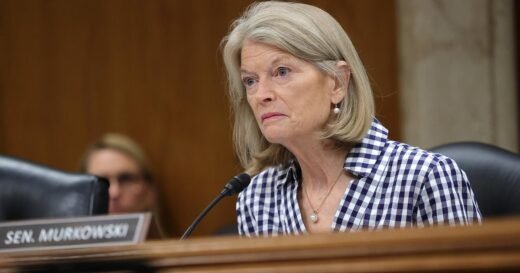
Lisa Murkowski says she’ll vote against Todd Blanche’s nomination for attorney general, imperiling his chances
new admin - Aug 07, 2026Washington — Republican Sen. Lisa Murkowski said Friday she will oppose Todd Blanche's nomination as attorney general, narrowing the confirmation…