



Everything Is Not Fine

When I first became a psychiatrist, I learned very quickly that it was not a fun job to mention at parties:
“What do you do?”
“I’m a doctor.”
“What kind?”
“A psychiatrist.”
From there, one of two things usually happens. One, a person launches into a deeply personal story involving their depression, medications, marital collapse, family trauma, or some cocktail of all four before I even taken a bite of an appetizer. Or the person will laugh nervously and ask, “Are you analyzing me right now?” because apparently psychiatrists are also psychic and spend social events diagnosing strangers for kicks.
It doesn’t matter whether I am at a wedding, in an Uber or on a dating app. The word “psychiatrist” turns me into either a receptable for everyone’s problems or a personification of every fear they have about mental health.
Naturally, I assumed this would be the only job title in my career that made people uncomfortable. I thought I’d found the hack to survival by following my therapist’s advice and telling people I am an accountant because “there are no follow-up questions.” Then, I became a chief wellness officer in higher education.
That title creates a whole new category of confusion and awkwardness.
Some people hear “wellness” and think yoga, smoothies and inspirational posters. Others assume I’ve arrived to deep breathe them out of their workplace stressors in place of actual institutional change. Of course, some of the questions come simply because my role is unique and new, and even I don’t always know how to explain what I do.
Still, before you read another word of this column, I want to clear up any misconceptions and introduce myself properly and tell you what this space is and is not.
Hi, I’m Jessi. I’m not an accountant. I’m a psychiatrist who sees patients and the chief wellness officer for a five-campus university system. I serve our students, faculty and staff. I work at the intersection of people, culture and institutional reality, which means I spend way too much time thinking about how higher education isn’t built to support its people as humans. After burning out badly myself in my old job, I learned that I’m also part of the group that isn’t fully supported by workplaces. But as a helper, I also don’t think I recognized that I needed or could need support, too.
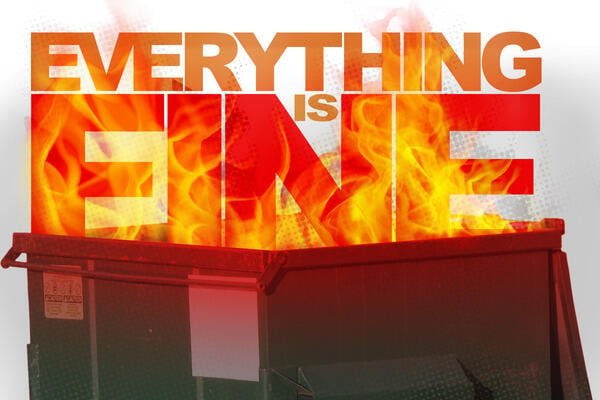
This column, “Everything Is Fine” is named after a meme, the words on the mousepad in my office, and one of higher education’s favorite coping mechanisms: the default answer to the question, “How are you?” My favorite acronym for FINE is “feelings I’m not expressing” and when I say that out loud in talks, people laugh because we laugh when it’s true.
The title is not reassurance or blind optimism. It’s an invitation for deeper conversation about real vulnerability and feelings that higher education does not always welcome. I want to support the staff, administrators and faculty who are doing everything they can to support our students, but don’t always feel seen and heard themselves. I’ll talk about burn out, authentic leadership, toxic positivity, workplace uncertainty and other areas of higher ed that could benefit from real talk.
If that sounds heavy or even a bit scary, don’t worry. I have no intention of writing a monthly mandatory training module or deep dive into emotions. I lean into irreverence, sarcasm and pop culture, but also care deeply about evidence. My goal isn’t to make light of the hard things, but to make the hard things easier to talk about. Wellness to me is not a side project or a branding exercise. It shapes whether people stay, lead and function inside our institutions.
Let me clear up a few myths upfront.
First, wellness is not just mental health. Mental health matters enormously and is a large portion of what I hear about and talk about when I’m wearing both of my higher education hats. But, wellness is bigger than counseling access or a crisis response. It includes 8 dimensions, from spiritual to financial to intellectual, and looks at everything from prevention to intervention.
Second, wellness is not “woo.” If a stress ball or affirmation gets you through a terrible meeting, that’s great. Keep doing that. But the work I care about is grounded in data, organizational change and the realities of how institutions actually function. Wellness is not distinct from the things every administrator cares about: recruitment, retention and the future of higher ed. It is a crosscutting element in all of it.
Third, I am not here to pretend the system does not matter. In many cases, the system is the problem. But system change is slow and we still need to survive this week or this month or this meeting. We need to hold both things at once: Institutions need to change, and people and teams still need practical tools to function while that change happens on academia’s timeline.
And finally, yes, I am going to ask about and talk about real feelings. Not because I want every cabinet meeting to become group therapy, but because “fine” and “okay” aren’t feelings (Just ask the movie Inside Out) and I’d love to see what happens in higher education when we reward more than just constantly pretending with productivity.
All of that is what this column will explore. I’ll probably push a few buttons along the way, but we need to get uncomfortable for change to happen.
Here’s the truth: I’m not fine. You aren’t fine. And higher education definitely isn’t fine. Pretending otherwise has not been an effective strategy for our people and institutions to thrive.
But, if we can talk about it openly, maybe we can get through it better together.
I’d say it’s about time we start.
You may be interested

From inside Iran’s Evin Prison, U.S. citizen Reza Valizadeh gives update on conditions, fears exposure to disease
new admin - Aug 08, 2026This week, CBS News received another recording from inside the notorious Evin Prison in Iran with an update from U.S.…
Vet names 'most aggressive' breed of cat and it's not orange ones
new admin - Aug 08, 2026Amir Anwary has revealed the type of cat he has found in his veterinary experience to turn 'manic' upon reaching…

Hawaii Rep. Ed Case faces primary challenger and more to watch in today’s races
new admin - Aug 08, 2026Hawaii voters go to the polls on Saturday for primaries in the heavily Democratic state, with Rep. Ed Case facing…