



Full transcript: Ukrainian President Volodymyr Zelenskyy on “Face the Nation with Margaret Brennan,” May 31, 2026

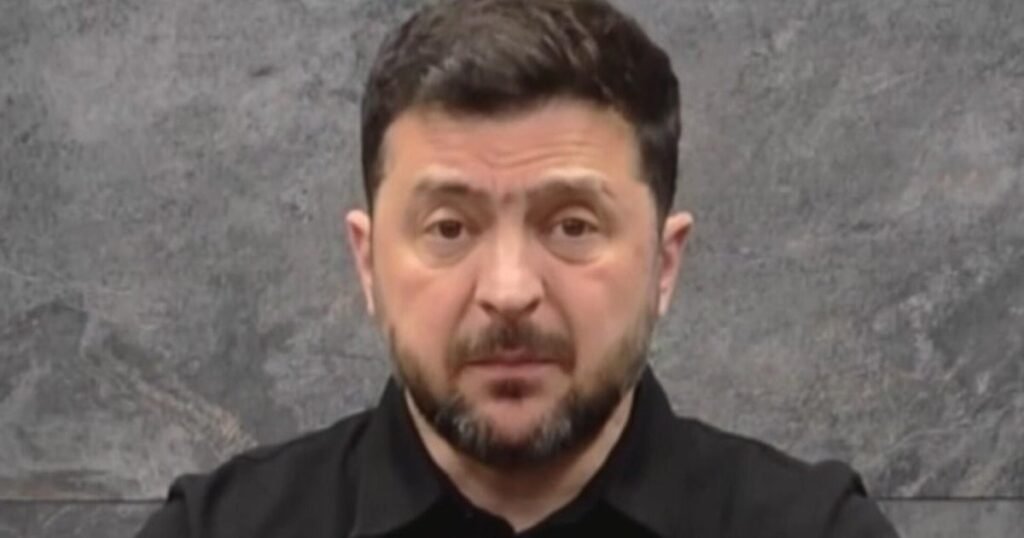
The following is the full transcript of the interview with Ukrainian President Volodymyr Zelenskyy, a portion of which aired on “Face the Nation with Margaret Brennan” on May 31, 2026. The interview was taped on May 29, 2026.
MARGARET BRENNAN: We go now to the President of Ukraine, Volodymyr Zelenskyy, who joins us from Kyiv. Welcome back to Face the Nation, Mr. President.
UKRAINIAN PRESIDENT VOLODYMYR ZELENSKYY: Thank you so much, Margaret.
MARGARET BRENNAN: You have warned that Ukraine has intelligence that Russia is preparing for a new massive attack. This is after Moscow had warned foreign nationals to leave your capital city ahead of expanded strikes. Exactly, what are you bracing for?
PRESIDENT ZELENSKYY: So, first of all, today at night, or tomorrow at night, we will have- we think that we will have big attacks from Russian side using drones, using cruise missiles and ballistic, and we see the preparation always. We see the preparation, by the way- we are thankful to United States and European partners when they share with us intelligence. So, when we know that Russia prepares a big massive attack, definitely, our partners also know, maybe not a lot of details, but we know. So today, of course, I didn’t address yet to my country. I will do it a bit later in the evening, and of course, I will say that our people have to be very, very careful, cautious, and children, and they have to use bomb shelters, because today at night or tomorrow at night, high percent, of course, nobody knows 100% but there is a high percent. So usually we have, we have each day attack from Russian side on civilians, and of course on battlefield. And two times a week, or two times per 10 days, they have big, massive attacks with ballistic, and etc. Last massive attack, just to understand, it was- some days ago, it was 600 drones, Iranian drones, Shaheds, and they had 35- about 30 plus ballistic missiles. In total it was 90 missiles and more than 600 Iranian drones, so it was very difficult to destroy it. We used all our weapon, what we have, what we produce, and of course we used anti-ballistic missile. This is the biggest deficit for us.
MARGARET BRENNAN: Overnight, a Russian drone slammed into a Romanian building. We also saw a Russian drone hit a Turkish ship. These are NATO member states. We’re hearing from European countries that Russia is taking more and more operational risks in Europe. Why do you think Vladimir Putin is taking these risks at this moment?
PRESIDENT ZELENSKYY: First of all, it’s not the first time he has- he’s doing such pressure. I think it’s political pressure. It’s messages from Russia, don’t help Ukraine. I think this is the most- the most usual meaning, what, what he used, don’t – if you will – help Ukraine, (or) I will do these such steps. So he began- he tried once crossing at the very beginning of this war. He did it in Romania, and then a little bit later it was in Poland when they used 21 drones. Then, for example, today at night it was again Romanian, not the first time, we gave these messages to our Romanian partners at night. Usually we try to catch all the drones, even when they go in their direction to other countries, like Romania, Moldova, or the direction of Poland, we try to catch everything. If we can’t, of course, we give these messages to our partners. We try to help them, and also the same with the Baltic countries, Estonia, Lithuania, Latvia. So Russia uses this just to attack politically and by weapon pressure on NATO countries to look at the reaction. So the reaction we- I think the reaction has to be more strong from the unity of NATO countries. And I think that Putin is comparing how this reaction and how it’s changed during this one year or two years, three years, this is the way how- and he also, the testing of air defense of other countries, NATO countries, which are bordering us or bordering Belarus or Russia. So he’s testing what air defense they have. Can they destroy all the- all the missiles or drones. This is what I think.
MARGARET BRENNAN: You sent a personal letter to the White House and to Congress within the past few days, explaining that ballistic missiles, as you put it, remain Vladimir Putin’s last major battlefield advantage. You need a surge of interceptors to take these missiles out. Have you gotten a response from America?
PRESIDENT ZELENSKYY: Thank you very much for this question. This is the biggest, this is the priority for us, and big, big challenge. We had a very difficult, tough winter. Russia attacked us by lots of ballistic missiles on our energy infrastructure, water supply, schools- it was- it was very difficult. Now, we see big deficit. Of course, one of the reasons is the situation in the Middle East with the Iranian war, and we see that the deficit is increasing, and we need to hurry up to rush and to send messages and meetings, and do a lot of meetings with other partners. We don’t see enough missiles in production of the United States. We see that this is- it can be crisis in the world, including Middle East, of course. I hope, God bless, that the ceasefire will be long and lasting peace. I wish it to Middle East countries and to the United States, and I hope that President Trump and his team and American side will negotiate ceasefire. But what we see, we have to prepare for the challenges. And we in Ukraine, we don’t have ceasefire, we have long five years war, and we see that Russia is increasing their internal production, the production of ballistic missiles, and we have deficit with anti ballistic. This is big problem. I sent a letter to the White House and Congress of the United States, and I hope that they will understand and will answer, respond. And this is very important. We need to increase the production. I know all the companies in the United States, huge companies, great companies, but only United States can produce such number. 60, 65 missiles per month for today’s challenges, it’s nothing. Russia knows it, it’s not, you know, secret information. We need to do production wider. Germany now has some licenses. I asked previous administration, I am asking today’s administration, give Ukraine licenses. We will increase the production of Patriot missiles. It will be very helpful for us, it will be very helpful for Middle East, for everybody whom United States will decide to help.
MARGARET BRENNAN: But the United States has not granted you that yet. Do you expect to speak to President Trump or anyone in the U.S. government about it?
PRESIDENT ZELENSKYY: We spoke with President Trump. I’m thankful that we can share this topic between us. We created the program, Ukrainian, European, and United States called program PURL. Through this program, we send European money, you know about it, and we can buy. But now we can’t buy a lot. There is the deficit in production, it is not the topic of money today, it’s not about presents from United States and etc. So we just need it very much.
MARGARET BRENNAN: Right. These are the European-funded weapons program that NATO administers, but they’re American-produced interceptors. I understand that. But you know, Secretary of State Rubio recently said that Ukraine has the strongest military in all of Europe. The Army Secretary of the United States called the Ukrainian battlefield the Silicon Valley of War, praising how you’ve integrated AI and anti-drone technology. So, you have this edge on this type of warfare. Can you use it in any way to take down these Russian missiles, or are you solely dependent on American manufacturing to help?
PRESIDENT ZELENSKYY: I can give you one example very quickly. When we’ve got messages to help in the Middle East to defend some bases with American soldiers and also infrastructure of Middle East countries like Saudi or Emirates, etc, and I came with- with our groups, we sent more than 200 of our experts. Such a level of [UNINTELLIGIBLE] and different kind of interceptors, radars, systems of electronic warfare, nobody has. And secretary is right. So we have- and we can destroy all kinds of drones, we can destroy a lot of different missiles, but we don’t have, still, in our total programming system, we don’t have anti-ballistic. This is the biggest problem. Yes, we are on the way. By the way, I wanted to say, we will build it, I know, but we need time for this. But during this time, we lose people. So, what we can give the United States? All the things what we have, and what United States, for example, doesn’t, like cheap interceptors, a lot of different kinds, different military, different AI drones, and etc. So, but we don’t have anti-ballistic, and the United States has anti-ballistic systems. What we want? We want to share, we want to give everything what we have. And we remember that United States helped us from the very beginning of this war, so of course we are very thankful, and we are ready to share what we have. But until the moment we will produce our European anti-ballistic system, until this moment, we need support from the United States.
MARGARET BRENNAN: Is there any offer from Europe to take down these ballistic missiles? Is there any hope other than the provision of more patriots?
PRESIDENT ZELENSKYY: Between us, Europeans gave us some systems. It was the second year of the war, but it was, again, it was about the American system patriots. Also France and Italy, they have one system, SAMP/T, it’s good system, but they also need to increase the production, because nobody knew that will be this year- will be such big war, nobody counted on this. So everybody has to increase the production. It’s time. It’s all about time. It’s a pity, but it’s true.
MARGARET BRENNAN: Well, there’s high demand, as you say. Let me ask you, though, about the status of diplomacy. Secretary Rubio said there are no negotiations scheduled between Russia and Ukraine. He seems to be acknowledging this is completely stalled. President Putin’s spokesperson said it is too early to speak in specifics about the end of the war. Do you think Russia can ever come to negotiate an end?
PRESIDENT ZELENSKYY: Yes, of course. First of all, I want to say that there are several tracks. And the priority track was during last year, I think it was American track, it was trilateral meeting, United States, Ukraine, and Russia. Yes, it was technical level, not leaders level, on the level of NSA, but it was, I think it was good. It was a priority then, United States be open- and we have to be open, between us, we are partners. United States moved and shift their focus on the Middle East, and because of this, I think Middle East is a priority. That’s why we have some pauses in our diplomatic negotiations. We have European track. I will always be on the side that it can’t be just United States track or European. I thought that the most strong position is when Ukraine, Russia, America- United States, and Europe, I think that this is the most strong, powerful negotiation format. But, we have what we have. Now, Europe tries to find their way how to push Russia to the peace. And also, the third way, and of course, we are ready to speak bilaterally with Russia. I’m ready to meet with Putin if he will be ready. I think we need more sanctions. I think we need more pressure. And you asked when they will be ready, and if- if they will be ready, theoretically. I think yes, more sanctions, more pressure, they will be ready for the dialogue. Even now, they have losses. 30, 35,000 soldiers, Russian soldiers, per month. And it’s a huge number of losses. Really, we increased this number, we- I mean, they increase the number to attack us, and that’s why the number of losses is very big. And each month, you have to know that they mobilize, I think the same, very comparable number with losses, so this is a problem for them, the deficit of people. And they are on the way to the big crisis with the people, I think all these things will push them to the dialogue.
MARGARET BRENNAN: Your senior Ukrainian commander, Brigadier General Andriy Beletsky, told Reuters Ukraine has a six month window to seize the battlefield and strengthen its hand for peace talks. What do you need to do in those six months? And if it’s not the U.S., who’s the European partner that Vladimir Putin will agree to sit down with to make him broker peace with you?
PRESIDENT ZELENSKYY: Yes, it’s true that during this period of time- I can say a little bit more. From December- it began in December 2025, Russia began to lose initiative on the battlefield. And from this point of view, I shared this information with our American partners. I said to them in January, I think that we have window for the negotiations, because each month they will lose more and more people, and they will lose, because of these reasons, they will lose initiative on the battlefield. Now they- they began attack us with massive missiles attacks, and again, the main reason why they did it, because they begin to lose on the battlefield. They couldn’t occupy territories more during one month than they lose during the same month. So now we have this period of time before the winter. So I think that in winter- we have, before the winter, we need to find a way, diplomatic way, to sit and to speak. But it depends [on] the pressure on Putin, the pressure in his society, and I think that is increasing, the pressure by sanctions- not to lift them, to put more. It’s good, it’s diplomatic way. I hope that the United States will do it, and European sanctions, but they made more than 20 packages of sanctions already. Who can be from Europe? We have the format in three countries. I don’t know it’s the best one or not, but this is the priority for Europe, what I understand for today. The three, it’s UK, France, and Germany. These three countries can be, I think, negotiators. But also we have good partners from Nordic countries, and also you know that Türkiye always wanted to be a mediator, and even we had some successful steps when we brought back our war prisoners. This is also very important. But who will be at the end? It’s up to Ukraine and Europe to decide who it will be, and it’s also important that Russia will be ready for speak, for dialogue and for Europe.
MARGARET BRENNAN: When is the last time you heard from Secretary Rubio, or Steve Witkoff, or Jared Kushner, the president’s peace envoys, and will they ever come to Kyiv?
PRESIDENT ZELENSKYY: Yes, we count on they are coming to Kyiv. I hope that they will find a possibility to come here in two weeks. But at least I’ve got such message from my negotiation group, they told me that they had contacts with Steve and Jared, and they said that they are ready to come to Ukraine and to speak, if, of course, if- always if, you know, Margaret. And today, ‘if,’ it means Middle East. So I don’t know what will be in the Middle East, and how you close to negotiations, positive one- again, I hope so. So I don’t know if- but I think that we need to see American negotiation group in Ukraine. They’ve never been here. I think it’s important, not [only] for us. It’s useful for them to understand, to see, to see people, that their life is going on, but we want to stop this war. It’s meant to stop Russia. They’ve been several times in Moscow. I said previously about it, if they want to go this time to Moscow, they have to come to Kyiv and then go to Moscow. I think it will be helpful.
MARGARET BRENNAN: You’re talking about more sanctions. Because of the pressure on oil prices due to the war in Iran, the U.S. has been suspending some of these Russian oil sanctions. I’m asking this because there was a recent report investigating what is happening with the kidnapped Ukrainian children that Vladimir Putin has been taking and putting into these reeducation camps. Yale University says there are at least six of them, and that Russian oil and gas companies are assisting with this state-sponsored kidnapping program. Has the U.S. lifting these sanctions basically helped fund kidnapping Ukrainian kids? Is that what’s happening?
PRESIDENT ZELENSKYY: Margaret, it’s difficult to answer this way. I can tell you that I mostly agree with you, because lifting sanctions is- is a help for the soldiers of Russia. It’s very helpful for their defense industry. They are- they- I mean, this- after lifting sanctions, we didn’t see some surprises, some low prices with the- with oil or with petrol or diesel in Europe or somewhere. We didn’t see it. Because, I’m not sure that it depends on the- on the Russian oil, the market prices, really. Because we saw- what we saw- well I don’t know, maybe I’m not correct, but it’s nearly 5%, 5% of world oil, this is Russian- Russian investment, yeah? So, 5%- how it can make influence? I think no, it’s not about it. It’s how to find, I think, dialogue with Russians, but it’s not correct dialogue. Why? Because Russians don’t understand words, they don’t understand- I think they don’t understand emotions, because they think that this weak position, that’s why we need to be strong and put sanctions on them. They really stolen thousands of Ukrainian children. We know about 20,000, we know, but maybe it’s more, but we identify 20,000, we know the names. And we could bring back, by the way, thanks to leaders to different countries, and by the way, Middle East partners, and the First Ladies of Ukraine and of the United States, they also help with it. But we- we brought during- brought back during all these years 2,200. It’s 10% of the number of the children what we know. So, but I think that thousands of children we didn’t identify until now, so this is a big problem. I don’t see how Russians are ready to give us back these children. This is a difficult way how we do this. So they proposed us to exchange children with soldiers. Can you imagine, how we can exchange our children? We can’t- first of all, it’s out of the law. We can’t exchange civilians. You can give back civilians. And how you can exchange- yes, it’s important to get back our warriors, war prisoners- war prisoners, but we can’t exchange them on the children. But the fact that Russia proposed to exchange children, this is the answer, that they stolen children. And I hope that Congress will find- find the possibility again to put sanctions on Russians, because of the children. We spoke with congressmen, we spoke so many times about it. I hope that they will make this step.
MARGARET BRENNAN: The Treasury Secretary has said some of the poorest countries in the world had asked the U.S. for that temporary lifting of Russian sanctions, and that’s why the U.S. went along with it. But it sounds like you are- you are arguing there’s more damage than good that’s served. Is the United States doing more to help locate these children? Do you need more help from the United States?
PRESIDENT ZELENSKYY: We need more help. We need more help. We need thousands children- to get them back. You know that we lose time. Why? Because there are, you know, such very bad examples, awful examples. When these children grow up and they push these boys to the battlefield. We have such examples. We have–
MARGARET BRENNAN: –You have evidence of that?
PRESIDENT ZELENSKYY: Yes, we have evidence of it. Yes, and they, they teach- they taught these children to hate their native country, to hate native people. And Ukrainians, can you imagine, such young Ukrainians, young boys, come to the battlefield and kill- kill Ukrainians. So, I mean, this is- this is a practical way of disinformation of Russia. How they use all the instruments to kill Ukraine and Ukrainians, and how to use children. And also they want- there is one of the rule, how they divide families. They divide families, I mean, the brother, they moved- brother and sister, for example, boy and girl, they divide them and move to different families. This is, I mean, and there are hundreds examples of such- of such steps of Russia. That’s why we can’t lose time. We need to bring back children as quick as possible, and of course we need- we need the help of all the world. We need help of the United States of America.
MARGARET BRENNAN: Before I let you go, I just want to come back to what you mentioned in regard to drone technology, and this offer that you made to the United States. Is the deal progressing or is it stalled?
PRESIDENT ZELENSKYY: So, we wanted very much to do the first drone deal with the United States, like with the first strategic partner, but the United States wanted to check all our types of drones. We signed- we accepted, I accepted this document, this way how they wanted us to train, to check, to use it in the sky, on the water, because we have not only sky drones, we have sea drones, and etc. So I accepted this way, but we still didn’t accept a drone deal, like the big document. I hope that we are on the way. But we have already drone deals with some Middle East countries, and we have already drone deals with some European countries. Now we’re preparing the big drone deal with EU, and I hope that we will have such decisions with American partners. I count on it.
MARGARET BRENNAN: You count on it, and you need to keep working with Silicon Valley and American technology companies on this?
PRESIDENT ZELENSKYY: We want very much, yes, because American technological companies, they have a lot of different interesting AI technologies, what we don’t have. And we have a lot of things what they don’t have, because our experience on the battlefield. I think this cooperation can be the- can be huge and the most powerful in the world. So we need, you know, we need to negotiate already, not to speak about it, just to make steps, and to do it as quick as possible.
MARGARET BRENNAN: You need President Trump to say yes. It sounds like?
PRESIDENT ZELENSKYY: Yes, we need President Trump to say yes.
MARGARET BRENNAN: Okay. Mr. President, thank you for your time, and we wish safety to your residents of Kyiv as you prepare for what is coming.
PRESIDENT ZELENSKYY: Thank you so much. Thank you, Margaret, for this dialogue. Thanks to your nation for the big support, and we are proud that we have such friends. And I wish you peace. All the best.
MARGARET BRENNAN: And we’ll be right back with a lot more ‘Face the Nation,’ stay with us.
You may be interested
Andy Burnham to become U.K.’s prime minister Monday after being declared Labour Party leader
new admin - Jul 17, 2026Andy Burnham was officially declared leader of Britain's governing Labour Party on Friday, clearing his final hurdle to taking office…

How 4 Colleges Are Expanding Student Success
new admin - Jul 17, 2026[ad_1] As student demographics and needs continue to evolve, colleges are realizing that supporting success extends well beyond tutoring and…

Michigan Investigation Into Football Coach Tops $12M
new admin - Jul 17, 2026[ad_1] UM is investigating the events that led to the firing of its head football coach. The University of Michigan…