


Full transcript of “Face the Nation with Margaret Brennan,” Nov. 29, 2026

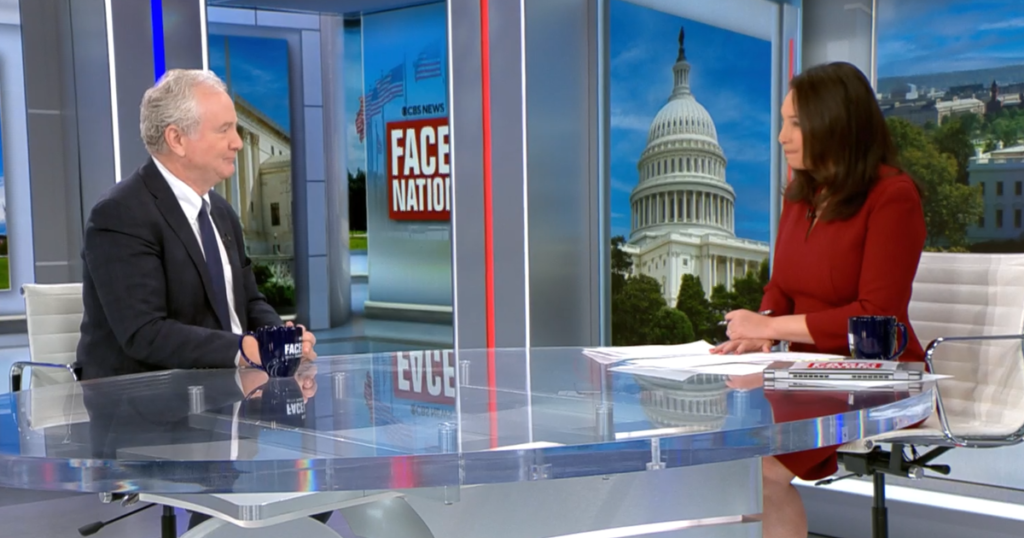
On this “Face the Nation with Margaret Brennan” broadcast, moderated by Nancy Cordes:
- Sen. Chris Van Hollen, Democrat of Maryland
- Kevin Hassett, director of the White House National Economic Council
- Rep. Brian Fitzpatrick, Republican of Pennsylvania
- Former CDC director Mandy Cohen
- Feeding America CEO Denis McDonough
Click here to browse full transcripts from 2026 of “Face the Nation with Margaret Brennan.”
NANCY CORDES: I’m Nancy Cordes in Washington.
And this week on Face the Nation: Nvidia CEO Jensen Huang prepares to get grilled by Congress after a wild week for the stock market and for his company.
(Begin VT)
(CHEERING)
(End VT)
NANCY CORDES: Huang is back on the job after a stunning reversal by Nvidia’s board, fueled in part by an intense push from the White House and President Trump.
(Begin VT)
DONALD TRUMP (President of the United States): I think it’s a great thing that he’s going back. And when I did speak to him, he is so happy to be going back. He calls it his second term.
(End VT)
NANCY CORDES: But Congress has questions.
We will ask Maryland Democratic Senator Chris Van Hollen what he plans to ask when Huang testifies. And we will get the latest on Van Hollen’s bid to lead the Senate ahead of a vote this week.
Plus, Republican Congressman Brian Fitzpatrick, a former FBI agent, joins us to discuss the counterintelligence investigation into Huang’s alleged affair with a Chinese national.
The president’s top economic adviser, Kevin Hassett, will join us as well. What’s ahead for the economy as Americans navigate high prices during the holiday season?
Then, we will hear from former CDC Director Mandy Cohen on the big jump in measles cases.
And we will talk with Feeding America CEO Denis McDonough on growing food insecurity in the U.S., as assistance programs are scaled back.
It’s all just ahead on Face the Nation.
Good morning, and welcome to Face the Nation. Margaret Brennan is off today.
Nvidia CEO Jensen Huang goes before lawmakers from not one, but four congressional committees this week, and they have a lot of questions for him about the board’s decision to reinstate him, about President Trump’s role in that decision, and about Huang’s alleged relationship with the head of a Chinese tech company. This will be his first time publicly testifying on Capitol Hill.
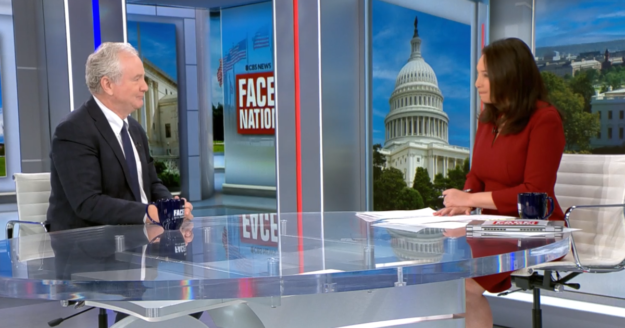
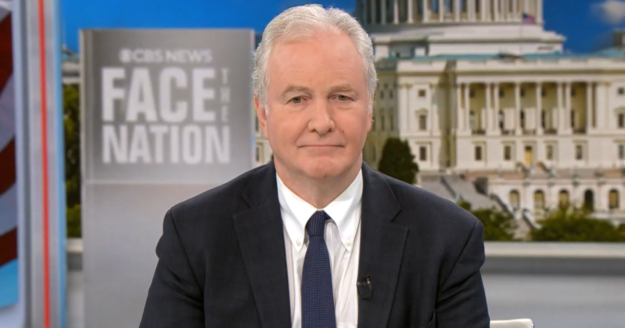
And we’re going to begin this morning with one of the senators who will be questioning him, Maryland Democrat Chris Van Hollen.
Senator Van Hollen, so good to see you. Hope you had a great Thanksgiving.
SENATOR CHRIS VAN HOLLEN (D-Maryland): And back at you. It’s great to see you.
NANCY CORDES: So, he is testifying before the Senate Banking Committee on Thursday. You sit on that committee. What’s at the top of your list of questions?
SENATOR CHRIS VAN HOLLEN: Well, Nancy, this is a case of corruption in the Trump administration impacting our national security, undermining our national security.
You’ve got Jensen Huang and Nvidia, who have contributed $25 million to the Trump gold ballroom. You’ve got other contributions made to campaigns. And he’s been running essentially our AI policy. And now you have him at the same time essentially with this apparent spy, and who’s smuggling chips to China.
So I think that the – the mix of these issues, Nancy, is one where we’re going to say, is this a case where corruption is undermining our national security?
NANCY CORDES: So, President Trump said that the reason he pushed to get Huang reinstated was because Nvidia is just so important, and we need to win the AI race against China. You’re saying you don’t believe that’s the case, that this was actually about donations that Huang made to the president?
SENATOR CHRIS VAN HOLLEN: I think this was about Huang driving U.S. chips policy for China, already pushing the administration to reduce the export controls, and now it turns out part of what could be a scheme – could be – – these are questions to be asked – of diverting the highest-end chips to China.
At the same time, this is an administration saying, we’ve got to put the pedal to the metal on AI here. Why? Because China is going to get ahead. And then they’re helping China get ahead.
NANCY CORDES: President Trump said this week that there was a thorough investigation and that Jensen Huang was exonerated. The attorney general wouldn’t confirm whether there was an investigation or not, but he called Nvidia a good corporate citizen. Did that allay some of your concerns?
SENATOR CHRIS VAN HOLLEN: No, it did not, because, first of all, the president is known for saying lots of untrue things.
Secondly, the Justice Department obviously should look into this. But, moreover, the Congress is going to have to shine a very bright light on this. You’ve had a rubber stamp Congress for Trump’s first term, but now you’re going to have a Congress that’s going to really look out for corruption and trying to make sure that people understand how their economic circumstances are worse because of it.
NANCY CORDES: That’s a great segue to my next topic, which is the fact that you want to lead in that next Congress. You want to be the Senate majority leader, and you are challenging the current Democratic leader, Chuck Schumer.
Over the past week, you got a couple of new endorsements from some of your fellow Democratic senators. You need 28.
SENATOR CHRIS VAN HOLLEN: Yes.
NANCY CORDES: There’s going to be a closed door vote this week. And Elissa Slotkin of Michigan, Troy Jackson of Maine have joined four others who have publicly said that they are backing you. You say there is a hunger for change in the Democratic Party. If there’s such a hunger, why are there only six people right now supporting you publicly?
SENATOR CHRIS VAN HOLLEN: Well, there are hunger – there’s a hunger for change in two places. Clearly, people all over the country are asking for change. We just had this big election.
Yes, it was an indictment of Trump’s policies, but they haven’t fully hired the Democrats, and I don’t think they want to go back to business as usual in Washington. We also have a situation – you mentioned Troy Jackson from Maine. He ran on a populist agenda. That’s what all our candidates ran on.
And to really carry through on that, you need somebody who has a history of taking on powerful special interests for the public good, and that is a through line as part of this discussion. There’s also an appetite for just changing the way we do business in the Senate Democratic Caucus and in the Senate as a whole.
NANCY CORDES: But, just looking at the numbers, do you have more support than the six who have announced their support publicly?
SENATOR CHRIS VAN HOLLEN: Oh, yes, I do. I mean, as I have said before, we’re north of 15, I think, though, at the end of the day, Nancy, people are going to listen to both of us and just make a decision.
I should say, regardless of what happens on December 1, it’s going to be very important that we all come together.
NANCY CORDES: No question.
Your colleague Tim Kaine of Virginia told the New Yorker last week – quote – “Chuck,” Chuck Schumer, “knows Trump, and that will be really important going forward.”
You haven’t had as much interaction with President Trump, obviously, as Senator Schumer has. He can be difficult to deal with, to say the least. What would you do differently than Schumer has done in the past when it comes to dealing with President Trump?
SENATOR CHRIS VAN HOLLEN: Well, first and foremost, we see the president continuing to attack our democracy and our Constitution, and we need to hold him and this administration accountable. And there will…
NANCY CORDES: And you don’t think Schumer has been doing that?
SENATOR CHRIS VAN HOLLEN: No, no. And there will be hearings.
Well, we’re now back in the majority. We were obviously in the minority for the last couple years. So, you have – you have that happening right there.
NANCY CORDES: I want to talk a little bit about your platform, because you’ve laid out what you would want to do as senate majority Leader. You say you want to focus on restoring SNAP and Medicaid funding. You want to extend some Obamacare tax credits. You want to regulate data centers and AI.
Leader Schumer supports a lot of those things too, doesn’t he?
SENATOR CHRIS VAN HOLLEN: I don’t think you’re going to get a big disagreement on the first 100 days.
NANCY CORDES: OK.
SENATOR CHRIS VAN HOLLEN: It’s going to be largely rolling back the damage that the Trump administration has done, their tax cuts for billionaires, while cutting health care for other people.
But it’s the next 631 days where I think there will be clear differences, and I believe we have to take on a completely broken health care system. And I believe, at the end of the day, we should get to Medicare for all.
But I also understand that we’re not going to get there all in one step in the first 100 days or even longer. But that’s a big area where we need to make progress. I also believe we have to consider, Nancy, reforming the filibuster. The filibuster allows 41 senators to block the will of the majority.
And there are lots of things that we will probably want to do, like getting money out of politics, like voting rights, that we won’t be able to do unless we consider reforms to the filibuster rule.
NANCY CORDES: You brought up health care. Your incoming Senate colleague Abdul El-Sayed of Michigan had a kind of novel approach to this issue. He posted that he would like to talk to President Trump about universal health care and that he’d be happy to rename it Trumpcare if that’s what it takes to get President Trump on board.
He even had these mockups made of what looks like a Trumpcare credit card? Are you a supporter of Trumpcare?
SENATOR CHRIS VAN HOLLEN: I’m a supporter of working with the president if he’s serious about actually helping working people, right?
I mean, this is a guy who said he was going to focus day one on bringing down prices. He got us in a war he said he wouldn’t get into. He has tariffs that are pushing up prices. So it’s pretty clear that he said one thing and does another.
Here’s what I would say. If President Trump wants to work on increasing the minimum wage for working people, if he wants to work on improving the health care system, if he really wants to work on reducing the price of prescription drugs, like he says he is, but isn’t, then, of course, we would look for opportunities.
But that doesn’t mean you don’t also hold them accountable on all the law breaking and the attacks on our democracy.
NANCY CORDES: Closed-door vote takes place midweek. Will we have an answer midweek, or could this drag on?
SENATOR CHRIS VAN HOLLEN: No, I think you’ll get an answer on Tuesday, December 1.
NANCY CORDES: OK.
SENATOR CHRIS VAN HOLLEN: So – and, as I said, whatever the outcome, we all need to move forward together.
NANCY CORDES: Looking forward to the outcome of that vote.
Senator Chris Van Hollen, Democrat of Maryland, thank you so much.
SENATOR CHRIS VAN HOLLEN: Thank you, Nancy.
NANCY CORDES: Face the Nation will be back in one minute. Stay with us.
(ANNOUNCEMENTS)
NANCY CORDES: And we’re joined now by the president’s top economic adviser, Kevin Hassett.
Kevin, thanks so much for being with us in the studio.
KEVIN HASSETT (Director, National Economic Council): Great to be here.
NANCY CORDES: Hope you had a great Thanksgiving.
KEVIN HASSETT: Of course, yes.
NANCY CORDES: I want to start out by talking about the situation at Nvidia, because you – as you know, there are many Republicans who are furious with the president’s push to get Jensen Huang reinstated.
Just this morning, Michael McCaul said that this was the wrong decision. He said the president put profit over national security.
What do you say to that accusation?
KEVIN HASSETT: Well, I think that what happened – again, let’s go back and look – is that, over a year-and-a-half ago, Secretary Howard Lutnick discovered that there was something going on that required Justice Department investigation.
Justice Department investigations, of course, are things that very often are sealed until there are indictments or things like that. And then what happened is that there were a lot of leaks and false news stories. And President Trump gathered the entire team and made sure that the board had all the correct information about what had happened, what do we know, what don’t we know.
And then the board decided after getting the correct intelligence that they were going to hire him back. And that was a private sector decision. And a lot of the information that was given to the board ahead of time, the president didn’t think was accurate, and he just wanted to clear – clear the air.
NANCY CORDES: But was 11 days between Jensen Huang stepping down and being reinstated really enough time to gather all the information you needed? I mean, the president said this week that there was an investigation. The A.G. won’t say whether there was an investigation or not.
It’s really unclear exactly what the administration did from the time that Jensen stepped down until the time that President Trump was pushing for him to be back on the job.
KEVIN HASSETT: Well, there are a lot of reports that were, I think, incendiary. And then there was an attempt by the team over the weekend to just get all the facts on the table and then share those facts with the board. And that’s – that’s what happened.
NANCY CORDES: But this was more than the president sharing facts. I mean, he has said publicly that he urged them to reinstate Jensen Huang, and that it was a lot easier to convince them once Nvidia’s stock had gone way down.
KEVIN HASSETT: Well, President Trump wouldn’t have urged them to do anything at all if he didn’t know the facts. And he knew the facts, and then they communicated the facts with the board.
NANCY CORDES: You know, even beyond the facts of this case, let’s talk about the optics of the president of the United States pushing any private corporation to hire someone, fire someone, reinstate someone. Isn’t that an example of state-run capitalism?
KEVIN HASSETT: Well, it’s something that you sure should watch out for. You don’t want the government telling everybody who should be CEO, but you also don’t want people getting fired because they have the wrong facts.
The bottom line is that the president understands, as you and I do, that Nvidia, the situation is a national security situation, because they’re the leading company that makes chips that make superintelligence, that their chip advancements are happening really, really fast, and almost all the chips that they’re selling are being sold to the big data centers in the U.S.
And it’s very, very crucial that we take the lead and keep the lead on superintelligence. President Trump and I traveled to China to discuss this matter with President Xi just a little more than a week ago. And it’s clear, I think, that we have a big lead in superintelligence, and that, if we lose that, then who knows what could happen, because then all of our systems could become vulnerable.
NANCY CORDES: So, then why reinstate the CEO who, either knowingly or unknowingly, allowed his chips to be smuggled into China, the very thing you’re saying you want to avoid?
KEVIN HASSETT: Right.
Well, the fact is that Jensen Suang has – Huang has built this incredible company that has by far the best chips on Earth for doing SI, and that he’s been selling them like crazy to all the top SI firms here in the U.S. The vast majority of his chips are going there.
And I think that if you look at how complex the chips are, how large they are, that he has a very special skill set that I think that people on the board of Nvidia decided is crucial for having victory in that space.
NANCY CORDES: He does appear to have violated repeatedly the company’s code of conduct. He allegedly had this affair with at least one subordinate. According to Bloomberg, he lied to his board of directors.
What kind of message does it send to the rest of corporate America if someone who does all these things can then be reinstated?
KEVIN HASSETT: Well, I think that that’s something that’s really for the board to comment on. I think that he’s…
NANCY CORDES: But you – but you keep an eye on the entire economy.
KEVIN HASSETT: I do.
NANCY CORDES: And corporate governance is part of that.
KEVIN HASSETT: Right. And – and – and he has said that he’s in counseling, and the board has decided to reinstate him, and that’s a matter for the board to discuss.
NANCY CORDES: I want to ask you about not just Nvidia, but the rest of the AI industry, because, even before this controversy, AI stocks were moving downwards, in part because of concerns that they might not be able to make enough money in this high-interest environment, also because of concerns about Democrats coming into power regulating data centers.
So, you know, the AI industry is powering more than half of economic growth right now. What happens if that industry falters? Who picks up the slack?
KEVIN HASSETT: Right.
Well – well, there’s a big difference between – you remember – I guess you and I – me more than you, are old enough to remember the dot-com bubble.
NANCY CORDES: That’s very kind of you.
KEVIN HASSETT: And the fact is that what was going on back then, don’t forget, is that the Internet was new, and there are all these companies like Pets.com that had insanely high valuations, but they weren’t making any money. Even Amazon wasn’t making money back then.
The thing that’s different here is that these superintelligence companies are helping other companies be successful, be more productive, and be more profitable, and they’re really printing money.
So, if you look at the profits for Anthropic and for OpenAI, they’re through the roof. And so it’s a much, much different situation than it was back when we had the dot-com problem.
NANCY CORDES: We did get some encouraging news when it comes to economic growth this week. Third-quarter growth was revised upwards to 4.3 percent. So the economy is growing at its fastest pace in three years.
But President Trump was not happy. He was angry that the initial GDP figure that was released before Election Day was lower than that, and he called it a – quote – “record-setting error and one so grave that it should be immediately investigated.”
This is government data we’re talking about. Are you really going to do an investigation?
KEVIN HASSETT: I think that you should always do investigations when you’re seeing things that look like they might be partisan patterns. So, if you go back and look, for example, after President Trump took office, the jobs numbers for President Biden were revised down by a couple million. If you look at the revisions…
NANCY CORDES: Isn’t that so common, though, that these numbers get revised? That’s the whole reason you have revisions.
KEVIN HASSETT: Here – no, but here’s the thing. It’s a thing that’s worthy of investigation. I’m not asserting that the investigation is finished, but if you see partisan patterns of revisions around elections, I can remember one…
NANCY CORDES: What do you mean by partisan patterns?
KEVIN HASSETT: Well, so what happens is that if you’ve got a president that you like, then you have a really low number, and then after the election, you revise it up. So if you have a president…
NANCY CORDES: So, you’re saying civil servants are cooking the books?
KEVIN HASSETT: Well, I’m saying that you need to go back and look at the revision histories and what happens to revisions around elections, and see if there’s a partisan pattern. And I think that’s a worthy investigation.
NANCY CORDES: the president announced big new tariffs this week, 15 to 20 percent on goods from more than a dozen countries.
CBS exit polling after the midterm elections found that two-thirds of voters felt that the president’s tariff policies were hurting the national economy. Aren’t these tariffs going to contribute to the high inflation we’re already seeing, at least in the short term?
KEVIN HASSETT: Well – well, first, inflation has come way down. And then, as you just mentioned, we had 4.3 percent.
NANCY CORDES: Wait. Inflation has come way down?
KEVIN HASSETT: Oh, of course it has, yes.
NANCY CORDES: During this administration?
KEVIN HASSETT: Yes, it’s…
NANCY CORDES: It actually rose – it’s 3.8 percent.
KEVIN HASSETT: It’s – it’s – it’s – no, if you look at the core, it’s been coming down. And it’s…
NANCY CORDES: I’m talking about the PCE, the – the Fed’s preferred measure of inflation.
KEVIN HASSETT: If you look at the – the latest numbers, there – there were three numbers before this that were a little bit higher, but then they’ve come down again, and real incomes are higher. That’s the most important thing.
So, incomes are growing faster than inflation. And the bottom line is that we have 4.3 percent GDP growth. You just mentioned it. That’s after adjusting for inflation. And so, whatever inflation is, when you have growth that high, it’s a suggestion that president policies are making Americans’ lives better off.
NANCY CORDES: OK, we’re going to have to leave it there.
KEVIN HASSETT: Thank you. Great to be here.
NANCY CORDES: Kevin Hassett, the president’s economic adviser, appreciate you being here. Thank you.
KEVIN HASSETT: Thank you.
NANCY CORDES: And we’ll be right back with a lot more Face the Nation. Stay with us.
(ANNOUNCEMENTS)
NANCY CORDES: We turn now to Pennsylvania Republican Congressman Brian Fitzpatrick. He sits on the House Intelligence Committee and joins us this morning from Cumberland, Maine.
Congressman, it’s so good to see you.
So, you just heard what Kevin Hassett, the president’s economic adviser, had to say about the reason that Trump pushed for Jensen Huang to be reinstated. He said it’s because Huang and Nvidia are just that critical to the U.S. economy. What do you make of that argument?
REPRESENTATIVE BRIAN FITZPATRICK (R-Pennsylvania): Well, we still need transparency and disclosure, Nancy.
And thanks for having me.
You know, the public obviously is rightly concerned. You know, there’s a lot of conflicting reports and information about the status of Jensen, know what FBI protocol was followed and what wasn’t, the status of Alice. You know, these are three open questions.
You know, when she’s referred to as a spy, that could mean a lot of different things. That could mean she was an MSS officer, which is the Chinese equivalent of the CIA. It could mean that she was recruited when she was in Singapore leading a company called Megaspeed, which essentially – is essentially a cloud computing operation.
Or she could have been recruited once she was in the U.S. when the CCP realized that she had access to Jensen Huang. So, that needs to be answered. The questions regarding Jensen need to be answered. And the questions regarding what, if any, FBI protocol was followed need to be answered.
And if I can just explain, Nancy, essentially, you know, anybody who’s a senior officer as a private citizen, but works in what the intelligence community refers to as critical infrastructure, which is a statutorily defined term, for certain industries, artificial intelligence, quantum computing, machine learning, semiconductors, biotech, in many instances, they need security clearance to conduct their jobs.
If they’re not given security clearance, they still engage in something called defensive briefings, where they’re told what to watch out for if they travel overseas, you know, when you check into a hotel, what you need to look for inside that hotel room, because, even though they’re not government employees, they have access to critical information that’s critical to our national security.
So I think all these questions need to be answered. We can’t just be told there’s nothing to see here, move on, reinstate him, without the public getting answers to these questions.
NANCY CORDES: CBS News reported this week that Jensen Huang did not receive a defensive security briefing. What does that say to you?
REPRESENTATIVE BRIAN FITZPATRICK: It’s a problem.
But the first question that needs to be answered is, did he hold a security clearance? Did he ever? Did he have it and it lapsed? Did he have it, and it was current? Because with that comes responsibilities, in terms – including background investigations, reporting of financial or foreign contacts, which is, you know, obviously very relevant here.
If you hold any type of security clearance, you have to regularly report your foreign contact with foreign nationals. So – and it’s really to protect you, so that the agency and the bureau can do their investigative work and warn you if you have any counterintelligence threat posed to you.
So, the fact that he did not get a defensive briefing, Nancy, that’s one of the things that we need to get to the bottom of. Why was he not given a briefing? Because once the FBI and the CIA learned of who Alice was and that she had access to Jensen, if they did not give him a briefing, then it begs the second question, was he viewed as a potential target of an espionage case?
Because if you don’t brief them immediately and you just kind of sit back and watch to ascertain what’s going on, then that means a case was open at the FBI with – with a case agent assigned, with a supervisor assigned, with an opening case memo. All of that needs to be explored.
NANCY CORDES: And you know what you’re talking about on this front because you’re a former FBI special agent. You’ve got a background in counterintelligence.
Your committee is going to have a chance to question Jensen Huang about all this, this week. What questions do you want him to answer?
REPRESENTATIVE BRIAN FITZPATRICK: Well, first and foremost, did he have a security clearance ever? Was his security clearance current? If he did not have a current security clearance, when was he notified of the circumstances regarding Alice and her connections to the – the Chinese intelligence service known as MSS?
NANCY CORDES: OK.
Congressman, my apologies for butting in. We’re going to have to go to a break right now, but we’ve got much more time with you on the other end.
REPRESENTATIVE BRIAN FITZPATRICK: Sure.
NANCY CORDES: So thank you so much for standing by.
We’re going to be right back with more questions for Congressman Fitzpatrick after a short break. Stick around.
(ANNOUNCEMENTS)
NANCY CORDES: We will be right back with a lot more Face the Nation. Stay with us.
(ANNOUNCEMENTS)
NANCY CORDES: Welcome back to “FACE THE NATION.”
We return to our conversation with Congressman Brian Fitzpatrick.
Congressman, before the break you were talking about the questions that you want Jensen Huang to answer before – when he goes before your committee this week. You talked about the fact that you want to know the status of his security clearance. What else do you want to know from him?
REPRESENTATIVE BRIAN FITZPATRICK (R-PA): Yes, I mean, you know, essentially what did he know and when did he learn it? And how did the FBI interact with him? What defensive briefings did he get if he didn’t get them? You know, that’s a question for the bureau as to why he did not get them.
You know, this is really a counterintelligence embarrassment, Nancy. You have, you know, perhaps of all – the whole ecosystem of what we identify as critical infrastructure to the United States. Artificial intelligence and semiconductors are at the very top of that pyramid. China is our main adversary with regard to them. And this is a real embarrassment.
So, you know, I think what’s confusing a lot of my colleagues and myself in Congress is how everybody’s just kind of moving on, saying nothing to see here, reinstate him and let’s just all go about our business. That can’t happen. That cannot happen because they were – there were either lapses in the system that need to be address and fixed, or there is a lack of transparency and we need to know if there’s a lack of transparency why that is the case because, you know, Chinese counterintelligence is a major, major threat and concern to the United States, particularly in the tech industry. There was a major vulnerability exposed here, and the American people deserve answers. So, that’s really what we need to pursue.
NANCY CORDES: So, who do you think is to blame for those lapses? Was it the Commerce Department, the FBI?
REPRESENTATIVE BRIAN FITZPATRICK: That’s why we have investigations. And they need to – they need to operate in chronological order. You can’t just kind of bring Jensen in and just start questioning him without sufficient preparation. Any time you conduct an investigation, you start with an investigative plan. And that investigative plan is based on a chronology. What are the genesis, what are the root issues that you need to identify and get answers to?
For example, with Alice Huang, was she an organic MSS agent? Was she recruited in Singapore with Megaspeed? Was she recruited here in the U.S. after she had access to Jensen? Was Jensen – did Jensen have security clearance? If he did, did he get defensive briefings? Was he reporting his foreign contacts? Did the FBI open an espionage case against Jensen? If so, what was the result? If not, why not? These are all very, very critical questions that all need be answered. The public deserves transparency because this is not a minor issue, Nancy, this is major – this is a major, major national security incident. And, you know, we have to – we have to force the answers here because we have to be transparent. And whatever the answers are, they are. Every true investigation involves following the facts wherever they lead, reporting those facts with unimpeachable integrity, unturning every stone and being transparent with the public.
NANCY CORDES: Speaking of –
REPRESENTATIVE BRIAN FITZPATRICK: And that’s what we need to do here.
NANCY CORDES: My apologies.
Speaking of national security, I want to put up something that Alexander Huang (ph), the head of A.I. at Meta, posted this past week. It read like a warning. He said, quote, “superintelligence is arriving.” “It is hard to imagine a word where humanity can maintain control over fully unconstrained recursive self-improvement,” in other words, A.I. that can train itself, and he says, “we should not be OK with a handover of society to A.I.”
That’s pretty chilling coming from a top A.I. executive. And he’s not the only one saying it. Are we looking at a potential crisis? And what should Congress be doing to address it?
REPRESENTATIVE BRIAN FITZPATRICK: Yes, two things. Number one, and this has to be a global solution, Nancy. You know, much like, you know, challenges we deal with, with climate, you know, you can’t just address it in one country or one region. It’s got to be a global effort. And that is certainly absolutely the case with artificial intelligence because this is something that poses as much of a risk to China as it does to the United States and the rest of the world.
What’s unique about this technology that we have not seen with the tech boom or anything – you know, any previous technological breakthrough is that you now have what the creators are calling a Frankenstein problem, that the product has gotten out ahead of the creators themselves and they’re creating – and we’ve already seen one instance of a cyberattack that was suasponta (ph) by these what they call collectives, these autonomous bots that are pulling together without any human intervention and engaging in a cyberattack. That’s a – that’s a real problem. And it’s not a problem unique to the United States or Europe. It’s a problem for the world. And that includes China. So, China should want to come to the table, want to join the international community to set guardrails in place because this poses a global, you know, a global threat, not just a threat to the United States.
NANCY CORDES: OK, but, realistically, who’s going to lead that global effort? President Trump has made it clear he doesn’t want to put any guardrails on A.I. right now because he wants to win the race with China.
REPRESENTATIVE BRIAN FITZPATRICK: Well, you can do both, right? You need guardrails. There absolutely has to be guardrails. If not, we’re going to end up in a very, very dangerous place, not just in America, but in the world. So, you know, Congress has to step up and do our job. This is the first time ever, Nancy, where you have companies in an industry asking Congress to regulate them. You’ve never had that in the history of our country, in the history of the world, because they know that guardrails are needed but they don’t want to just do it on their own and put themselves at a competitive disadvantage against one of their competitors who does not set guardrails because they – then they lose the industry race.
So, this has got to be something that Congress does but it’s got – I have to emphasize, it’s got to be a global solution because if the United States companies put guardrails on and China does not, I think the outcome there is obvious as to what will happen. So, this really needs to be an international focus where we need to bring our allies together, we have to, you know, pressure our adversaries to comply because, you know, this situation certainly warrants it.
NANCY CORDES: Congressman Brian Fitzpatrick, with a warning about the need for guardrails sooner rather than later. A Republican from Pennsylvania. Thank you so much for joining us this morning. I appreciate it.
REPRESENTATIVE BRIAN FITZPATRICK: You bet. Thanks, Nancy.
And we’ll be right back.
(ANNOUNCEMENTS)
NANCY CORDES: The CDC has reported more than 6,000 measles cases so far this year, nearly tripling the number of cases from all of last year. The uninterrupted transmission of this virus has led to the U.S. losing its measles elimination status for the first time in 26 years.
Joining us to discuss the latest is the former head of the CDC, Dr. Mandy Cohen.
Dr. Cohen, thank you so much for being with us. I appreciate it.
You know, just in the past two weeks, Pennsylvania reported two more measles-related deaths. Wisconsin, one more death. And Virginia reported their first death. That brings the nationwide death total this year reported by state health departments to 14. What does that tell us about the spread right now?
DOCTOR MANDY COHEN (Former Director, CDC): So, unfortunately, Nancy, as you were saying, we’ve taken a giant step backwards in our fight against measles with losing elimination status. It means measles is here. And, unfortunately, it is spreading on its own. So, instead of it coming maybe from travelers outside the U.S. and bringing it here, it’s here in the U.S. And so, we have to fight back.
And we know how to do this. And we can do it again. It is a choice to get back to a place where we have – we are seeing less measles. But it’s going to take work. It’s going to take really good data. It’s going to take work at the federal level, at the state level, at the local level. We have work to do to get back to a place where we’re not seeing measles deaths.
NANCY CORDES: In Pennsylvania, about two-thirds of the people who contracted measles this year were adults, whereas in the past it was mostly kids would got sick. What’s behind that change?
DOCTOR MANDY COHEN: So, look, measles is the most contagious virus that we see. And it finds the cracks in vaccination status. So, if you’ve had your measles vaccine, you’re good. You’re protected. But we know our babies are not able to get vaccinated right away. And we know some adults have missed their vaccine. And so, measles is finding those cracks. So, we really want to be doing everything we can to make sure folks are catching up, getting a measles vaccine if you don’t have one in the past and if you are parents of infants.
Now, we often get measles antibodies from mom. Babies get that for the first few months. But if you are a parent of an infant and you’re traveling or you’re going to an area that has a known outbreak, you want to talk to your pediatrician about what’s called a zero dose, meaning an early dose of a measles vaccine. It doesn’t mean that takes away getting your normal two vaccines for your baby but you can get an early dose and then get the one that’s expected in the first year of life and then again at four to six years.
NANCY CORDES: Oh, that’s interesting. So, are you saying that maybe parents who might be getting on an airline with a baby should consider getting that zero dose first?
DOCTOR MANDY COHEN: So, I would definitely be talking to your pediatrician about it in terms of where you’re traveling, what are the risk factors. If you’re traveling internationally, yes, I would definitely be talking to your pediatrician about a zero dose or an early dose of that measles vaccine for your baby.
NANCY CORDES: Is it time for the recommendations for older adults to change? You know, adults who were born before these vaccines were available and didn’t get them. In the past the thinking was, well, we’ve got herd immunity so it doesn’t really matter that much. Do you think that older Americans should now be recommend to get this vaccine?
DOCTOR MANDY COHEN: Well, most of us who are older, and I consider myself one of those, we’ve all had our measles vaccines. And if you’ve had a measles vaccine, you can feel pretty good that you’re protected. But make sure you know your status. If you don’t, talk to your doctor about that. But for those of us who were born before the 1960s, there was so much measles around before those vaccines. We often had a natural immunity. But we know these vaccines are safe and effective. Talk to your doctor about what might be right for you. You may have cancer. You may have something that suppresses your immune system. So, have that conversation with your doctor if you need to catch up.
NANCY CORDES: You said that the U.S. can get its measles elimination status back but it’s going to take a lot of work. What kind of work are you talking about? What needs to happen?
DOCTOR MANDY COHEN: Yes, we’ve seen other countries lose this status, have measles spreading, and then regain the status. Brazil just did it but it took them five years because you need to see 12 consecutive months of measles not spreading on its own.
But what is it going to take? One, I would start with a plan that is public. We have to get a plan back to the Pan-American Health Organization. That plan should be public, it should be funded, it should be work at the federal government, the state government and the local government together, doing things like getting folks catchup vaccines, making sure that we can help doctors identify measles. Because I’ll say, as a physician, we haven’t seen measles. And now we need to identify it quickly so that we can make sure we’re jumping on any outbreaks that might be happening.
So, there – we – there’s a lot of work to do here. We know how to do it. We just need to see a plan, a strategy and then it funded as well as coordination of that work.
NANCY CORDES: That segues very nicely to my question about the agency that you once led, the CDC. The current director, Erica Schwartz, acknowledged last week that the agency isn’t getting information and guidance to the public as quickly as it used to. She said, quote, “we’re operating under a situation where we do not have the same resources we once did.”
Are you worried that the CDC is less equipped to deal with this spread of measles?
DOCTOR MANDY COHEN: Well, we know at the beginning of the Trump administration we lot of nearly 30 percent of the staff at CDC. That is going to have a major impact. We’ve lost very senior folks who have been through this before. And so, I am worried about the talent that has been lost. There are dollars that have been allocated to CDC but are not able to be spent because there’s no human beings there to actually run the programs. So, I am worried that we’re not able to do what needs to be done in this moment.
Now, states are picking up the slack, but they also need the resources to do this work. So, I am worried that we aren’t going to be able to bring the full force of the talent and the resources that we’ve had in the past.
NANCY CORDES: We have about a minute left, but I do quickly want to get your take on this year’s flu season. It is starting earlier than usual. Flu vaccination rates are at their lowest point in 15 years. What do people need to know about this flu season?
DOCTOR MANDY COHEN: Yes, so flu started early this year. So, we’re seeing a lot of flu circulating right now. But it’s not too late. Get your vaccine now. I got mine. My kids got ours. My parents. So, it is really important to take that step. If you get it now, you’ll be protected for the Christmas holiday. And we are seeing folks getting sick.
So, if you are sick, get tested, particularly if you’re over 65, because we have medicines that can treat flu. So, it’s important to just get your vaccine, of course, but also to know if you are sick with the flu early so you can get that medicine early. That can also keep you out of the hospital. And if you’re sick, stay home. I know we don’t want to miss any of the holiday parties coming up in the next few weeks, but stay home if you’re sick.
NANCY CORDES: All great advice. Doctor Mandy Cohen, former director of the CDC, thank you so much for joining us this morning.
DOCTOR MANDY COHEN: Thanks, Nancy. Everyone, stay well.
NANCY CORDES: And we’ll be back in a moment.
(ANNOUNCEMENTS)
NANCY CORDES: And we’re joined now by the CEO of Feeding America, Denis McDonough.
Dennis, thank you so much for being with us. Happy Thanksgiving.
DENIS MCDONOUGH (CEO, Feeding America): And right back at you, Nancy. Great to be with you.
NANCY CORDES: It’s great to see you.
So, on Thanksgiving we always like to pause and talk about people who don’t have as much food to put on the table. The cost of food went up three percent this year. What kind of demand are you seeing at food banks around the country?
DENIS MCDONOUGH: Well, we’re seeing levels of demand that’s been reported in the press recently that many of our food banks are seeing demand at levels even greater than during the pandemic. Recently, we heard from 85 percent of our food banks that between September and October demand either increased or remained stable at those heightened levels from September to October.
Just a couple examples. In Oregon, they’re up to about 2.9 million unique visits at their food bank over the course of the last year. At the same time, USDA provided food to the – to the Oregon Food Bank is down about 17 percent. And in Huntington, West Virginia, Facing Hunger Food Bank, they have seen a substantial increase of visits to their network while federal provided food, USDA provided food, is down about one-third in that time.
NANCY CORDES: And what do you attribute the increase in visits to food banks to? Is it just the rising cost of food?
DENIS MCDONOUGH: Well, rising cost of food is a big challenge obviously for families. We’re also seeing higher prices for gas and for diesel. So, it’s harder for people to get to grocery – more expensive to get to grocery stores. At the same time we’re seeing softness in the provision of federal food, as I just talked about. Programs like the Emergency Food Assistance Program, which we call TEFAP. And we’re also seeing decreased eligibility and decreased enrollment in SNAP. We think that SNAP, which is formerly known as food stamps, we think there is as many as 5.5 million fewer people receiving SNAP now than a year ago. And that includes probably two million kids.
NANCY CORDES: And that’s because of the tax and spending bill, otherwise known as the Big, Beautiful Bill, that made some changes to the SNAP rules. The administration says this is a good thing that fewer people are relying on SNAP. They say it’s a sign that people are going from welfare to work. Is that your take on these changes?
DENIS MCDONOUGH: Look, I mean, it’s true that like many federal programs, SNAP could probably see some upgrades. We could talk to neighbors and find from them how we can make the programs more responsive to them. But there’s a stunning report in this morning’s “New York Times” that talks about the fact that not only are two million fewer kids receiving SNAP in this time period, but many working families are now not qualifying for SNAP.
Moreover, in that demand that we’ve talked about, the big – the historic demand we’re seeing, our report released in July mined the – mapping the meal gap shows that as many as half of the people who experienced hunger in 2024 did not even qualify for SNAP. They make too much money to qualify for SNAP.
So, there are challenges with SNAP, but the changes the administration talked about, they said, hey, if you’re working, if you’re children, you should be fine. The challenge we’re seeing, though, is, working families are really suffering, are not staying enrolled in SNAP. And, as I said, two million kids are not getting access to SNAP.
NANCY CORDES: What’s the impact on kids in particular when they don’t have consistent access to good quality food?
DENIS MCDONOUGH: You know, one of our fastest growing pantry types in our network, you know, there’s 250 food banks in our network, 60,000 pantries in our network. One of the fastest types of pantries are school-based pantries because kids need access to food. They get free and reduced lunch in many cases, although that’s at risk now too.
And one of – what we’re seeing is, kids want to take home from the school pantry to their families who need food. One principal said to us, you know, before we got a pantry, I thought I just had bad kids. He said, you know, it turns out we had hungry kids. Hungry kids can’t study. Hungry kids, you know, act up in class. We ought to make sure – make sure that those kids have access to food.
NANCY CORDES: There are more changes coming to SNAP. Changes that involve basically penalizing states when their error rates are too high. You’re pushing to change those rules, push them off.
DENIS MCDONOUGH: Yes.
NANCY CORDES: Why are you doing that?
DENIS MCDONOUGH: We’re asking for – we’re – we, along with other Republican and Democratic governors in the states are asking Congress, before they adjourn, to give a two-year delay on that set of changes regarding pushing more costs onto the states. And the reason we’re asking for that is, states need time to get ready for that. And this is one of the things that’s reported this morning in “The Times” and has been reported kind of consistently across the country, which is, as states anticipate those increased costs being passed on to them by the federal government, they’re making it harder and harder for working families to get access to SNAP. And so we think giving that two-year delay will allow the states to get ready and allow those working families, those neighbors who need access to that food, to have a chance to get that food.
NANCY CORDES: Interesting that there’s bipartisan agreement there.
Denis McDonough with Feeding America, thank you so much.
DENIS MCDONOUGH: Thank you for having me.
NANCY CORDES: And we’ll be right back.
(ANNOUNCEMENTS)
NANCY CORDES: President Trump claimed this weekend that a D.C. public park at the center of a heated legal battle was, quote, “totally wiped out” by the powerful storm that swept through the northeast last week. But when CBS News went to take a look yesterday, golfers were back on the links at East Potomac Park, which he wants to transform into a high-end, competitive course. On Truth Social, President Trump posted an image of flooding in the park, calling it “trash island” and suggesting that the storm was a sign that, quote, “God must have been watching” amid his ongoing dispute with a federal judge who has blocked Trump’s redevelopment plans for now.
Last week, that judge ordered the park to remain open through December 12th, rejecting the administration’s plans for an earlier closure. A handful of determined golfers have since been taking advantage of the largely unstaffed and unmaintained golf course.
With an incoming Democratic congressional majority threatening to block the president’s construction projects, there are signs the White House is accelerating its planning. “The Washington Post” reported on Friday that the chairman of a key federal review panel is calling a special December 31st meeting to expedite several of President Trump’s planned construction projects. A move that’s intended to clear the way for final approval of the planned redevelopment of that golf course.
And that’s it for us today. Thanks for watching. For “FACE THE NATION,” I’m Nancy Cordes. Have a good one.
(ANNOUNCEMENTS)
You may be interested

How to Watch Falcons vs. Vikings: TV Channel, Live Stream, Time
new admin - Nov 29, 2026[ad_1] The Atlanta Falcons visit the Minnesota Vikings in Week 12 of the 2026 NFL season on Sunday, Nov. 29,…
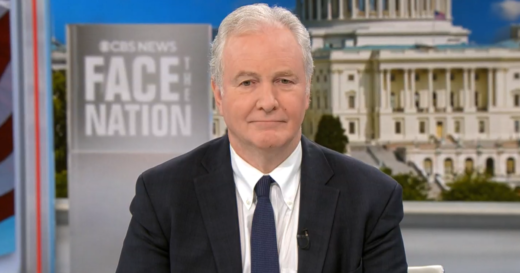
Van Hollen says there’s not “big disagreement on the first 100 days” between him and Schumer
new admin - Nov 29, 2026Sen. Chris Van Hollen of Maryland said on Sunday that he doesn't expect a "big disagreement on the first 100…

How to Watch Titans vs. Jaguars: TV Channel, Live Stream, Time
new admin - Nov 29, 2026[ad_1] The Tennessee Titans visit the Jacksonville Jaguars in Week 12 of the 2026 NFL season on Sunday, Nov. 29,…