




Finding Career Direction in the First Year

Katherine Rose, currently a sophomore at Appalachian State University, entered college with plans to become a speech pathologist, but after taking a few introductory courses, she began to question whether it was the right career path for her.
Charlotte Brach, a sophomore at Michigan State University, arrived on campus freshman year with less certainty about her future. She enjoyed reading and writing but wasn’t sure what careers would align with those interests.
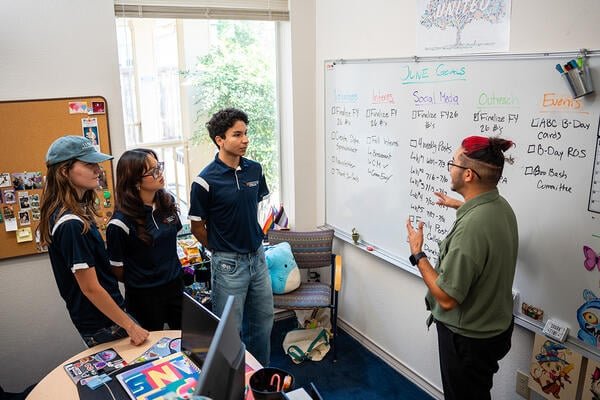
Both students were introduced to Career Discovery, a for-credit course developed by Podium Education that gives first-year students opportunities to explore different industries and potential career paths through hands-on projects with employers. Those experiences ranged from interviewing students about their consumer preferences for L’Oréal to completing marketing-related projects for other companies.
Throughout the course, which came early in their college journeys, Rose and Brach had opportunities to reflect on their academic interests and future career goals.
“After taking the opportunity to really explore these different paths, I realized that I needed a career that I was going to be able to interact with other people because it was something I really enjoyed,” Brach said. “I never realized prior to these projects just how much interaction can come through different careers.”
Exploring careers earlier: Rose’s and Brach’s experiences reflect a broader question facing colleges and universities: Can introducing structured career exploration earlier on students’ academic pathways strengthen not only their career readiness but also their motivation to stay enrolled and complete their degrees?
Podium Education is exploring that question through Career Discovery, which eight universities piloted in the spring: Appalachian State, Cleveland State, Florida Gulf Coast, Kent State, Metropolitan State University of Denver, Michigan State, Southern Methodist and the University of Texas at San Antonio.
The educational technology company announced today that the program has expanded to two additional institutions this fall, Boston University and Florida International University, bringing the total number of participating universities to 10.
Early findings from end-of-course student surveys suggest promising results. Students’ self-reported clarity about their strengths and interests more than doubled, while 80 percent reported greater career confidence. The share of students who said they intended to persist in college also increased by 15 percentage points.
Chris Parrish, co-founder and president of Podium Education, said the program was developed in response to growing concerns about the return on investment of a college degree and the need to make career exploration a priority earlier on for students.
“Many of the students we serve happen to be Pell [recipients], happen to be first gen, but most freshmen haven’t been part of a boardroom before at a place like L’Oréal,” Parrish said. “Bringing the world of work and what it feels and looks like to them is a really important part of context setting, and that allows students to just have a seat at the table and to feel out what they like.”
The initiative comes as colleges and universities increasingly seek to connect academic experiences with career opportunities. Recent research by the DeBruce Foundation found that individuals with higher levels of career literacy—the ability to understand, plan and navigate potential career avenues—explored a broader range of job opportunities and reported greater employment security.
Other institutions are also working to integrate career exploration earlier in students’ academic journeys. At the University of Delaware, an optional course for students who are undecided about their major or considering changing it helps participants explore academic disciplines and career possibilities through faculty interviews, student panels and career center resources. City University of New York Chancellor Félix Matos Rodríguez also recently discussed CUNY Beyond, an initiative aimed at making career readiness a more integral part of the undergraduate experience, on Voices of Student Success.
For Parrish, these efforts reflect the importance of helping students connect their academic interests to potential career paths before they reach the later stages of college.
“The hope here is that students moving through the Career Discovery experience see themselves in these different organizations in a way that helps them declare their major and academic pathway with confidence,” Parrish said.
On the ground: At UT San Antonio, Career Discovery is part of a broader effort to help students connect academics to future career opportunities. Heather Shipley, provost and senior executive vice president for academic affairs at the university, said students often struggle to recognize and articulate the skills they develop through their experiences, particularly those balancing college with paid work and other responsibilities.
“One of the things that we notice for students is oftentimes they’ll have these experiences, but they don’t know how to talk about them, they don’t know how to reflect on them,” Shipley said, noting that roughly 40 percent of the students her institution serves are first generation and the same share are Pell eligible. “They’re often working … as they’re trying to also get an education that’s going to give them a different opportunity later in life.”
Introducing career exploration earlier in students’ college journeys, she added, can help them recognize how their experiences translate into professional skills and prepare them for future opportunities, potentially strengthening their motivation to persist toward graduation.
“That’s really what this [Career Discovery] project is. It’s introducing them to those types of concepts a lot earlier,” Shipley said. “It gives students an understanding about what is happening in industry, what happens in corporations, so when they’re ready to do those internships … they have that skill set, those durable skills, and can apply it to other types of opportunities.”
Neva Specht, executive vice chancellor and provost at Appalachian State University, sees similar value in introducing career exploration before students reach their senior year. She said the program helps students look beyond the careers traditionally associated with their majors and consider a broader range of professional opportunities, particularly as artificial intelligence reshapes the labor market.
“It’s just opened up people’s eyes about what kinds of careers are out there,” Specht said. “This has been an opportunity for students to learn a lot more about careers and to start thinking about it earlier, so that when they graduate they are ready to go and they know they’re ready to go.”
“The most valuable part of this experience is gaining real insight into what certain careers do, as well as having the opportunity to meet professionals and ask questions,” she added. “That’s going to be really important as AI continues to move on.”
Finding direction: Rose, now a communication sciences and disorders major, said participating in career exploration early in college helped her recognize how much she enjoyed the communication and social aspects of the projects she completed. She’s also considering internships in human resources and marketing, broadening her understanding of potential career opportunities.
“It really helped me understand what skills I need to be a successful person,” Rose said. “I’m feeling more comfortable now within my major and college itself.”
For Brach, now an international relations and journalism major, Career Discovery helped her realize that her career options extend far beyond the limited number of professions she had previously considered. She now hopes to become an international correspondent, a goal she said emerged as she explored different industries and opportunities through the course.
“That’s how I landed on my hopeful career in the future,” Brach said. “It was just really investigating and going through all of the different potential opportunities that I’m not sure I would have had had I not seen that within Career Discovery.”
Get more content like this directly to your inbox. Subscribe here.
You may be interested

Anthropic files for IPO amid concern over AI threat
new admin - Oct 27, 2026Anthropic, the tech company behind Claude, filed IPO paperwork Monday, marking a major step for the AI giant as concerns…

Ryan Gosling’s Dead Man’s Bones Shares New Song ‘Lost in the Night’
new admin - Oct 27, 2026[ad_1] Ryan Gosling’s band Dead Man’s Bones is officially back with their first new song in 17 years, “Lost in…

We’ve had touchscreen laptops for years. Can Apple make them better?
new admin - Oct 27, 2026A laptop with a touchscreen should be no big deal — we’ve had them for ages. But Apple took a…