



Dr. Dre, Raekwon and Hip-Hop’s Growing Embrace of AI

Over the weekend, Palantir, the data-mining and defense-software company co-founded by Peter Thiel that currently occupies the cultural imagination as a Terminator-esque boogeyman, thanks to its contracts with ICE and the Pentagon, posted a since-deleted photo of Raekwon, one of the Wu-Tang Clan’s most revered members, across its social media accounts. “It was great to have @Raekwon at our office again,” the company wrote. “Congratulations to the Wu-Tang Clan on their farewell tour. Never forget your OGs.”
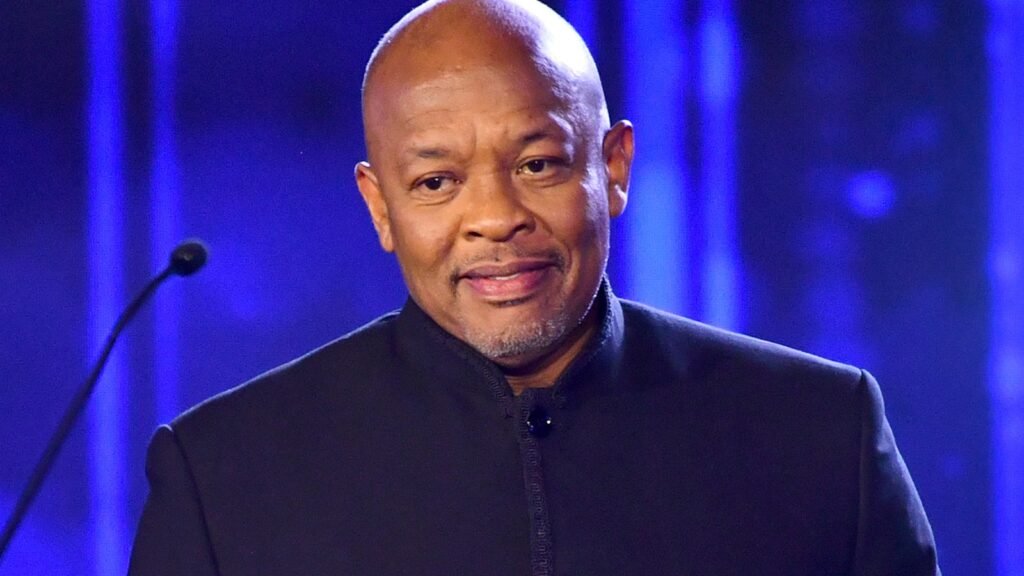
By Sunday, The New York Times had published an interview with Jimmy Iovine and Dr. Dre, conducted at the former’s Los Angeles mansion in which Dre expressed his appreciation for A.I. “I think the only people that see it as a threat are the people who have trouble creating,” he said.
In another clip currently going viral online, Rick Rubin, supplier of quotes, declares that vibe coding is “the punk rock of software”, a description so limp in its countercultural authority that it felt as though it had itself been generated by an LLM.
Lately, it isn’t just the likes of Tyga and Fenix Flexin who seem to be catching AI fever. Rap’s mogul class appears equally enamored with its supposed potential, repeatedly deploying “tool” as though the classification settles the argument. Dr. Dre compared the technology to the burgeoning slate of synthesizers and samplers at the dawn of hip-hop.
“I had a discussion with a few people a few days ago,” Dre said. “They were against A.I. and I’m like, ‘OK, you sound like the person that would have been against the drum machine when it came out.’ Or synthesizers, right? It’s a new tool for creativity.”
The analogy isn’t all that persuasive at the level of ownership. A sampler was a machine an artist could own and bend to their will, whereas a generative model is rented from a platform whose owners control the system and set its terms. More importantly, these models are trained on vast quantities of already recorded music from other artists, while offering services capable of producing complete songs from short prompts.
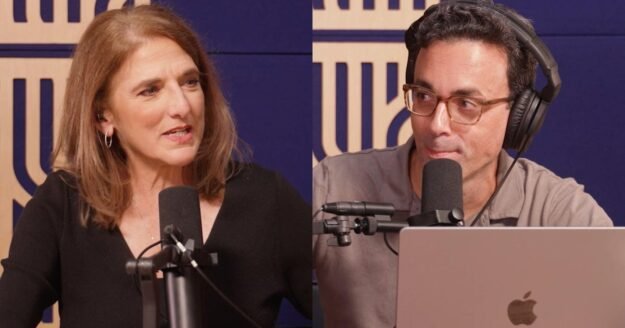
Nonetheless, A.I. is in fact a remarkable tool for becoming extraordinarily wealthy, extraordinarily quickly. In June, AI music startup Suno raised more than $400 million in a funding round that valued the company at $5.4 billion. In March, Netflix acquired Ben Affleck’s AI-powered filmmaking startup, InterPositive, for $587 million in cash. Timbaland has gone beyond rhetoric, co-founding Stage Zero, an AI entertainment company whose projects include TaTa, an AI artist. Rubin developed The Way of Code in collaboration with Anthropic, then discussed it in a podcast hosted by Andreessen Horowitz founders Marc Andreessen and Ben Horowitz.
This comes as the financial viability of the A.I. gold rush comes into broader question. Amid the haze of celebrity AI headlines was an interview with OpenAI chief executive Sam Altman, released over the weekend, in which he conceded that he had overestimated how quickly the technology would reorder the economy. “We’ve all been too ambitious on timelines,” he said. “Even with this incredible technology, society and the economy will adapt more slowly.”
All the while, broader questions about the levels of consumption truly needed for large-scale A.I. adoption — and, more importantly, who pays for it — have a growing number of analysts concerned about the effects of the A.I. industry on consumers. The Federal Energy Regulatory Commission has ordered grid operators to address whether the costs of connecting data centers and other enormous energy users are being shifted onto ordinary ratepayers. There’s also, of course, the surveillance state of it all. Palantir is right now in the process of building ImmigrationOS for ICE, a system designed to aid its “selection and apprehension operations,” while its AI software remains central to Pentagon programs. That makes Raekwon’s most recent appearance (his first came in 2010, after which he told fans to Google the company) more than an odd bit of corporate social content. A company whose products expand the reach of the state is borrowing the cachet of a culture born in communities subjected to aggressive policing and surveillance.
Then there are the growing worries of an increasingly vulnerable bubble at the core of the industry that rap moguls currently seem so eager to offer marketing for. According to estimates from the Bank for International Settlements, the world’s AI giants will spend more than $1 trillion on AI-related capital expenditures across the next two years, all while these capital commitments continue to outpace actual earnings. The International Monetary Fund estimates that even a moderate correction in AI stock valuations, coupled with tighter financial conditions, could reduce global growth by 0.4 percent relative to baseline.
Of course, people at the top can profit well before any of that matters which, from at least one vantage point, could seem very punk rock, indeed.
You may be interested
Marco Rubio defends Trump’s ban on media outlets from White House, arguing police or soldiers are not ‘kicking down the doors’
new admin - Sep 22, 2026[ad_1] Secretary of State Marco Rubio defended the Trump administration’s decision to ban CNN, MS NOW and Politico from the…

Oppo’s new phone is the first with three 200-megapixel cameras
new admin - Sep 22, 2026Oppo’s new Find X10 Pro Max flagship phone, launched today in China, is the first anywhere to use 200-megapixel sensors…

20 trendy baby names for boys and girls predicted to be most popular by 2030
new admin - Sep 22, 2026Baby names can be influenced by a variety of factors, from pop culture to timeless classics, having a resurgence Source…