

Creating Learning Outcomes of Greater Sustenance (opinion)


I always loved getting cotton candy when I went to the Firemen’s Carnival as a kid. But as huge as that pink ball appeared, it was all just fluff.
Lately, following what many of our colleagues have been talking about, I’ve been trying to decenter content and to use it as a vehicle to test skills. This starts with getting rid of that ball of fluff at the bottom of your syllabus’s first page and taking the time to write good learning objectives.
Rather than that ex post facto list of what you want students to know (i.e. content, facts), write an objective that states what you want them to be able to do. For example, on the original version of the syllabus for my food history course, one course objective was “Students will know and be able to think critically about food in the Renaissance in Italy.” First of all, that knowledge (facts about food in the Renaissance) will be mostly if not wholly useless to most students in the future, other than for cocktail party banter. Second, the phrase “critical thinking” means absolutely nothing; it’s undefinable and un-operationalize-able to test. I would recommend you delete this verbal equivalent of Hamburger Helper from your pedagogical vocabulary.
Instead, check out this amazing graphic of a revised Bloom’s taxonomy of learning objectives. Notice how each statement contains a verb; students need to be able to do something, not just know some fact. I decided in revising my syllabus (and, ultimately, my course) that a better first learning objective might be “Students will be able to assess the validity and generalizability of primary sources.” This makes the objective testable: One way you could test this is to give them extracts from a Renaissance cookbook—are these recipes generalizable, i.e., would everyday Italians at that time have eaten this stuff? Rather than making a list of the content you want to teach, make a list of the things you want the students to be able to do. Below are the current learning objectives for that Italian food history course.
By the end of the course, students will be able to:
- Identify some changes in how Italians have eaten over the last three millennia;
- Summarize connections between Umbria’s culinary past and larger themes in Italian and world history, with particular attention to the implications of race, gender and sexuality, religious faith, and class;
- Distinguish between primary and secondary sources;
- Analyze different kinds of primary sources—texts, objects and images—for their meaning;
- Integrate primary and secondary sources on the environmental, sociocultural and economic factors in Italian food history into an argument;
- Generate a “usable past”: build a community-engaged archive and communicate your research about various aspects of contemporary food systems using 21st-century tools while practicing systematic, ethical and public-facing scholarship.
Note that at the end of the course the student doesn’t know/understand/grasp a bunch of content. Rather than these vague terms, the student can do certain things that might actually be useful in other courses, or with other material: identify, summarize, distinguish, analyze, etc. With good learning objectives, it’s easy to make good assessments, because the objectives are measurable. Better learning objectives are not an end unto themselves, but rather the first step in what’s called “backward design”—something most of us never heard about when we were working on our doctoral degrees.
Because most graduate programs emphasize subject material and rarely if ever talk about teaching, most of our mentors and professors were generally nice people and mediocre pedagogues. The way most of them created a new class was to generate a list of content they wanted to teach. For anthropology of food, they would have thought, “Well, I’ve got to teach Lévi-Strauss and probably Mary Douglas. And I should talk about methodology…”
They came up with the content, then made tests to test it and then, at the very end of the process, generated subpar learning objectives like “Students will know and be able to think critically about the methodology of food anthropology and related theories.” Again, how would you test that? What exactly is “thinking critically”? The tests of that knowledge are content tests: multiple-choice questions.
A much better way to design courses is to start with the end/goal of the class by generating the learning objectives. You can get really technical about this with books like Learning Assessment Techniques (Jossey-Bass, 2016) or Gronlund’s Writing Instructional Objectives (Pearson, 2009), but for now just concentrate on the things you want students to be able to do. If methodology is important, then maybe something like students will be able to “Generate an appropriate anthropological methodology for different research questions.” Once you have a good learning objective, then you come up with assessments (ways to test) whether students are learning that.
Assessments come in two types: formative and summative. Formative assessments are often short, in-class things you do to monitor student learning to provide ongoing feedback, both for the students and for you. They’re often low-stakes or no-stakes (i.e., you’re not giving or deducting points). An example is an anonymous poll using the software Poll Everywhere. Both you and the students can see what they know (or don’t).
Summative assessments are things like quizzes, tests, papers, etc. You can use formative assessments all along, in every class, but summative assessments are less frequent. Once you have a good learning objective, it’s easy to generate a good summative assessment. For the learning objective above, I could imagine a test in which the instructor gives students three research questions and has them write up the methodology for three different anthropological research projects (participant observation in an urban garden, interviews in a market, etc.).
Look again at the list of learning objectives above: It’s pretty easy to think of a number of ways of assessing each of them, whether that’s quickly in class or with some sort of quiz or written assignment. For example, to assess whether students have met the learning objective “Identify some changes in how Italians have eaten over the last three millennia,” an instructor might have any of the following on a test:
- A multiple-choice question that asks students to select how polenta has changed over time, with the options being a) ingredients, b) preparation, c) status of people who have eaten it, d) cultural meaning or e) all of the above.
- A short essay question asking the student to describe the ways that polenta has changed over time;
- A longer essay asking the student to identify three specific foods that have changed over time and describe the changes.
A student selecting the correct multiple-choice answer (e) or who writes a good (short) essay has identified a number of changes in Italian foodways over time—that is, the student has demonstrated their mastery of that learning objective.
For a more straightforward learning objective like “Distinguish between primary and secondary sources,” an instructor might do any of the following:
- A multiple-choice question that asks students to select all of the primary sources in a list of historical sources;
- A definition question asking the student to define primary and secondary sources;
- A longer essay asking the student to think about writing a paper about pasta sauce and imagining all of the primary sources that they might use for that research.
Here as above, when one has good learning objectives, making the assessments is pretty easy: You simply have to take the learning objective and figure out a good way to test whether the student got it. Having learning objectives that are not simply “The student will memorize a whole bunch of things” assures that your tests will assess what the students can do, rather than simply the knowledge of some facts and figures. In other words, you focus on skills rather than content.
There’s one more step in backward design after 1) good learning objectives and 2) good assessments. This is where you have content: Now you think of what readings would be good not just because they have interesting facts but because they illustrate different methodologies or distinctions between primary sources versus secondary sources, etc. Instead of focusing on the stuff, you’re focusing on the skill (here generating good methodologies for research). If you ever want to get way into backward design, see L. Dee Fink’s book Creating Significant Learning Experiences: An Integrated Approach to Designing College Courses (Jossey-Bass, 2013). You’ll realize the more you think about courses that this should be called “the right way to design a course” rather than “backward design.”
Either way, get rid of the cotton candy and offer your students a more hardy, nourishing educational repast!
You may be interested
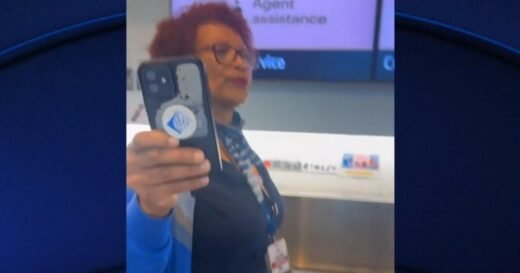
United Airlines employee appears to threaten to call ICE on passenger: “You don’t act like a citizen”
new admin - Jul 21, 2026A United Airlines employee appears to have been caught on video threatening to call U.S. Immigration and Customs Enforcement on…

World Cup champs greeted as heroes in Spain as 2026 tournament comes to an end
new admin - Jul 21, 2026World Cup champs greeted as heroes in Spain as 2026 tournament comes to an end - CBS News Watch CBS…

New round of strikes targeting Iran underway, U.S. officials say
new admin - Jul 21, 2026A 10th straight night of U.S. strikes on Iran is underway as President Trump vows Tehran will pay for the…