




Calif. 2-Year College Bachelor’s Bills Pass Despite Objection

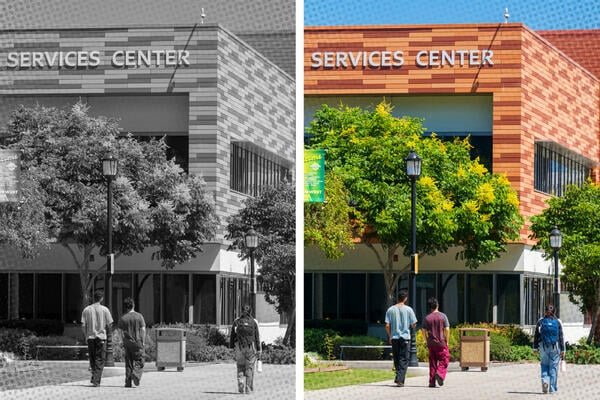
Higher education leaders in California are split on whether community colleges should be allowed to offer bachelor’s degrees.
Inside Higher Ed | Leonard Ortiz/MediaNews Group/Orange County Register/Getty Images
The California Assembly passed two heavily amended bills that would affect the ability of community colleges to offer four-year degrees, despite a last-minute swap of positions by the California Community Colleges system, which originally supported the legislation, and California State University, which initially opposed it.
The bills began as an effort to make it easier for two-year colleges to offer bachelor’s degrees when a similar program isn’t offered at a four-year institution nearby, or when that program does not meet workforce demand. Assemblymember David Alvarez and state Senator Christopher Cabaldon, the bills’ sponsors, have said they wanted to improve access to bachelor’s degrees for people who weren’t able to travel to attend a four-year institution in another region, and to train people for in-demand jobs when there’s a workforce need.
The amended versions of AB 2694 and SB 960, which both passed, though many assemblymembers abstained, include provisions that limit the number of four-year programs a college can propose per year, restrict the way potential programs will qualify and give four-year colleges greater opportunity to object to new programs.
Higher education leaders in states across the country have debated policies that allow community colleges to offer bachelor’s degrees. Typically, community college leaders support them, and four-year college leaders object out of fear that the new offerings might hurt their enrollment. Higher education leaders in California had followed that same pattern—until legislators amended the bills in the final days of the legislative session.
In a letter to Alvarez, CCC Chancellor Sonya Christian said the amendments to AB 2694 changed the legislation into something that would increase rather than reduce barriers for community colleges that want to offer bachelor’s degrees. The letter, provided to Inside Higher Ed, is dated two days before the end of the session.
“This was not an easy shift for us. We strongly supported where the bill began, with the goal of expanding access to affordable, high-quality bachelor’s degrees for Californians who do not have a realistic pathway today,” Christian wrote. “As the bill has changed, however, the framework now being proposed would make that goal harder, rather than easier, to achieve.”
Christian wrote that while she supported the effort to prevent duplicative bachelor’s degrees from local California State University or University of California campuses, the amended version of AB 2694 “creates new eligibility tiers, program caps, online program restrictions, external workforce and capacity reviews, and a five-year prohibition on submitting similar programs for re-consideration.”
Because of the last-minute amendments, a spokesperson for the California State University system said that leaders removed their formal objection to the bills but did not officially support them.
In a statement last week after the legislation passed, CSU leaders said the bills struck an “appropriate balance of expanding access where it is needed, responding to workforce demand and preserving the critical coordination that has long been a strength to our state.”
They said the legislation would create more opportunities for place-bound and underserved students, maintain the importance of transfer pathways, and encourage collaboration between the state’s three higher ed systems.
The CCC system has offered bachelor’s degrees within strict parameters for more than 10 years. Across the country, 24 states allow some sort of community college bachelor’s degrees, but they have not proven popular; enrollment data from last spring shows that only about 2 percent of all community college students were enrolled in a bachelor’s degree program, according to the Community College Research Center, based at Teachers College at Columbia University.
The fate of the two California bills is now in the hands of Gov. Gavin Newsom, who vetoed similar bills in recent years. Newsom has until the end of September to sign or veto the legislation. If signed into law, the policy would take effect in 2028.
You may be interested

Central Arkansas Settles Scholarship Inquiry With ED
new admin - Sep 09, 2026[ad_1] A complaint alleged that 10 privately funded scholarships discriminated on the basis of race or sex. nirat/iStock/Getty Images Plus…

Rethinking Support for First-Gen Sophomores
new admin - Sep 09, 2026[ad_1] First-generation students can face a range of challenges in college, from financial barriers and feelings of isolation to navigating…

The Blood Donation Blind Spot
new admin - Sep 09, 2026Women may be disproportionately affected by blood shortages and are more likely than men to need a blood transfusion than…