



Building a Cabinet

RST: Gordon, yesterday we lost a national treasure. Dolly Parton’s America is one of my favorite podcasts ever. Many of us admired and even loved Dolly, but you were friends with her. I’m so sorry for your loss.
EGG: Losing Dolly is a loss for anyone who believes in the power of kindness and always being one’s true self. I think she was everyone’s friend because she could connect with millions who never met or saw her. An American treasure indeed.
RST: May her memory be for a blessing. So I wrote my column—sans you—last week about going to a cabinet retreat with a president we both like and respect. Since then, I’ve been thinking about the staffing of top jobs at universities, and I’d like us to discuss it.
EGG: I have suspected for some time that you want to cross over to the dark side of administration. Stay where you are and keep those of us on the administrative side of the university in tow! We need calm and sympathetic voices telling the rest of the world about the challenges we face.
RST: Wrongo, Ringo. I have nothing but admiration for people willing to give up the luxuries of the professoriate for the thankless task of administration. Calm and sympathetic? You talking about me? Ha!
EGG: Rachel, you are a sympathetic traveler. And let’s be honest: You are intrigued by the administrative apparatus and by the people who man the masts. Unfortunately, there is a whole cadre in the professoriate who think administrators were put on earth to make their lives miserable.
RST: Well, curiosity is my vice. But here’s the thing: Every time I talk to a president, I ask how many people on the executive team remained after a year or two. Most say, “None.” I wrote about this in an early Sandbox issue, basically saying that when a new leader comes in, cabinet members might want to dust off their CVs. That got me the nastiest email ever—a forwarded message from a president’s cabinet member. I’ve thought about that a lot. Was I wrong to say that new leaders would want to build their own teams?
EGG: Quite the contrary. In my experience, any new president—particularly one coming from the outside—needs to think very carefully, and fairly quickly, about building their own team. I would almost always replace the provost, because any good provost sitting there really wanted my job and was disappointed not to get it.
RST: Maybe you just had more ambitious provosts. And, well, in the Stone Ages, moving into the big office might have been more appealing. But these days, I’m not so sure. I can think of many provosts who are happy where they are and have no designs on a presidency.
EGG: Cynical as it sounds, that is a reality in many instances. Other cabinet members have their own assumptions, loyalties and ways of working. They may be performing brilliantly—but not necessarily for you or the agenda you were hired to advance. If you are going to make changes and put your leadership stamp on the institution, you first have to consider whether the people at the helm are the people you need.
RST: Can you talk about how you decided to fill important roles?
EGG: I have a personal style of leadership. It is not command and control. Rather, I maintain high expectations for the performance of others and hold them accountable. I want them to lead, and I want to be able to do what I do best.
RST: Which is what? Not being snarky here—just curious.
EGG: I learned early that my magic was in the wider sector: explaining the value of the university to many audiences, particularly the cynics. And I loved working with the Legislature and donors. That is why I needed strong people around me whom I trusted: a team of exceptionally competent people who held themselves to high standards and refused to engage in rivalries.
RST: Plus, as you’ve said, you’re an ATM. Or you can shake money out of trees.
EGG: With a cabinet, I needed to make certain that we believed in a common cause and in each other, and that they were loyal to the president and the institution. I tried to create an environment in which they could speak candidly with one another without taking offense and could speak to the president without fear. In the end, though, they needed to be able to speak with one voice. Dissension or backbiting could not be tolerated. So, with that as an overall expectation, I wanted people who were truly excellent at what they did, who knew how to play team ball, and who, from my point of view, filled my gaps. The last thing I needed was a group of sycophants or mini mes.
RST: Mini mes! There you go again, stealing my eloquent language. We have gone from being an odd couple to singing in chorus. Maybe that’s what civil discourse is all about: learning to understand those who are different and seeing how much alignment there is while still maintaining one’s own perspective. But moving along, tell me about mistakes you’ve made in hiring.
EGG: Oh my, must I?
RST: Yes, you must. Remember, this whole chapter in your long, long, long career is about reclaiming your First Amendment rights. Speak freely, Gordon!
EGG: The biggest mistakes I made were hiring second choices. I’ll walk you through it, boss. In the traditional academic process, you’re given three names. You interview those three, and one is clearly superior. You work diligently to recruit that person, but they decide not to come. Then your instinct is to move to the second choice. Mistake. They were your second choice because they were not as good a fit for what you wanted or expected.
RST: So then you’re stuck?
EGG: No. I would go find another first choice. I reverted to becoming a one-man search committee: identifying, through information and word of mouth, the most talented people in the country and then going after them without a committee or the normal process. I had much greater success both in recruiting the individual and in hiring a successful partner. Getting caught up in the traditional search process is yet another mistake.
RST: Hold on. Aren’t these searches supposed to be public? That sounds like command and control, not exactly collaborative. And at a public institution, how do you balance speed and discretion with fairness, transparency and confidence in the process?
EGG: You are correct: They are supposed to be public, often turning candidates into piñatas. Public searches can signal a lack of confidence in the institution’s ability to recruit exceptional people discreetly. That is one of the things I admired at both Brown and Vanderbilt—I would have a small advisory committee to help identify the very best people. Then I would get on an airplane, go sit on their doorstep and make the case. Why go through a kabuki dance when you know who you want?
RST: Helps when you have your own plane. I know that’s what you miss most about your presidencies. Now you have to fly commercial like the other 99 percent. What about “moving along” senior-level staff? (I’ve learned that no one ever gets fired in higher education).
EGG: Rachel, this is one of the hardest things in the life of a president. But it is also one of the most necessary duties. You cannot tolerate mediocrity. Nor can you tolerate someone who cannot relate productively to the other members of the cabinet. If you hire someone who believes they are the smartest person in the room, then they are in the wrong room.
RST: You talking about me?
EGG: Truthfully, I never had difficulty asking people to step down. The question was how to do it. When I was younger, I thought having blood on the floor was a sign of leadership. That was truly stupid. You want people to leave with grace and dignity, without your fingerprints visibly all over the decision. But there is a bottom line: You have to get the right people in the right seats on the bus, and that sometimes requires difficult personnel decisions.
RST: What was hardest for you about managing people?
EGG: Naturally, the stock answer would be managing egos or keeping people who dislike each other from engaging in pugilistic behavior. And there is always some of that.
RST: You talking about me?
EGG: The real challenge was getting people to work with maximum efficiency and effectiveness because they believed in the role of the university and in their own importance to that role. Senior leadership at a major American university is not a clock-in, clock-out job. Yes, everyone needs time with family and time for themselves. But senior roles bring unpredictable demands and require an unusual level of commitment. It is not a failure to say that you simply cannot put forth that much time and energy. But it is a failure if you accept the role and do not meet its expectations. As president, you also have to model that behavior and inspire others to do the same.
RST: Now I know you are talking about me. I’ve had 9-to-5 jobs—or 9-to-7 jobs—but when you find your calling and are doing work you are passionate about, as we both are these days, then work-life balance is not really the issue. Everything feels integrated. That is, I think, the case for many of us who are fortunate enough to get to places—and maybe it’s because we’re both old—where we love the work and want to keep doing it.
EGG: I call it harmony. If you are really committed to your work, it is a symphony. And I love the symphony.
RST: And bonus points if you get to work with great people who inspire, challenge and make you laugh really hard. You got to sit next to Dolly for five years; I am so lucky to have you as my co-columnist and friend. Love you, minion. Please stay healthy forever.
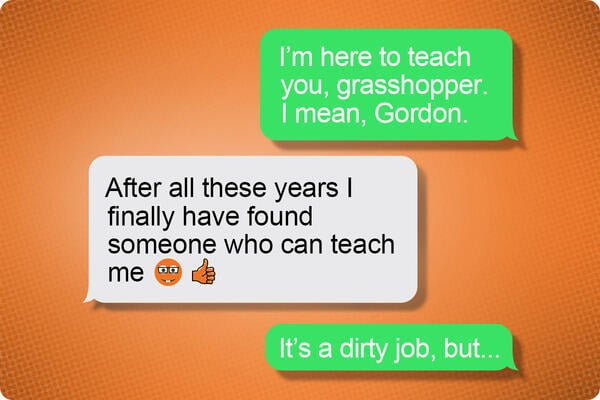
EGG: Love you, boss. 😘🥰🤓👍🏻
You may be interested

Office Hours Hold Value, but We Need to Adapt (opinion)
new admin - Aug 26, 2026[ad_1] How many times have you sat in your mandatory office hours waiting impatiently for students who never come? During…

Kesha Pays Tribute to Dolly Parton With Live Cover
new admin - Aug 26, 2026[ad_1] Kesha honored Dolly Parton during her concert at the Pavilion at Star Lake in Pittsburgh last night, showcasing a…

President of Dolly Parton’s foundation says nonprofit will “carry her dream forward”
new admin - Aug 26, 2026Dolly Parton, who died Tuesday at age 80, leaves behind much more than a musical legacy. A generous philanthropist, she…