



Australian woman gives birth to rare identical quadruplet daughters

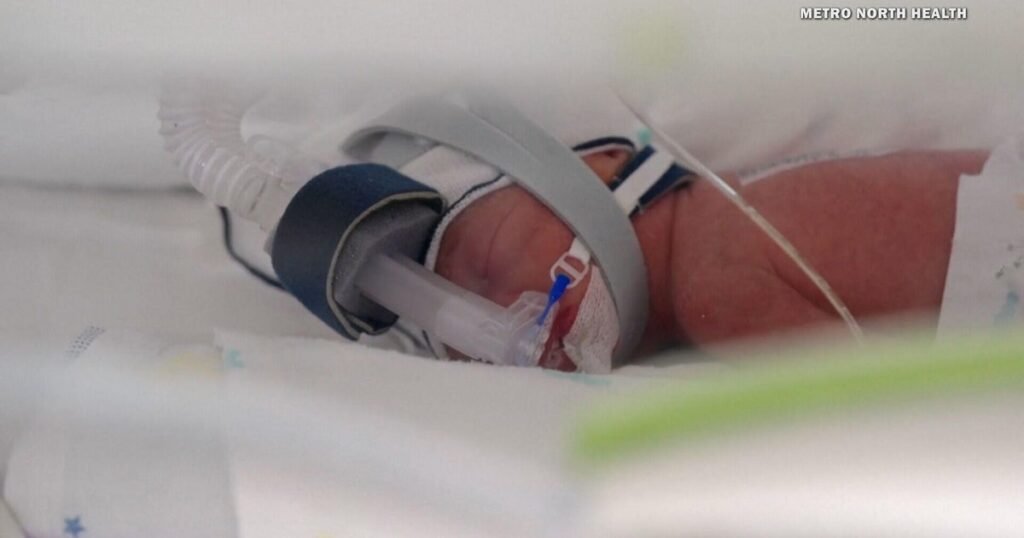
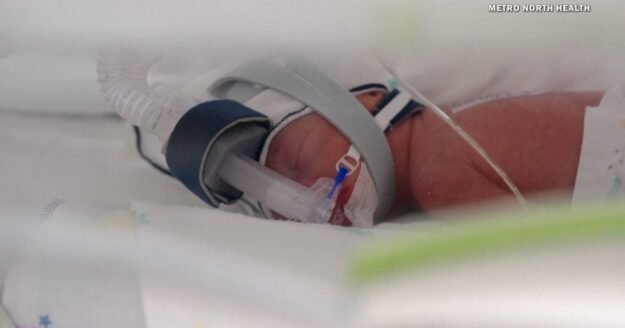
Jenitar Na’amoana and her husband, Jortham, thought their family was complete after welcoming four children. Then came an unexpected surprise: four naturally conceived, identical daughters.
Na’amoana, 34, gave birth to Emily, Harriet, Catherine and Alexa last week.
“The fact that we’ve got four beautiful, healthy babies born at 28 weeks and four days is incredible,” said Dr. Alexa Bendall of the Royal Brisbane and Women’s Hospital.
All four daughters share 100% of their DNA after a single fertilized egg split into four embryos, making the pregnancy a one-in-15-million occurrence.
In 2020, the Marr family in Dallas welcomed their own set of naturally conceived identical quadruplets: Harrison, Henry, Hardy and Hudson.
Jenny Marr believes that, whatever the odds, they’ve won four jackpots in the same genetic lottery.
“You’re just overwhelmed and just exhausted and sleep-deprived, and you’ve got four babies that are hopefully all on a sleep schedule that you can manage, but it is four times the joy,” Marr told CBS News
Marr’s advice to Jenitar and Jortham Na’amoana: stick to your sleep schedule.
“Because that’s how you’re going to survive,” Marr said. “Make sure mom takes care of herself. I hope they’re just healthy little girls and meet all their milestones, and it’s so, so exciting.”
You may be interested

House passes short-term bill to punt government funding fight past midterm elections
new admin - Jul 22, 2026Washington — The House on Tuesday approved a short-term extension to fund the government until Dec. 4, hoping to punt…

Belgium Parts Ways With Rudi Garcia Following World Cup Quarterfinal Appearance
new admin - Jul 22, 2026[ad_1] NEWYou can now listen to Fox News articles! The Royal Belgian Football Association (RBFA) has confirmed that head coach…

Severe labor shortage could emerge in the U.S. over the next 10-15 years, population scientist says
new admin - Jul 22, 2026The U.S. is set to face a severe labor shortage in the next 10 to 15 years, a leading population…