

Anti-Unionization Views in Higher Ed Pity the Plumage but Forget the Dying Bird


In an Aug. 27 opinion piece titled “Postdocs Aren’t Burger Flippers: Why Unionization Is a Bad Idea,” Yale faculty member and professor of radiology and biomedical imaging Dr. Evan D. Morris took the position that unionism by postdoctoral scholars would threaten the highly individualized mentor-mentee relationships which he states are essential to furthering science. Dr. Morris’s anti-unionization views vis-à-vis postdoctoral scholars appeal to the emotions of academia’s privileged by romanticizing the unequal power relations facing early-career professionals. Such views also forget that systemic issues, such as hostile working environments that are closed to many, represent real threats to the vitality and productivity of communities committed to advancing knowledge.
I am truly, sincerely happy that Dr. Morris experienced healthy and productive mentorship relationships during his career and was able to use these relationships in ways which brought him (and those with whom he worked) career advancement and personal fulfillment. I am so, so lucky to also have wonderful mentors who changed my life. I hope to be a mentor for others in ways which honor what I’ve received from having met and worked with these mentors. But we cannot assume these experiences are the norm, and they are not the starting point for a productive conversation about the merits of postdoctoral unionization.
Dr. Morris is right that mentorship—highly personalized, grounded in mutual respect and appreciation, and conducted with care and an attention to ethical conduct—is something that makes postdoctoral (or graduate degree–seeking) experiences memorable and formative to a person’s identity as a scholar, scientist or humanist.
Yet good, exceptional mentorship is not something restricted by unionization. If we are to use anecdotes about mentoring as data points, I might suggest mentorship can just as easily be strengthened by the presence of unions on campus (for faculty, postdocs, staff and graduate employees!), because unions offer policy frameworks for mentors and mentees to find professional and personal boundaries that are just as healthy (if not more so) than mentorship occurring outside of unionization. I would argue that good mentors must always keep in mind how precarious the university workplace is for early-career scholars. Communicating to a mentee how to navigate workplace precarity is only strengthened by the presence of unions, because unions are a tool to reduce that precarity.
Unionization and active union action represent key bulwarks against the exploitative labor practices which too often characterize the university or research center. Anyone who has experienced graduate and postgraduate labor in university systems possesses some awareness or experience of these conditions: few or little health and retirement benefits, quid pro quo behavior or hostile work environments, murky work expectations, health and safety violations, and stagnating stipends or pay, just to name a few. Good mentorship is not disrupted by a union organization that supports and advocates for workers’ rights to not have to weather these conditions.
Dr. Morris makes a final plea to the reader to consider science as a meritocracy, and suggests mentorship is one major support of that system. I do not wish to take up a debate about whether we should understand science as a meritocracy here. I do wish to remind Dr. Morris that scientific communities—like the rest of the university as an institution—have struggled (and struggle!) to even offer seats at the table to people who, if brought into the fold and mentored, might easily become the next Bohr, Heisenberg, Watson or Luria. Unionization doesn’t cause that incalculable loss, nor does it prevent early-career scientists from receiving supportive, inspirational and ethical mentorship.
You may be interested

Could an American win men’s singles at this year’s U.S. Open?
new admin - Sep 01, 2026Could an American win men's singles at this year's U.S. Open? - CBS News Watch CBS News The Athletic's Lukas…
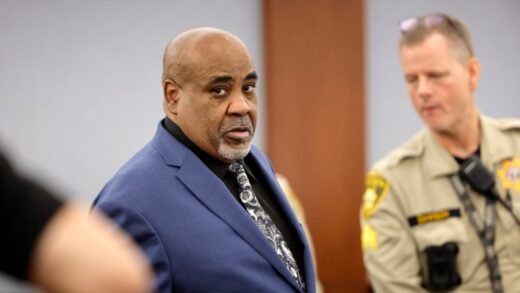
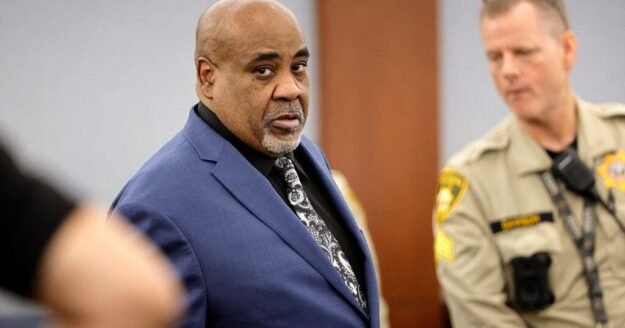
Duane ‘Keffe D’ Davis Found Guilty
new admin - Sep 01, 2026[ad_1] The former Compton gang leader charged with orchestrating the 1996 drive-by shooting death of hip-hop legend Tupac Shakur was…
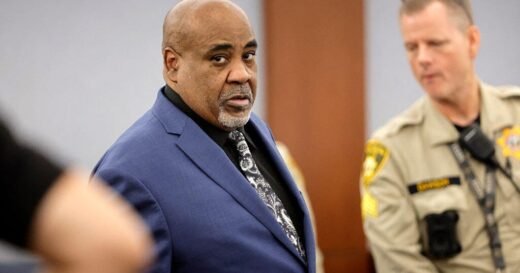
Jury finds Duane Davis guilty in 1996 murder of Tupac Shakur
new admin - Sep 01, 2026A jury has found Duane "Keffe D" Davis guilty in the killing of rapper Tupac Shakur on a Las Vegas night nearly 30 years…