


Alabama’s New “Gulf of America” Mandate Impacts Colleges

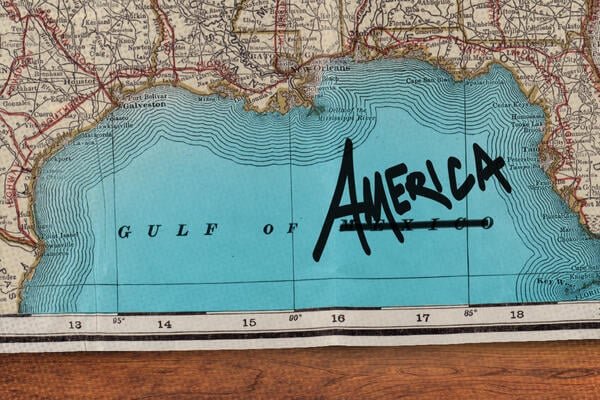
Alabama’s Gulf of America Act took effect last week, making it state policy to use President Trump’s preferred term for the Gulf of Mexico.
House Bill 2 requires “all state and local entities and their employees” to “refer to the body of water that borders the coast of Alabama as the ‘Gulf of America,’” and to reflect this “terminology in all newly created maps, documents, educational materials, websites, official communications, and other resources.”
The page-and-a-half-long law has one exception for the public schools, colleges and universities it impacts: They can use Gulf of Mexico “for historical purposes” during instruction. Otherwise, the law doesn’t exempt Alabama faculty or other university employees, including reporters, from its restriction on what they can call this body of water.
The University of Alabama at Birmingham has ordered journalists at WBHM, the university-sponsored NPR affiliate, to comply, according to emails obtained by Inside Higher Ed. Back in June, Steve Murray, UAB’s executive director of business operations, told then-WBHM Executive Director Will Dahlberg, “We will be referring to the Gulf as ‘Gulf of America’ in content written or spoken by WBHM staff beginning on Oct. 1.” That’s when the law took effect.
The emails then recount a string of questions and confusion over how to follow the law. Murray, who oversees WBHM, asked the station to track compliance and count references to the “Gulf of America” versus the Gulf of Mexico “during our newscasts and stories published/shared on our website, social media, podcasts, etc.” He cited a legal analysis that came from “Cam,” which Dahlberg told Inside Higher Ed meant Cam Earnhardt, the top university lawyer.
Earnhardt further assessed the risk of WBHM using content from third parties that might mention the Gulf of Mexico, including NPR and the Associated Press, which both provide content to WBHM and regularly use “Gulf of Mexico.”
“Given that risk, it would make sense for WBHM to evaluate how often there are references in its content to this body of water and also how difficult and costly it might be to revise third-party content before displaying it or broadcasting it on a WBHM broadcast or website,” Earnhardt wrote. “UAB should then use that information to evaluate the risk of displaying and broadcasting this content without modification as an institution.”
The law also requires public employees to “make reasonable efforts to update all pre-existing resources owned by state and local entities” under their jurisdiction—including maps, educational materials and communications—to reflect the name change “where practicable,” making an exception if doing so “would impose an operational or financial burden.”
In August, WBHM Managing Editor Andrew Yeager expressed confusion over the tracking request, writing, “Are you suggesting we catalogue every reference on air?” Dahlberg asked for more guidance, to which Murray initially simply replied, “Seriously?” Yeager eventually wrote that it’s “not possible to catalogue ever[y] instance of Gulf of Mexico across all our channels.” Murray also told Dahlberg that staff needed to sign a document saying they were aware of the law and their obligations as state workers.
UAB spokespeople told Inside Higher Ed Tuesday that “there was a disconnect regarding a request for data that was previously resolved. There are no plans for attestation or tracking.” But they didn’t provide any written guidance that the university has given to employees, including faculty and WBHM journalists, regarding how they must follow the law.
Universities across the state didn’t respond with much information about how they’re implementing the law.
The Silent South
The Alabama Constitution gives the University of Auburn system and University of Alabama system, which includes UAB, greater autonomy than other public higher ed institutions, meaning they might be able legally to refuse to follow the law if they desired to. The Gulf of America Act doesn’t say they’re exempt. The systems didn’t respond to requests for comment this week.
Jason Senkbeil, a tenured professor in the University of Alabama at Tuscaloosa’s Department of Geography and the Environment, said he was told faculty have to follow the law.
“I teach a 100-level class and I’ve been calling it ‘the Gulf’ and not saying which one for years because I didn’t know where this was going,” Senkbeil said. “So I told my class I have to say it now.”
“It’s state law,” he said. “I will comply with state law.”
Beth Davis-Sramek, president of the Auburn chapter of the American Association of University Professors, said, “I have not heard a thing. There has been no official word [or] formal communication from Auburn leadership about this law.” She said Inside Higher Ed’s email regarding this story was the first she’d heard of it.
A spokesperson for the University of South Alabama said in an email simply, “As a state institution, we are going to comply with Alabama state law.” Other universities didn’t respond at all.
Jim Purcell, executive director of the Alabama Commission on Higher Education, told Inside Higher Ed in an email that because “the requirements are established directly in state law,” his agency “did not issue separate guidance to institutions regarding implementation of this Act.”
David Standridge, the Republican state representative who introduced the legislation, picked up his phone Friday, but after this reporter introduced himself, he said he was in a meeting and asked to talk later. He didn’t call back or respond to follow-up requests for comment this week.
A spokesperson for Republican Alabama Gov. Kay Ivey, who signed the legislation into law, did provide comment.
“The state of Alabama refers to the Gulf as the Gulf of America, period,” the spokesperson wrote in an email. “It is not hard to see that these so-called ‘free-speech’ complaints are just a cover up for blatant bias against the Trump Administration.” (On the first day of his second term, Trump signed an executive order attempting to rename the Gulf.)
Academic Freedom Concerns
Davis-Sramek said she has worries about the law that don’t specifically relate to the body of water.
“If they can say, by legislative mandate, ‘We’re going to force employees to reference Gulf of America,’ then what else might they force us to say—or restrict us from saying—in terms of our teaching and research?” she said. “This, in particular, seems silly on the surface. But I think it begs a bigger question: If they can do this, what else can and might they do?”
The Foundation for Individual Rights and Expression has expressed concern that the law violates the First Amendment. Michael Hurley, a government affairs counsel at FIRE, noted that the U.S. Constitution protects faculty academic freedom at public universities.
“It’s not the same as the state cartographer who’s making a map,” Hurley told Inside Higher Ed.
“Professors have the right to generally speak freely about … educationally relevant subjects in the classroom, in their research,” he said. “And the state certainly cannot impose an orthodoxy on those professors.”
The law’s constraints on university-employed journalists raise a different, though related, set of concerns. Aaron Terr, FIRE’s public advocacy director, told Inside Higher Ed there isn’t much precedent for how such a law applies to public radio stations.
“The government generally has broad authority to regulate what its employees say as part of their jobs,” Terr wrote in an email. “For example, a state agency naturally can control what an employee puts in an agency press release. But that rule isn’t absolute.”
He cited a 2020 ruling in a case regarding the first Trump administration’s alleged interference in Voice of America’s reporting, that said the “core editorial or journalistic functions of government-employed journalists” are, like faculty teaching and research, exempt from ordinary rules regarding public employee speech.
“That reasoning makes sense,” Terr said. “The role of journalists at public radio stations is to exercise independent editorial judgment, not to serve as a government mouthpiece.”
Dahlberg has resigned from his executive director position at WBHM, where he started as an unpaid intern more than a decade ago. The law wasn’t the only reason why—he said he and other employees had issues with Murray and the university’s treatment of the station more broadly—but the law was “a bridge too far for me in terms of the journalistic ethics that I uphold.”
“I also conveyed to our team I did not see a path forward as a leader that I could ethically enforce this,” Dahlberg said. He said that while University of Alabama system lawyers didn’t put it in writing, he was essentially told noncompliance could result in discipline, up to dismissal.
“I increasingly, like other public media colleagues, [am] concerned about stations that are licensed to universities and the escalating problems that is presenting,” he said. “Particularly in red states and areas where there are not protections for journalists.”
You may be interested
Travel Hacks to Save on Flights and Gas as Prices Soar
new admin - Oct 07, 2026[ad_1] IE 11 is not supported. For an optimal experience visit our site on another browser.Now PlayingHoliday Travel Planning: Smart…
Federal Judge Backs Virginia in Tuition Equity Case
new admin - Oct 07, 2026[ad_1] A federal judge ruled that a Virginia law that allows undocumented students to qualify for in-state tuition at the…
Samsung Wallet now unlocks some GM cars
new admin - Oct 07, 2026Users of some Samsung devices in the US and Canada can now lock, unlock, and start select GM vehicles using…