



Federal Judge Backs Virginia in Tuition Equity Case

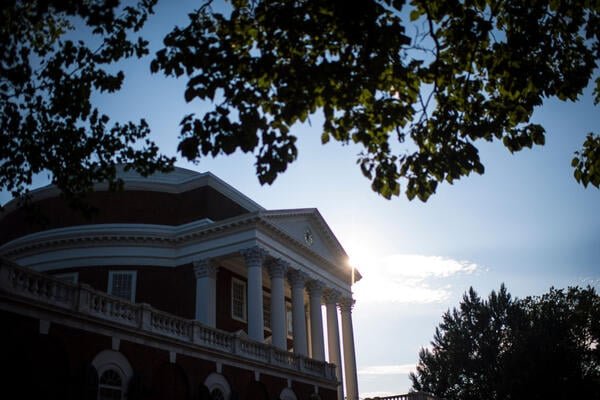
A federal judge ruled that a Virginia law that allows undocumented students to qualify for in-state tuition at the state’s public colleges and universities based on where they went to high school can stand.
Jabin Botsford/The Washington Post via Getty Images
Virginia officials prevailed in their effort to protect a state law that allows undocumented students to qualify for in-state tuition rates at Virginia’s public colleges.
The Justice Department challenged the law late last year, but a federal judge threw out the case this week. In a ruling Monday, Senior U.S. District Judge Robert Payne concluded that the state law doesn’t violate federal statute in part because other groups of out-of-state students can also qualify for the reduced tuition, such as the children of active-duty servicemen and women who filed taxes in Virginia.
Since June 2025, the DOJ has sued every state that allows undocumented students to pay in-state tuition, and Virginia is the second one to win in court. Other states sided with the DOJ and agreed to consent judgments that ended the challenged policies—decisions that have upended the lives of undocumented students. As federal courts reach varying conclusions about the legality of the state policies, advocates expect the issue to eventually reach the Supreme Court.
Which political party controls the state has played a key role in the outcome of some of these lawsuits. In Virginia, when the DOJ first sued in 2025, Republicans were in charge and agreed to end undocumented students’ eligibility for in-state tuition. However, before Payne, a George H. W. Bush appointee, could approve that agreement, newly elected Democrats were sworn into office and changed the state’s position.
More than 525,000 undocumented students are currently enrolled in colleges across the country. Roughly 180,000 of them are learning in states that have stopped offering them in-state tuition, and another 210,000 attend college in states that are currently being sued for their policies. Virginia has about 9,800 undocumented college students, according to data from the Higher Education Immigration Portal.
Advocates have called the Trump administration lawsuits a coordinated assault on the rights of undocumented students, warning that striking down the policies could affect local and state economies. They also note that lawsuits could face different fates because the challenged laws are written differently.
In the Virginia lawsuit and the 25 others like it, the DOJ cited a federal law that bars noncitizens from qualifying for higher education benefits, such as in-state tuition, on the basis of residence unless “a citizen or national of the United States is eligible for such a benefit.”
In his decision, Payne argued that Virginia can continue to offer in-state tuition to noncitizen students because of the way the law is written, which includes over a dozen ways to qualify for in-state tuition in Virginia. Undocumented students don’t qualify for in-state tuition based on residence, but rather based on where they went to high school, a provision created by a 2020 state law.
The DOJ had argued that the high school location is a proxy for residency, but Payne disagreed. For example, this pathway to in-state tuition eligibility would exclude Virginia residents if they attended a private day school or boarding school in another state, and include U.S. citizens who are residents of other states but attended school in Virginia, he wrote.
Additionally, Payne wrote that the DOJ interpreted the law to mean that Virginia can’t offer in-state tuition to undocumented students unless all U.S. citizen students were eligible.
“The statute does not say ‘all citizens.’ It says ‘a citizen,’” Payne wrote. “If Congress meant ‘all citizens’ it could have said so. It did not.”
Virginia had argued that the state couldn’t offer in-state tuition to undocumented students unless “any” or “one” U.S. citizen student could also qualify, which some do. Allowing all U.S. citizen students from all states would defeat the purpose of offering in-state tuition, Payne wrote.
“Undocumented students are not treated better than United States citizens from other states,” Payne wrote. “Some undocumented students receive in-state tuition. So too do some United States citizens from other states.”
Thomas A. Saenz, president and general counsel of the Mexican American Legal Defense and Educational Fund, said in a statement that Payne made the right call.
“The court in Virginia carefully considered Virginia’s policies and practices to conclude correctly that Virginia does not award regular tuition ‘on the basis of residence’ and therefore complies fully with federal law,” Saenz said.
MALDEF has previously sought to intervene in similar lawsuits on behalf of undocumented students in four states, but not all judges have granted the organization’s motions. Saenz said this ruling makes a case for allowing advocates to step in.
“Although the court did not have to address issues, such as the Tenth Amendment, that arise in other tuition-equity cases, the decision exposes the lie in other courts’ conclusions that it would be ‘futile’ to allow intervenors to defend state tuition-equity laws duly enacted by state legislatures,” Saenz said.
You may be interested

GTA VI will have in-game podcasts and at least six radio stations
new admin - Oct 08, 2026Music is always a major part of a Grand Theft Auto game, and Rockstar Games says GTA VI will have…

How to Watch Nebraska vs. Indiana Volleyball: TV Channel, Streaming, Time
new admin - Oct 08, 2026[ad_1] NEWYou can now listen to Fox News articles! No. 1 Nebraska visits No. 15 Indiana on Thursday night at…

Turnstile Announce Free Charity Show at Washington Monument
new admin - Oct 08, 2026[ad_1] Turnstile has announced a free show that will take place on the National Mall in Washington, D.C., on Oct.…