



AAUP Opposes Accreditor’s Intellectual Diversity Proposal

The American Association of University Professors is opposing a higher education accreditor’s plan to begin evaluating institutions on “intellectual pluralism” and “intellectual diversity”—a term the AAUP notes is connected to conservative criticism of colleges and universities and to the Trump administration’s continued push to transform them.
The pushback against the Commission on Colleges and Universities (formerly known as the Southern Association of Colleges and Schools Commission on Colleges, or SACSCOC) underscores the difficulties that long-standing accreditation agencies like it face as Trump seeks to overhaul this niche, but fundamental, aspect of the relationship between the federal government and higher ed. The commission is one of the largest accreditors in the country, overseeing more than 780 colleges and universities. But it’s faced push back from Republican lawmakers in recent years who felt the accreditor was overstepping its role.
For a university, earning accreditation unlocks access to federal student aid, including student loan money—but only if the accreditor recognizing the institution is itself recognized by the Education Department. Under Trump, that department is pressuring existing accreditors to assess institutions using some undefined criteria, such as intellectual diversity, while simultaneously promoting new accreditors to compete with them.
Last month, the commission released a new draft of its Principles of Accreditation, the standards universities will be expected to meet to earn and maintain the commission’s imprimatur.
Among the commission’s roughly 30 proposed standards is a new one, titled “Intellectual Pluralism.” If the commission enacts this standard, it will begin assessing whether colleges publish “policies designed to support, promote, and prioritize intellectual diversity and affirm the respectful, civil exchange of ideas and viewpoints,” and whether those institutions measure “student and faculty perceptions on the range of viewpoints and perspectives offered by the institution or program.”
The draft standard doesn’t define intellectual pluralism or intellectual diversity, or further explain how the commission would assess whether policies are sufficient in this area. The accreditor emailed a general statement but didn’t provide Inside Higher Ed interviews Thursday or answer multiple written questions.
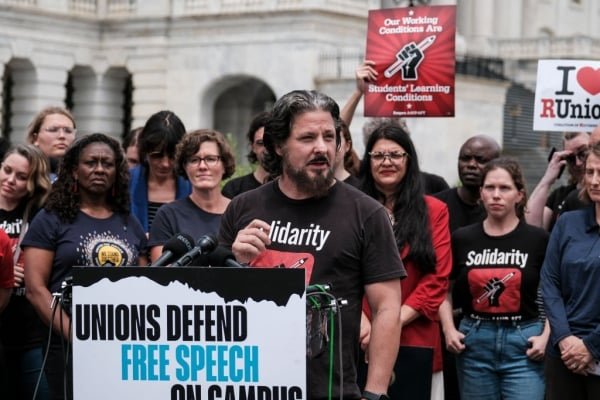
Todd Wolfson, president of the AAUP—which is both a left-leaning faculty union and an over-century-old professional association that wrote landmark definitions of academic freedom and tenure—told the commission in a letter this week that his group is “deeply troubled” by the new standard.
“Institutions of higher education should not be expected to prioritize intellectual pluralism on settled scholarly questions,” Wolfson wrote, “even if certain interests would prefer that their favored opinions be more widely represented on campus.”
Wolfson wrote that conservative writer David Horowitz—who authored The Professors: The 101 Most Dangerous Academics in America—“developed” the term intellectual diversity in 2003. Wolfson also said it appeared the commission proposed this new standard in response to an April 2025 executive order, in which President Trump ordered his education secretary to ensure accreditation requires prioritizing “intellectual diversity amongst faculty,” and in response to the Education Department’s proposed overhaul of the accreditation rules.
The commission’s website does say the new standard is “fully or in part aligned with Department of Education requirements or [is] recommended by [the Accreditation, Innovation and Modernization rule-making committee] to be included in the Federal standards.” But, as Wolfson noted, “executive orders are not laws, and the AIM Committee’s proposed changes have not been adopted.” (The administration is working to finalize the proposed changes, and Trump officials have said they want to do so by Nov. 1. The new rules would then take effect next July.)
Wolfson told Inside Higher Ed that the AAUP doesn’t know of any “other accreditation agency appeasing the Trump administration in this way on ‘intellectual pluralism.’”
In its proposed accreditation rule changes, ED seeks to require accreditors to evaluate whether universities have policies “designed to support, promote, and appropriately prioritize intellectual diversity and the free exchange of ideas amongst faculty, to include elements that address intellectual inquiry and student learning.” Accreditors would also be required to ensure universities measure “student and faculty perceptions on the range of viewpoints and perspectives offered by the institution or program, unless the institution or program has a religious mission,” in which case their policy must include “elements that address intellectual inquiry and student learning” consistent with that mission.
It’s unclear how, or whether, the commission will change its proposed accreditation standard in response to Wolfson’s input. In an emailed statement, commission President Stephen L. Pruitt said the overall “Principles of Accreditation are being revised by a dedicated committee of representatives from our member institutions. This feedback, along with all other feedback we have received, is being presented to the Principles Review Committee for review, discussion, and possible revision.”
The AAUP isn’t the only group that has raised concern about intellectual diversity criteria. In a public comment on ED’s proposal, the Foundation for Individual Rights and Expression wrote that while “meaningful exposure to competing ideas, arguments, methods, and schools of thought is an educational good … vague requirements to ‘promote, and appropriately prioritize’ intellectual diversity risk encouraging ideological quotas, compelled curricular balance, viewpoint-based personnel decisions, and ideological auditing.”
Tyler Coward, FIRE’s lead counsel for government affairs and an author of that letter, told Inside Higher Ed the legal analysis isn’t exactly the same when looking at what individual accreditors can do. He said, “The devil will be in the details” when it comes to carrying out what the commission has proposed.
But he said some of the concerns are the same, and if the commission is “citing this [ED] standard that has yet to be adopted as the reason why they’re doing this, perhaps it is premature. This precompliance is a problem, and we see that a lot during the Trump administration.
“There are ways in which this could go from this potentially good idea,” Coward added, to one that means “censoring faculty or creating a chilling effect for certain ideas.”
In an email to Inside Higher Ed, Wolfson listed other concerns AAUP has with the commission’s proposed standards, but also said what the commission is doing with the intellectual pluralism proposal is unique.
“Our biggest concerns are about how loose the language is on academic freedom. It opens the door to potentially bad interpretations,” he added. “They’ve also weakened their standard on shared governance. Genuine shared governance is substantially more than requiring ‘faculty input.’”
You may be interested

New Analysis Finds NIH Awarded 7,400 Fewer Grants
new admin - Oct 16, 2026[ad_1] NIH obligated all of its funds for fiscal year 2026, but AAMC argues that “the health of the federally…

Surface Laptop Ultra review: a different kind of MacBook Pro
new admin - Oct 16, 2026After setting up Microsoft’s Surface Laptop Ultra, I spent five minutes just staring at it. I wasn’t surprised by its…

Democratic Senators Criticize ED for Front-Loading Grants
new admin - Oct 16, 2026[ad_1] Two Democratic senators are urging Education Secretary Linda McMahon to reverse her department’s practice of “front-loading” grants. They argue…