



AI Literacy and the New Admissions Disadvantage (opinion)

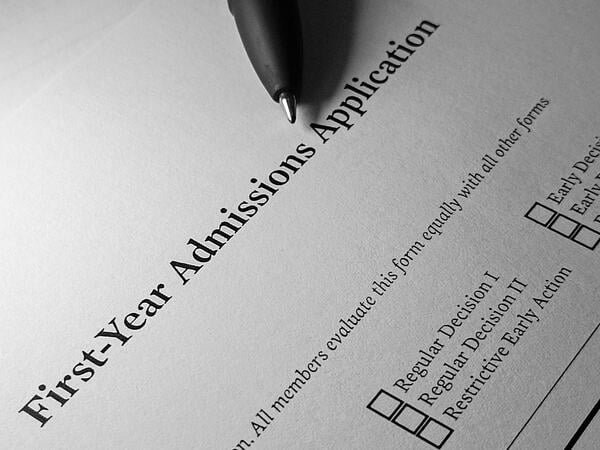
I teach writing to first-generation, low-income (FGLI) college applicants. The students I work with have a lot of questions about the many controversial issues within admissions, including topics like the 2023 affirmative action ruling, the rise of trauma narratives in admissions essays and Trump’s anti-DEI policies.
But this past summer, a new topic rose to the forefront of FGLI students’ anxieties: AI. Specifically, students are worried about all the ways that colleges are now subtly expecting applicants to demonstrate “AI literacy” in their admissions essays.
Driving this anxiety is a lack of transparency. The Common App treats AI-generated content as “fraud,” but colleges don’t typically disclose how their detection systems work. Because of this uncertainty, applicants want to learn AI’s prose style so they don’t accidentally trigger colleges’ AI radar. Know it so you don’t sound like it.
But this fear of “sounding like” AI is complicated by the colleges that allow its collaboration. Some colleges encourage students to use AI “to support your original ideas.” Others allow AI proofreading tools like Grammarly. These policies change admissions. If some colleges are allowing AI use, then not using AI could be a competitive disadvantage. To compound this further, other colleges are now including supplemental prompts about AI. Even if you don’t use it, you still need to be able to discuss it intelligently.
Confusing, right? Imagine applying to five different colleges, each with a different AI policy. Then imagine navigating those waters from an underfunded school district, where no one’s taught you how to use AI ethically.
For years, we’ve known that many of the factors deciding college entry are skewed to the wealthy. Standardized test scores like the SAT or ACT correlate with household income. Likewise, necessary edges like Advanced Placement and International Baccalaureate courses are much more accessible for students in well-funded school districts than underfunded ones. AI literacy is no different—but no one’s much discussing how AI’s digital divide is affecting admissions.
In today’s broader conversation around K–12 education, AI stands as the key dividing point. Affluent, white-collar families who know the importance of AI skills in future hiring pools are pushing their school districts to teach AI literacy. Economically disadvantaged school districts, on the other hand, do not have the push nor the funding to incorporate AI tools or AI training into their curricula. A December 2025 College Board study of more than 10,000 students, parents and teachers found that private school teachers report far greater access to generative AI tools than public school teachers do, and that private schools are “more than twice as likely to both permit GenAI use and have policies governing it.”
In the long run, because income and race are systemically entwined, this digital divide will widen racial inequality. As sociologist Jerel Ezell explains, “White students won’t just get first dibs on the latest and best AI technology, but an upper hand on the skills that are going to propel the future economy.”
I see this divide firsthand. FGLI students don’t have the same AI know-how as kids growing up in Marin or Loudoun Counties. They don’t have parents who send them to fancy robotics summer camps, nor curricula tailored around AI proficiency. Instead, from what I’ve observed, FGLI students often learn how to use AI on their own, without oversight or cultural guidance.
This can lead to exactly the type of AI misuse that will cull underprivileged students from admissions. For example, a student last month sent me admissions essay drafts that sounded like they’d been written by Claude. When I confronted the student about it, he told me that those same drafts had been approved by his high school counselor. I thought: How could a counselor miss this? My best guess is that his counselor had a huge student caseload and little time to spare per student. As Forbes explains, some public school guidance counselors manage caseloads of more than 700 students, while other schools might not even have a college guidance counselor at all. A counselor at a well-resourced district, by contrast, is much more likely to have the bandwidth to assess AI use in a draft, plus support from school infrastructure to teach ethical AI use.
This is what colleges are forgetting about AI: Learning how to use AI on one’s own isn’t the same thing as learning ethical AI use from a paid educator. AI literacy isn’t just about affording a ChatGPT subscription—it’s about cultural osmosis, regular integration and direct AI-proficiency training.
As our current admissions system stands, colleges’ differing AI policies inevitably prioritize the wealthy. This problem is most evident in colleges’ detection systems. As mentioned above, colleges do not typically disclose what detection software they use to screen for AI, nor how they train their admissions officers to “feel” for its use. Regardless of this nondisclosure, both of these policing systems are unreliable. Detection software is notoriously inaccurate and biased against nonnative English speakers. Human detection is also inaccurate, and dependent on each admissions officer’s own AI literacy.
And even if a student is rejected for suspected AI usage, colleges don’t have to tell them that’s what happened. Colleges don’t include justifications in their rejection letters. Because of this, colleges are allowed to reject applications that “feel” like AI, but they aren’t required to publish their training, detection rates or any other data.
In my opinion, if colleges can’t prove their AI-detection methods are equitable, they have no right to penalize applicants for AI use. Colleges should be more clear: Are they using Turnitin? GPTZero? Copyleaks? Do they check for AI watermarking? How often do they discard applications for AI use? What data trains their AI-detection tools? How do they train their officers? Such disclosure would work to level the playing field for students without admissions support.
One counterargument to such disclosure is that it could teach applicants how to cheat without getting caught. But the current problem is much worse than that potential outcome. As long as AI detection is murky, essays are just another focal point for inequality and bias, and not the leveling, “holistic” metric they are meant to be. As AI continues growing in sophistication, these inequities will only grow.
Disclosing one’s behind-the-scenes approach to AI isn’t a huge ask. Colleges already demand their applicants prove their AI literacy. It’s time colleges proved theirs.
You may be interested

Pope Leo to undergo surgery Tuesday to remove a lung nodule
new admin - Oct 12, 2026Pope Leo XIV will be admitted to a hospital Tuesday morning to undergo surgery to remove a lung nodule discovered…

139 people dead, including 15 children, after migrant boat capsizes off Africa: “Overwhelmed with all the bodies”
new admin - Oct 12, 2026At least 139 people, including children, have died after a boat carrying more than 300 migrants capsized off the coast…
How Apple can win the smart home
new admin - Oct 12, 2026This week, Apple is hosting its first-ever dedicated smart home event. While the company hasn’t shared details about what it…