


Rural Challenges

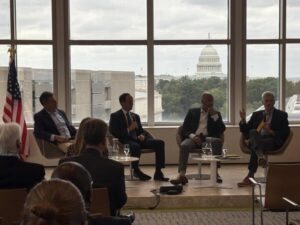
Westmoreland County Community College has been part of the Rural Talent Development Lab project for a little over a year now. Last year, the kickoff gathering was in North Carolina, because the grant and leadership are based at Appalachian State University in Asheville. This year, the conference was on my own campus. Kudos to the event staff who managed to make everything go smoothly despite a water main break that shut down the main building for the first day of the conference!
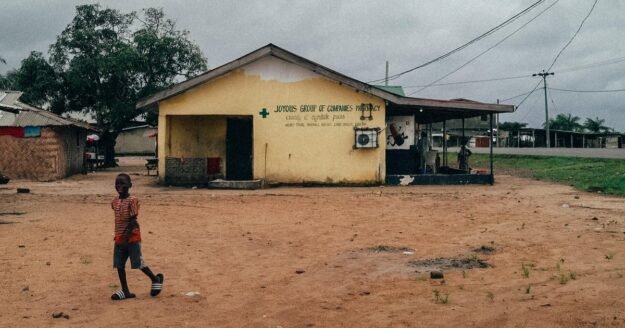
The purpose of the project is to identify and (ideally) solve or mitigate major challenges around workforce development efforts in rural settings. Pennsylvania is one of four states most deeply involved in the project, along with Montana, Kansas and West Virginia. My own county is partly suburban and partly rural, but we also serve two adjoining rural counties, so we face those same issues.
A defining difference of rural areas, unsurprisingly, is scale. It’s often difficult to hit the critical mass of enrollments necessary to sustain a program. Part of that is due to student transportation challenges, but a lot of it is due to scattered employer demand. The example used at the conference was a maintenance person for the town rec center. The rec center needs someone, but it only needs one someone. If you run a full program, you’d flood the market with the first class. Small employers often don’t have the budgetary slack to pay someone while they’re getting trained, and even if they did, you’d have to corral a certain number of employers at one time to make a program sustainable. And towns dominated by a single large employer can be subjected to brutal boom/bust cycles when the large employers move in or out. We’re seeing that now with data centers.
In a nutshell, we can be universal, or we can be self-supporting, but we can’t be both. Some areas are simply more expensive to serve than others.
Still, we do what we can, and try to do more. Folks at the conference discussed braiding funding streams, developing mobile labs, soliciting employer sponsors, and building branded collaborations that could attract philanthropic support. We also discussed the politics of it all.
When we broke into groups by state, it was oddly heartening to hear from my Pennsylvania colleagues that we’re all struggling with the same obstacles. The most obvious one is that PA state law requires community colleges to charge double tuition for out-of-county students, but the state only has 15 community colleges to serve 66 counties. If you live in one of the 51 counties without a community college, your options are to pay double (or more, if you go the four-year route) or to skip college. With all due respect to our elected lawmakers, that’s absurd. In practice, it means that we have to charge more to residents of lower-income counties. That’s a pretty effective way to prevent economic mobility.
At least that rule only applies to credit-bearing programs; noncredit workforce programs are exempt. But since those programs don’t receive state support, students have to cover their own costs. With low population density and absent specific sponsors, that’s a tall order.
Dual enrollment is tricky in rural contexts, too, as rural high schools don’t always have faculty with the academic qualifications to teach college classes. That’s usually less of an issue in more affluent and densely packed suburban areas. So the suburban high school students get a great deal with more dual enrollment classes, followed by cheaper tuition when they get here; the rural students get fewer dual enrollment opportunities, followed by double tuition when they get here. Then we wonder why higher ed has an image problem in some communities, and why folks in those communities sometimes struggle to get ahead.
Short of a major turn in our politics, solutions are necessarily going to be partial and bespoke. That’s not ideal, but it’s hardly unprecedented, either. Community colleges have embodied universalism on a shoestring pretty much from the beginning; it’s what we do. We see every community as worthwhile; heck, it’s embedded in our names.
The conference generated a sense of community, even while acknowledging real frustration. The work is worthy, as are the communities. If that means working around counterproductive laws, unfavorable demographics, and broken water mains, well, then that’s what it means.
You may be interested
Colleges Are Losing Young Men. What Brings Them Back?
new admin - Sep 25, 2026[ad_1] Women have outnumbered men on college campuses for decades, but the divide extends beyond who enrolls. Young men are…

Experts say 1 thing can help you feel ready for the day – and work better too
new admin - Sep 25, 2026Only 13% say they feel fully ready for the day ahead, as experts suggest regularly stepping outside your comfort zone…

Ex-N.C. State sports trainer accused of sexually abusing male athletes is arrested in Florida
new admin - Sep 25, 2026N.C. State's former director of sports medicine faces felony and misdemeanor criminal charges after being accused of sexually abusing former…