


Latest Trump Move Threatens Colleges Seeking to Promote Equality

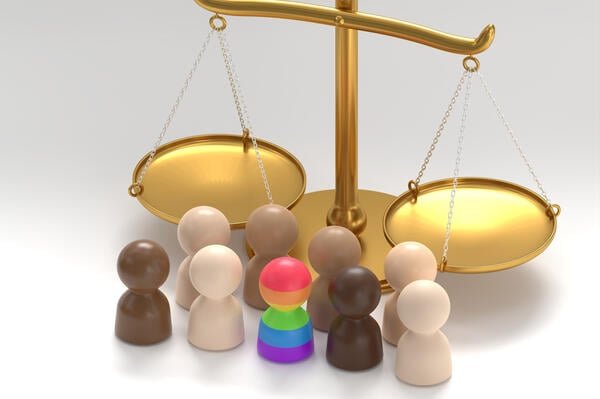
Just when it seemed that Trump might have turned down the heat in his attack on higher education, the Treasury Department released new rules Thursday that will reach more broadly and deeply into the landscape of both private secondary and higher education than anything his administration has done previously. As The New York Times reported, the new rules allow the Internal Revenue Service to “revoke tax-exempt status from any school offering targeted support to Black or other minority students.”
The Times rightly called the Treasury’s action “a sweeping change that opens another front in the president’s campaign to reshape American education.” Schools, colleges and universities that might have thought they were insulated from the brunt of that attack because they are not dependent on federal funding will now be in the crosshairs. They will find themselves in hot water if they provide minority-race students targeted help in anything from scholarships to academic programs.
As the Times notes, the rule will take effect beginning next June and apply to as many as 18,000 schools.
The threat to end the tax-exempt status of any school that does not hew to the administration’s aggressive misunderstanding and distortion of existing law will weaponize the Internal Revenue Service to serve the president’s culture war crusade and politicize another of the government’s nonpartisan agencies. In addition, it goes well beyond anything contemplated in the Supreme Court’s affirmative action decisions turning them into a tool to whiten the population of American higher education.
What the administration is doing is not only bad for many of the country’s selective secondary schools and colleges. It is bad news for the entire country, which would be ill served if the population of college graduates became even less diverse than it already is.
The administration’s new effort is two-pronged. First, by targeting private secondary schools, it aims to choke off the pipeline of students of color who might otherwise apply for admission to highly competitive colleges. Second, it seeks to shut the door on those who do so.
Not even the conservative majority on the Supreme Court has gone that far. Three years ago, when the Court struck down affirmative action in college admissions, it did not require colleges to be entirely race-blind.
Chief Justice John Roberts did initially speak in those terms when he said that those who wrote the guarantee of equal protection into the 14th Amendment believed that the Constitution “‘should not permit any distinctions of law based on race or color’ and [that] the Fourteenth Amendment would hold ‘over every American citizen, without regard to color, the protecting shield of law.’”
He added, in terms that the president no doubt approved, “Eliminating racial discrimination means eliminating all of it. And the Equal Protection Clause, we have accordingly held, applies ‘without regard to any differences of race, of color, or of nationality’—it is ‘universal in [its] application.’”
But Roberts did not end there. He called the achievement of a diverse student body and the remedy of the effects of past discrimination “commendable goals.”
And much to the chagrin of the president, Roberts left the door open for race to play a role in admissions when he said, “At the same time, as all parties agree, nothing in this opinion should be construed as prohibiting universities from considering an applicant’s discussion of how race affected his or her life, be it through discrimination, inspiration, or otherwise.”
But not two years after the ink was dry on that opinion, the administration went much further than the court did. It said that schools had to remove race-based decision-making not only from admissions but also from hiring, awarding financial aid and scholarships, assigning campus housing, influencing student discipline, and designing graduation ceremonies.
The administration has also demanded that colleges and universities turn over vast amounts of data about admissions, student achievement and graduation rates so it can determine whether there are any racial differences. A court has issued an injunction halting that demand, at least for the time being.
And President Trump and his colleagues withheld federal funds for research and other purposes from universities that they accused of racial discrimination without going through the arduous process of investigating and adjudicating first. In April 2025, the president threatened to withhold tax-exempt status from Harvard, saying it should be “Taxed as a Political Entity.”
He added, “Remember, Tax Exempt Status is totally contingent on acting in the PUBLIC INTEREST!”
However, that is not exactly right. The standard for removing tax exemption from a nonprofit or charitable institution is narrower, and the barriers to doing so are quite high.
In 1983, after the IRS revoked the tax-exempt status of Bob Jones University on the grounds that its ban on interracial dating and marriage was illegal, the Supreme Court held that an institution could only lose such status “where there can be no doubt that the activity involved is contrary to a fundamental public policy.”
The court decided that “it would be wholly incompatible with the concepts underlying tax exemption to grant tax-exempt status to racially discriminatory private educational entities. Whatever may be the rationale for such private schools’ policies, racial discrimination in education is contrary to public policy. Racially discriminatory educational institutions cannot be viewed as conferring a public benefit within the above ‘charitable’ concept or within the congressional intent.”
As Philip Hackney and Brian Mittendorf have explained, the Bob Jones case is the only one in which a college or university lost its tax-exempt status because something it did was “contrary to a fundamental public policy.” They note that the law makes it impossible to withdraw such status “on a whim.”
Hackney and Mittendorf note that the process begins with an IRS audit and a determination that a “nonprofit’s operations have a ‘substantial nonexempt purpose.’” That process alone “could take years,” they wrote.
Even then, the law provides ample opportunities for appeal and review.
In spite of those hurdles, yesterday’s Treasury Department action is serious business. It opens another venue for the administration to demand data and nose around in schools and colleges across the nation. It may mean that some educational institutions, already stretched thin, will have to bear still greater costs and burdens.
Hackney and Mittendorf note that if an “organization … loses its status, whether it’s a university like Harvard, a food bank, a homeless shelter or any other kind of charity, it is suddenly subject to federal income tax. It also loses the ability to receive tax-deductible gifts from donors who are eligible to make them.”
Having tried to choke off federal funding, the administration is now teeing up an effort to turn off the other financial spigots that are the lifeblood of private secondary schools and colleges, which it regards as its culture-war enemies. That effort signals another moment in which the administration wants Americans to think of equality as sameness.
But equality has never meant just that, in education or elsewhere. It has meant that we need to treat “like things alike and different things differently.” We have long recognized that we need to be equitable to be equal, and schools, colleges and universities now, as an article in GW’s Online Public Health puts it, “that each person has different circumstances and allocate … the exact resources and opportunities needed to reach an equal outcome.”
Don’t be fooled. The threat to go after the tax-exempt status of private educational institutions is not only about money.
It is an effort to get them to abandon their efforts to ensure that their places and the work they do contribute to a more equitable world.
You may be interested

£130 fine warning if caught breaking school gate restrictions when dropping kids off
new admin - Sep 04, 2026Parents face fines for breaking school gates restrictions during drop-off and pick-up times, as councils crack down on school run…

Newsom tours the South as speculation grows about a future White House run
new admin - Sep 04, 2026Newsom tours the South as speculation grows about a future White House run - CBS News Watch CBS News California…
Oh good, looks like yet another swarm of rogue AI agents from OpenAI
new admin - Sep 04, 2026A swarm of rogue AI agents from OpenAI reportedly commandeered a German website and transformed it into a messaging board…