



Trump Administration Threatens Colleges’ Tax-Exempt Status


Trump himself has repeatedly threatened over the last 18 months to take away some colleges’ nonprofit status.
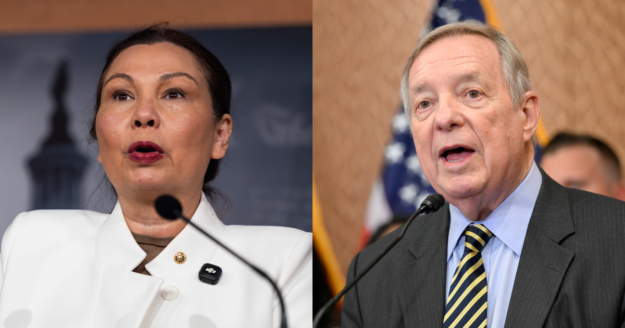
Photo illustration by Justin Morrison/Inside Higher Ed | Mandel Ngan and Joseph Prezioso/AFP/Getty Images
The Trump administration is threatening to revoke the tax-exempt status of private nonprofit colleges that “engage in racial discrimination,” which it claims includes the adoption or enforcement of any admissions policies, scholarships or other programs intended to support Black, Hispanic or other minority students. It’s the latest effort in the administration’s ongoing push to eliminate diversity, equity and inclusion at American universities.
As many as 18,000 private schools—which includes K–12 and postsecondary institutions—could have their 501(c)(3) tax exemption revoked if they are found to “discriminat[e] on the basis of race, color, or national or ethnic origin in administration of its educational, admissions, scholarship, athletic, or other policies,” according to a draft of the proposed rule released Thursday. The Treasury Department estimates that as many as 750,000 students attending those schools “may qualify for scholarships allocated on the basis of racial, ethnic, or national identity.”
If finalized, the rule would take effect after May 31, 2027. Colleges that lose their 501(c)(3) status would be subject to federal income tax, and donations to the colleges would no longer be tax deductible.
The policy builds on the administration’s other efforts to end race-based programming and policies. Federal agencies have already defunded grant programs that support minority-serving institutions, declared that several colleges are discriminating based on race in admissions and targeted race-conscious scholarship programs. Trump himself has repeatedly threatened over the last year to take away some colleges’ nonprofit status. In April 2025, he pushed to revoke Harvard University’s tax-exempt status after the university rejected several of the administration’s demands to change governance, admissions and hiring processes.
“Under President Trump, this Administration is standing up for America’s students by ensuring racial discrimination has no place in American education,” Treasury Secretary Scott Bessent said in a news release. “Schools rebranding race-based preferences as equitable, inclusive, or diversity-enhancing does not change their discriminatory nature. Today’s Treasury and IRS proposed regulations establish a clear standard, and the institutions that continue to use discriminatory practices will no longer receive the benefits of federal tax-exempt status.”
Historically Black colleges and universities, tribal colleges, and minority-serving institutions are likely to be most affected, said Shiloh Theberge, chair of the higher education law practice group at Fisher Phillips. Those institutions have “more programs, more donors and more financial assistance that are based on race,” she said. “I would imagine that if a large portion of their donors would like to earmark the funds to be used for students of a certain race or races, then this is going to be more difficult for them.”
The proposed rule would not prevent religious colleges from admitting students based on “genuine religious affiliation or membership,” nor would it prohibit any school from assisting students based on income, geographic location, first-generation status or military family status.
In its justification of the rule, the Trump administration leans on the 1983 Supreme Court decision in Bob Jones University v. United States, in which Chief Justice Warren Burger wrote that racial discrimination in education violated “fundamental national public policy,” and therefore the federal government was right to revoke the university’s tax-exempt status. (In this case, Bob Jones, a Christian university in Greenville, S.C., had a policy prohibiting interracial relationships, which it enforced until 2000).
This interpretation of the decision is likely to run into legal challenges, Theberge said.
“One of [the] legal challenges might be that the rule is arbitrary and capricious, and that the IRS can’t abruptly redefine what constitutes public policy discrimination,” she said. “I think that’s going to be one of the issues there—the Bob Jones case really didn’t authorize this sort of change to that definition of public policy.”
Trump officials also cited the more recent 2023 Supreme Court decision that banned race-based decision-making in college admissions. The administration has adopted a broad interpretation of the ban and used it to underpin nearly all of its efforts to end programming and support for minority students at American colleges and universities.
Several higher education organizations have come out strongly against the rule. National Association of College and University Business Officers President and CEO Kara Freeman said it “far exceeds agency authority.” In an emailed statement, Alliance for Higher Education President and CEO Mike Gavin called the proposed rule the Trump administration’s “most blatant attack to keep working class Americans and people of color from accessing higher education and a better life.”
“The new rules by the Treasury Department are the latest twist of the administration’s economic vise to force colleges and universities to comply with its highly partisan political agenda,” Gavin added. “By claiming that efforts to increase fair opportunity for all students are discriminatory, the administration is trying to gaslight the American people into believing that up is down and black is white.”
The Treasury Department will accept public comments on the rule 60 days after it’s formally published Friday. Theberge encouraged institutions to write in.
You may be interested
Latest Trump Move Threatens Colleges Seeking to Promote Equality
new admin - Sep 04, 2026[ad_1] Just when it seemed that Trump might have turned down the heat in his attack on higher education, the…
Illinois senators blast FAA administrator for holding air traffic controller raises “hostage”
new admin - Sep 04, 2026Illinois Democratic Sens. Tammy Duckworth and Dick Durbin harshly criticized FAA Administrator Bryan Bedford for holding up a pay raise…

Sam Altman apologizes for ‘messy’ GPT-6 Astra rollout that’s locked out paying users
new admin - Sep 04, 2026Just hours after OpenAI launched GPT-6 Astra, CEO Sam Altman was already apologizing for what he describes as a “messy…