


61 Percent of Colleges Have Met Their Enrollment Goals for Fall 2026

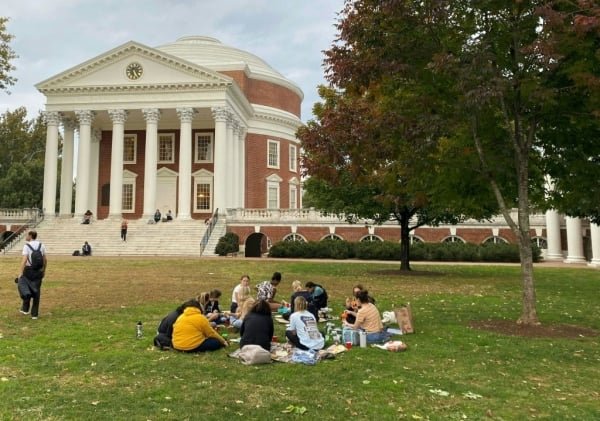
Colleges selected quicker and clearer aid offers, parent engagement, and campus visits as the top three levers for securing their incoming classes.
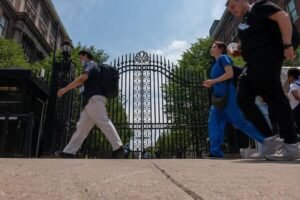
Daxia Rojas/AFP via Getty Images
As the fall semester fast approaches, just half of small colleges are confident in their ability to meet their enrollment goals this year, according to a survey of 134 higher education enrollment leaders Niche conducted this July.
Although 61 percent of respondents told Niche they anticipated hitting those goals this fall, that number was significantly lower—50 percent—for colleges with less than 2,000 students. Leaders at smaller institutions were also more likely than their peers to say that their confidence in their ability to hit their enrollment goals had declined since earlier in the admissions cycle.
Niche’s State of Higher Education Pulse Survey, provided exclusively to Inside Higher Ed, follows a February survey that asked enrollment leaders to predict how fall 2026 enrollment would play out. The latest update highlights where enrollment stands ahead of the start of the new academic year. The report emphasizes the unique struggles of small institutions, which made up almost half of the survey sample, to differentiate themselves from other institutions and meet their enrollment goals. In recent years, several small colleges have closed raising questions about what those who remain open need to do to stay afloat.
“It’s so clear that small institutions and everybody else really face different problems, and they serve different functions, as well … they may not have as big of an enrollment goal to meet, but they have far less wiggle room, so every seat counts,” said Allison Shrivastava, an economist at Niche.
The report explores what strategies institutions used to secure their incoming classes this year. Across the board, respondents cited campus visits as the most important strategy, followed by faster, clearer financial aid packages and parent engagement. Campus visits were especially valuable to smaller colleges, with 92 percent of respondents at institutions with fewer than 2,000 students listing them as a top lever for securing students.
The report notes that relying too heavily on any one tool can be risky: “One small school named its single biggest unsolved problem simply as the decline in campus visits, while others tied lack of event engagement directly to melt.”
Fewer institutions—just 22 percent—listed “increased discounting” as an important lever, and those who selected that option were less likely to hit their targets than their peers. Niche researchers argued that this indicates that quicker and clearer aid offers are more important than the amount of aid.
But Bob Massa, a retired enrollment manager with 45 years of experience in the field, argued that that’s not the case.
“To say that the amount of discounts, the amount of scholarships, is secondary, is simply not true,” he said. The survey did not ask how big those aid increases were, nor how much aid was originally offered, making it difficult to know exactly why the offers of increased aid were less successful at helping institutions hit their enrollment goals.
Overall, smaller institutions also offered much more in discounts than larger institutions, with a median discount rate of 63 percent at institutions with fewer than 2,000 students versus 34 percent at institutions with over 5,000 students.
The results showed mixed signals about whether higher discounts led to improved enrollment outcomes. Institutions that expected to hit their targets had slightly higher median freshman discounts than those who expected to fall short. But those that expected to exceed their goals discounted slightly less than those who merely reached their target. Meanwhile, only about half of institutions that relied on “increased discounting” this year (48 percent) hit their deposit targets, versus 67 percent of those who said they did not lean on increased discounting.
Massa said he would’ve been interested in seeing how discounting impacted not only institutions’ enrollments but also their revenues.
“You can meet your enrollment goal and be very short on net revenue if you discount too much. On the other hand, you can come in low on your enrollment and, because your discount rate was lower, you can actually meet your revenue goals,” he added. “It’s not that one is more important than the other—you need the students for a vibrant community, you need the students to fill different majors. All of that is important. But if you don’t have the revenue, you really can’t fulfill the promise.”
The survey also asked institutions to describe their biggest unsolved enrollment challenge. The most common type of problem, cited by 30 percent of institutions, had to do with brand recognition and differentiation, with one respondent noting that, “our competitors are seemingly everyone.” Colleges that increased their marketing budgets were also more likely to meet their enrollment goals than those who held steady or decreased those budgets.
A quarter said yield was their biggest issue. Just 18 percent of respondents said affordability; that number was slightly higher (20 percent) among small and midsized schools, but much smaller (8 percent) among institutions in the Northeast.
“For schools in the Northeast, cost barely registers; the fight is for attention,” the report stated.
Despite this, Massa noted the questions of brand recognition and affordability are one and the same, to some extent; colleges have to have a strong enough reputation for their price tag to make sense to students.
You may be interested

Pusheen’s first game is coming to Apple Arcade
new admin - Sep 08, 2026Pusheen is getting her first game, and it will appear exclusively on Apple Arcade. Launching October 1st, Pusheen’s Place lets…
How Much Is Florida State Coach Mike Norvell’s Buyout? Contract Details In 2026
new admin - Sep 08, 2026[ad_1] NEWYou can now listen to Fox News articles! Florida State head coach Mike Norvell entered the 2026 college football…

Sir Tom Jones Reveals He Was Fired From the Voice UK
new admin - Sep 08, 2026[ad_1] Sir Tom Jones has revealed he was fired from The Voice UK, and the currently airing 14th season appears…