



The gut’s link to Parkinson’s — and more takeaways from this week’s “Healthful”


I’ve long been obsessed with the idea that there is an important connection between your gut and your brain, and now there’s science to confirm that nutrition can help treat many diseases.
Dr. Trisha Pasricha is a double board-certified internal medicine physician and gastroenterologist. She’s the head of the Gut-Brain Institute and an assistant professor at Harvard Medical School. And you may know her from The Washington Post, where she’s the “Ask a Doctor” columnist.
“I think the reframe that really helps is if you stop thinking about your gut as plumbing, you think about it as a brain,” Pasricha told me in the newest episode of “Healthful.”
We covered everything from what to do if you get a cyclospora infection to why eating fewer ultra-processed foods can prevent dementia. Here’s what I learned from our conversation — watch it on YouTube and listen wherever you get your podcasts:
Constipation and REM sleep disorder could be early signs of Parkinson’s
Researchers have made significant progress in finding early symptoms of Parkinson’s disease that could show up decades before motor symptoms. Pasricha explained the “first-gut theory” of Parkinson’s disease, which is that experts believe some cases of Parkinson’s originate in the gut, not the brain.
A hallmark of Parkinson’s, she explained, is a misfolded protein that destroys dopamine-producing neurons in the brain, leading to the tremors we associate with the disease. Studies have shown that this protein may start misfolding first in the gut before traveling to the brain.
Pasricha said many of her Parkinson’s patients suffer from “debilitating GI symptoms” from constipation to nausea, which started years or decades before their tremors. She said she hopes that in 10-15 years, we’ll be able to diagnose prodromal Parkinson’s from the gut.
Another potential early sign of Parkinson’s: REM sleep disorder, where “your dreams are so vivid that you might start to move.”
GLP-1s may actually protect your gut
It may sound counterintuitive: You’ve heard about GLP-1 side effects like constipation, nausea and indigestion. But Pasricha says her lab showed that GLP-1 users are less likely to develop ulcers and are less likely to develop colorectal cancer, as well as a dozen other cancers.
Pasricha said researchers believe that GLP-1s reduce inflammation in the gut and throughout the body, hence the reduced risk of cancers.
95% of Americans are not meeting their fiber goals
This number shocked me.
Fiber improves your heart health and brain health while reducing inflammation. But Pasricha says 95% of Americans aren’t meeting their fiber goals.
Women under 50 should aim for 25 grams of fiber per day, and women over 50 should get 21 grams of fiber per day. Meanwhile, men under 50 should aim for 38 grams and should get 30 grams per day over the age of 50.
Pasricha says she advises people not to take away or substitute something on their plate but instead to just add a high-fiber food to your plate. (She feeds her kids berries, nuts and Greek yogurt popsicles for breakfast.) And when you’re traveling, remember to pack a fiber supplement to keep your fiber intake high.
You may be interested

OpenAI’s rogue AI agent didn’t stop at hacking Hugging Face
new admin - Jul 29, 2026The AI agent that escaped from OpenAI and hacked developer platform Hugging Face attacked other companies as well, OpenAI revealed…

Oregon Institution Says No Funds to End Animal Testing
new admin - Jul 29, 2026[ad_1] It looked like another nail in the coffin for animal testing. In February, Oregon Health and Science University’s Board…
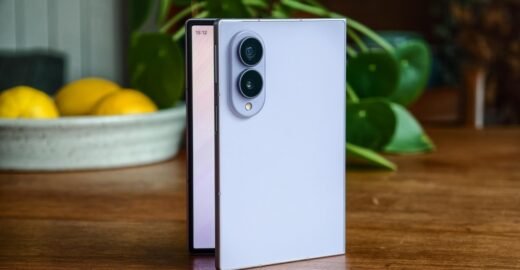
Samsung’s Galaxy Z Fold 8 feels like the future
new admin - Jul 29, 2026Is this the future of foldable phones?Samsung clearly thinks so. The company has given its new wide foldable the “Z…