



Federal Lobbying Slows in Second Quarter

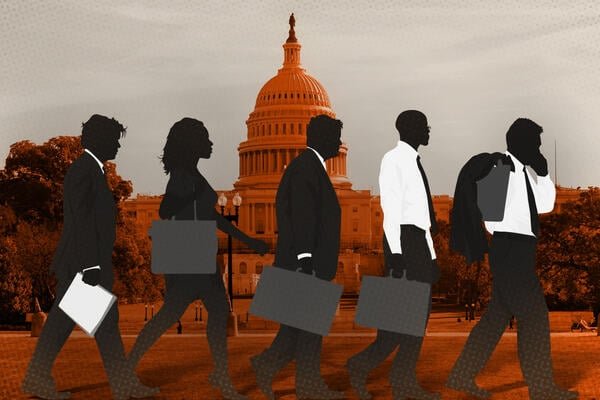
Many of the nation’s top research universities cut back on federal lobbying in the second quarter of 2026, even as the Trump administration’s efforts to overhaul higher education advanced.
While spending remains high for some institutions, members of the Association of American Universities reported their second-lowest quarterly federal lobbying total since Donald Trump took office for his second term. AAU members and university systems that lobby on behalf of AAU campuses reported spending $7.97 million in Q2 of 2026—just $17,000 more than the $7.95 million they spent in Q4 of last year.
(However, figures for the second quarter of 2026 are likely undercounted, since several universities did not meet required filing deadlines and may update numbers later.)
So far during Trump’s second term, research universities spent the most on federal lobbying in the second quarter of 2025: more than $10.7 million collectively, lobbying heavily as Congress deliberated on the One Big Beautiful Bill Act and other legislation that proposed far-reaching changes for higher education.
Among the AAU institutions, Cornell University spent the most in the second quarter of this year at $360,000.
But the top spender among all colleges and universities was once again a non-AAU member. The University of Phoenix led the pack with an expenditure of $410,000 on federal lobbying in Q2—one of the few non-AAU members to spend heavily on that front.
Here’s a look at the top spenders on federal lobbying among AAU members in the last quarter.
(The above list does not include systems that lobby collectively on behalf of member institutions or universities that are not AAU members.)
Cornell’s strong second-quarter push comes after the university spent just half that amount—$180,000—on lobbying in Q1. Cornell was also among the top-spending AAU members in terms of lobbying last year, shelling out more than $1 million to try to exert influence on Congress over research funding, the federal budget and other issues. Cornell’s lobbying efforts came as it negotiated a settlement with the Trump administration last year, reaching a $60 million deal in November. As part of the settlement, the Trump administration agreed to unfreeze millions in federal research funding and close civil rights investigations into how Cornell handled concerns about campus antisemitism.
“In recent years, Cornell expanded our engagement with policymakers and federal agencies to restore research funding and prevent regulatory changes that would harm our educational programs and land-grant mission,” a university spokesperson wrote to Inside Higher Ed.
Johns Hopkins University also had a strong presence on Capitol Hill, spending $350,000 on lobbying in the second quarter of 2026. (Lobbying expenditures for JHU include its medical system.) Hopkins, which has a major research portfolio, is a perennial top spender on lobbying among AAU members; last year it spent $1.3 million.
“Johns Hopkins continues to advocate for our mission of research, education and patient care,” Doug Donovan, director of media relations for JHU, told Inside Higher Ed.
Among the top spenders, the University of Rochester significantly increased federal lobbying efforts in the second quarter of 2026. While Rochester spent just over $400,000 on federal lobbying in all of 2025, this year it has already spent $350,000 across both Q1 and Q2.
Spokesperson Sara Miller wrote by email that the increase is “an anomaly” that she attributed to two factors: “First, the University of Rochester owns its medical center and manages the lobbying efforts, expenses and reporting for its entire health care network, which includes several regional hospitals and health care providers throughout New York State. This lobbying structure is not common for many of our AAU peer research universities that you are looking at.”
Secondly, she noted that UR “paid a large portion of its annual lobbying membership dues to the American Hospital Association, which are included in the lobbying spending numbers” for Q2.
Other AAU members, however, dialed back lobbying efforts in Q2. The biggest drop was at Emory University, which spent $210,000 in Q2 after starting the year at $380,000 in Q1. (University officials did not respond to a request for comment from Inside Higher Ed.)
The University of Washington also spent significantly less in Q2 than the first quarter—$260,000, down from $370,000 to start the year.
“Federal engagement is integral to our continued delivery of wide-ranging discoveries and knowledge that builds industries while improving people’s lives,” spokesperson David Rey wrote by email. “Advocacy at the federal level is one important part of those endeavors. The reduction is a case of the cyclical nature of quarterly reporting and is not reflective of a strategy change.”
In addition, federal lobbying expenditures at Yale dropped by $70,000 between Q1 and Q2 this year. Asked if that was a cyclical change or if Yale was reducing its federal lobbying push, a university spokesperson said that despite the quarterly decrease, Yale has ramped up such efforts over all.
“Since last year, the university has increased its engagement with government officials—opening an office in Washington, D.C., and adding more in-person meetings for the president with government officials in Washington, D.C.” they wrote. “The university works to communicate higher education’s impact and Yale’s mission and priorities to legislators on both sides of the aisle. We are also sharing the ways in which Yale is addressing problems across American society.”
You may be interested

OpenAI’s rogue AI agent didn’t stop at hacking Hugging Face
new admin - Jul 29, 2026The AI agent that escaped from OpenAI and hacked developer platform Hugging Face attacked other companies as well, OpenAI revealed…

Oregon Institution Says No Funds to End Animal Testing
new admin - Jul 29, 2026[ad_1] It looked like another nail in the coffin for animal testing. In February, Oregon Health and Science University’s Board…
Samsung’s Galaxy Z Fold 8 feels like the future
new admin - Jul 29, 2026Is this the future of foldable phones?Samsung clearly thinks so. The company has given its new wide foldable the “Z…