


Strengthening Institutions Program Grows at MSIs’ Expense


For months, advocates for minority-serving institutions predicted the U.S. Department of Education might channel funds slated for MSI programs into another bucket: the Strengthening Institutions Program, a capacity-building program intended to help underresourced institutions improve academic programs and infrastructure. The Trump administration recently proved their premonitions right, sparking a range of reactions, from reluctant acceptance to outrage.
ED and the Department of Labor, which has taken over some of the Education Department’s functions, announced plans to nix 2026 MSI grant competitions last Thursday, directing hundreds of millions of dollars to SIP instead. Many hope that MSIs, underresourced by definition, may still benefit from the funds, for which they are free to apply. But some worry the institutions will inevitably lose out on federal dollars by competing in a broader contest without the specific pools of funding Congress has historically designated for them.
Administration officials argued in a news release that MSI programs are “unlawful” because they confer “government benefits exclusively to institutions based on racial or ethnic criteria.” (MSI designations are defined partly by race-based enrollment thresholds, in addition to low per-student expenditures and high numbers of low-income students.) SIP has no race- or ethnicity-related criteria. The move comes as another blow to MSIs after the Education Department last year redirected funds for their institutions to historically Black colleges and universities and tribal colleges.
The departments also announced a shift in this year’s SIP priorities to focus on workforce development, artificial intelligence and short-term training programs, similar to other recently announced grant competitions. They plan to dole out upward of $300 million in SIP funds.
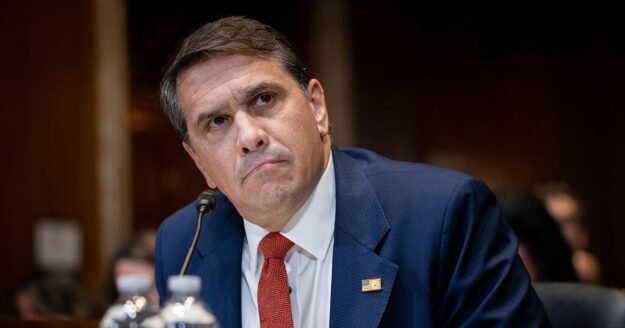
“The Trump Administration is investing in the future of higher education and ensuring that all students have access to high-quality programs,” Assistant Secretary for Postsecondary Education David Barker said in the release. “Through our partnership with the Department of Labor, we are creating a modernized system that will be more responsive to labor market needs and bridge the gap between employment and education.”
Tough Competition
David Baime, senior vice president for government relations at the American Association of Community Colleges, said his organization continues “to support the minority-serving institutions programs as authorized by Congress.” But “we have been anticipating a ‘super SIP,’ as it’s been called by some,” given the political circumstances, he said.
He’s hopeful that community colleges, including MSIs, will be able to compete for the SIP funding—especially because SIP’s new priorities, including workforce development, fit snugly into community colleges’ mission—though “there’s obviously uncertainty about how the money ultimately will be distributed,” he said.
Some MSI advocates and experts expressed more reservations.
Deborah Santiago, CEO of Excelencia in Education, an organization dedicated to Latino student success, said the new priorities align well with work many MSIs are doing, too. But because of the shift, institutions preparing to apply for SIP now need to reframe their applications in short order; the grant competition opened May 21 and ends June 23.
“The institutions that have the most need for this are the ones that are probably least ready,” she said, especially around graduation time when already stretched-thin staffs are busy with other tasks.
She argued that Congress explicitly created separate grants for individual types of MSIs based on an understanding that “these institutions that disproportionately enrolled this group of students—low income, many of them first generation—had limited institutional resources [such] that they couldn’t compete effectively in these other pots,” she said, and now they’re being forced to do exactly that. Nonetheless, she’s encouraging Hispanic-serving institutions to apply if they can quickly produce proposals “aligned with your current strategic plan” and “as authentic to serving your students” as possible.
ED did nothing out of legal bounds, said Amanda Fuchs Miller, former deputy assistant secretary for higher education programs in the Biden administration and now president of the higher ed consultancy Seventh Street Strategies. Administrations often switch grant priorities around, and Congress left room in its appropriations legislation for the Trump administration to reprogram MSI discretionary grant money to SIP, which is partly what tipped off MSI supporters of the possibility that ED would divert the funds. Nonetheless, she agrees the move flies in the face of “what Congress intended to do, which was to fund all these programs.”
Now MSIs are “for sure competing against a broader group of colleges, so it’s definitely going to be a tougher competition,” she said. “I definitely think they’re at a disadvantage.” She also worries the Education Department could go further still, withholding mandatory funds to MSIs, which she contends would be illegal, despite a December Justice Department report that suggested otherwise.
Calling on Congress
Some members of Congress came out against the departments’ most recent repurposing of MSI funds.
California senator Alex Padilla, chair of the Senate Hispanic-Serving Institutions Caucus, wrote in a statement to Inside Higher Ed that the Trump administration has “deliberately undermined Minority Serving Institutions (MSIs) and the vital role they play in expanding educational opportunities for students and uplifting the next generation of leaders and innovators.”
“This Administration’s unwarranted attempt to shift MSI funding to the Strengthening Institutions Program alters the original intent of the program and threatens essential resources for our schools,” Padilla said. “Every student deserves the opportunity to learn and grow, and investments in MSI funding are crucial to ensure all communities have access to quality educational resources.”
But Antonio Flores, president and CEO of the Hispanic Association of Colleges and Universities, wants to see a greater outpouring of support from both sides of the aisle. As far as he’s concerned, SIP and MSI programs are not “interchangeable funding streams” but were “established in statute for distinct purposes and populations,” he said.
Expanding SIP at MSIs’ expense contributes to a growing “sense of abandonment” among HSIs and “confusion” as to how long their grant funding will be shuffled off to other sources, he said. It also “weakens long-standing federal commitments to institutions that are educating millions of students nationwide, including the majority of Latino students.”
He wants Congress to insist that MSI grants be given out as intended.
“Our Congress should be stepping up and not allowing that to happen,” Flores said. “Congress is our main hope for turning things around.”
You may be interested

England fans urged to consider safety risk during Argentina World Cup semi-final
new admin - Jul 15, 2026England captain Harry Kane (Image: Marvin Ibo Guengoer - GES Sportfoto, Getty Images)Millions of Britons are transforming their homes into…

Zlatan Ibrahimović Praises Spain Midfielder Rodri: ‘He Puts Out Fires’
new admin - Jul 15, 2026[ad_1] NEWYou can now listen to Fox News articles! After recovering from a major ACL injury nearly two years ago,…

M&S shoppers snap up ‘perfect’ linen trousers for heatwave now £6
new admin - Jul 15, 2026[ad_1] A pair of lightweight trousers are as much an essential part of a warm weather wardrobe as a flowy…