

Do Faculty Recognize Financial Challenges?

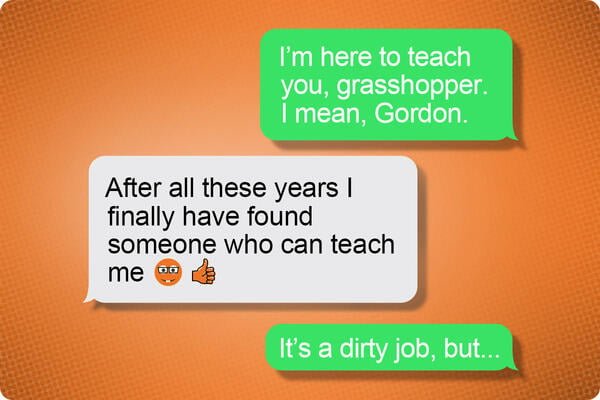
RST: Gordon, I know I said you could wait to see The Devil Wears Prada 2 until your granddaughters visit in July, but I’m changing my mind. You must see it immediately so we can discuss its relevance to higher ed.
EGG: I can’t keep up with all this homework! But Rachel, now that we’ve gotten to be great friends, have established a rhythm of working together and I understand that you are the boss, we need to get organized.
RST: Squirrel!
EGG: I need you to explain something to me in your role as a faculty member. I readily admit that you have a broad set of experiences and so you have not been bubble wrapped inside an English Department. Still, you are also a classic academic.
RST: You are the second person who has called me that this month. The first was an old friend, a Ph.D. in physics who opted out of academe for industry. I was complaining about my editor and wailing, “She’s not the boss of me.” This, he pointed out with a giggle, is patently untrue. Um, right.
EGG: Well, you are clearly the boss of me. But most important to me and our readers is that you are a classic academic yet have found a way to broadly understand the complexity of universities and as such have been able to view them through the other lens of the telescope—a lens that most leaders have to discover in order to be able to make good decisions about the common good. So I ask you again: What is it about faculty that makes it so difficult for many to gain perspective about the crisis facing higher education?
RST: When you call me a “classic academic,” I’m guessing you mean that I was hired to the tenure track and went through promotions to become a full professor. In which case, I can say “we” are unaccustomed to the idea of having a boss. We operate like we’re owners of little boutiques on Main Street instead of departments in a big box store.
EGG: Still, why do your faculty colleagues generally refuse to recognize the financial challenges facing universities? This understanding was brought home to me in your Sandbox when you wrote about your conversation with Dan Greenstein, who has been focused on financial realities facing colleges and universities. His research is showing that nearly half of the academic institutions in this country have serious financial deficits. Frankly, it is amazing to me that all of this information is available to our faculty, along with the regular closures and program eliminations widely discussed in the higher education press, and yet there is still an unwillingness to believe it. Go at it, boss.
RST: What Dan is doing is much more interesting, actually, and the situation is more complicated, Grasshopper. He’s built his own analytical tool and can run reports based on publicly available data to assess an institution’s financial risk. Dan is doing this work and writing about it on his blog, just as he did about the PASSHE transformation. It’s his personal research hobby (the guy doesn’t sleep).
EGG: Rachel, what I am trying to get my arms around is why are such bright people so clueless as to the reality of the times, and why do they not join hands with the leadership to create solutions?
RST: Join hands? You mean instead of waving with one finger? Have you met us? Carry on.
EGG: I suspect there is this notion that “we” are safe, so even though Amazon last week let 8,000 people go immediately with more to come, we are exempt. There have been cuts at Stanford, Harvard, Penn State, Wisconsin, USC and many others. If I were a faculty member reading about those places, I would immediately ask questions about how I/we can avoid that fate and what I need to do to support the mission of the university.
RST: Well, and all the other cuts at colleges and universities everywhere. At this point, I don’t know how anyone can be unaware of the fact the demographic cliff we’ve long known about has arrived, that the public hates us has lost trust in what we’re offering, that too many students stop out without degrees but with a shit ton of debt, and that the feds and most states are saying, “Sorry, no more for you.” I think the problem with faculty, as I said to you last time, is that they/we are overwhelmed with the amount of work we have to do, and we were never taught/trained to understand a lot of this stuff. We can look at a budget and see an endowment of X zillion dollars, or a huge pile of money in “reserves” and think we’re OK. Because, Gordon, we’ve always been OK.
EGG: Let me readily admit that many of my presidential colleagues and I have to carry a good portion of the initial blame, because we are accustomed to telling our internal audiences that things are fine when they are not. Out of generosity of spirit and a good deal of fear, we have not wanted to stir up the beehives. My/our bad! Yet, it is still astonishing to me that such bright people cannot comprehend that the world is amok and they need to pay attention and ask questions that the rest of the population is asking about the world around them.
RST: Um, yep. It’s baffling. Plus, one of the interesting findings in Dan’s work is that even the Richie Riches of higher ed have been living way above their (sustainable) means. They’re like trust fund kids who drain their accounts.
EGG: No one is safe from having to make difficult decisions. The only safety is the willingness of the institution to make good decisions and do it immediately. Much of the problem is the time-worn mantra that “someone will save us” or that “our program is too critical.” And that is coupled with the belief that it is always someone else’s fault. I am so interested in Dan’s work because it paints a broad-ranging picture that is difficult to ignore.
RST: The data are the data. And the findings can be surprising. When he ran his tool on systems, Dan found that the financial health of a public system is less dependent on state funding than it is on governance structure and leadership.
EGG: Tell me about it. But that should not be a surprise, because leadership is the critical component of change and higher education does a terrible job of getting the right leaders for the right time. Search committees can scare the hell out of candidates. They can be public beauty contests where we parade candidates before groups of hostile people. This is coupled with the concern of many candidates to be publicly exposed for fear of losing their present position. That is no way to attract people who can lead in a difficult environment.
RST: We need good and courageous people to want to take on these jobs. Here’s what I’m curious about: How many leaders are really willing to face up to the facts once Dan presents them? I mean, some are eager for the information. I just had him run his tool for a fairly new president, who was wowed by it. I asked because the president had ideas for where to cut; the analysis showed how those departments contributed to overall financial health. That is a fantastic conversation starter for the leadership team. But I’ve talked to some presidents who do the faculty trick of quibbling with the data, missing the forest for the leaves. IPEDS data is two years behind, sure, but Dan can include recent enrollment information and financial audits. We know that things are not trending upward. Presidents who want to quibble are basically beyond help. But, even if they see the big picture, will they be able to convince faculty, staff and boards that changes must be made?
EGG: That is the challenge of leadership. Running a university is akin to a political campaign; university presidents have limited power because they always are in the process of cajoling or compromising. Frankly, it is exhausting. So many presidents kick the ball down the road until they can get out of town and on to their next job or retire. Why go through hell? Leave it to your successor and eat popcorn from the sidelines.
RST: Except that that road is a dead end, as we’ve seen with all the closures. Gordon, I want to respond to your first poke. You called me a “classic academic.” When you say “faculty,” who exactly do you mean? Your homework for our next chat is to read a new novel called The Adjunct by Maria Adelmann. It’s about the caste system in the professoriate and burns with class rage. It’s a little spicy, but I think you’ll be able to handle it. You are a grown-up, even though you (and I) can shop in the kids’ section.
EGG: You know I hate homework. It interferes with watching The Pitt!!
RST: Most of us have already finished the second season. If you didn’t travel so much, you would be caught up.
You may be interested
8/16: Sunday Morning – CBS News
new admin - Aug 16, 20268/16: Sunday Morning - CBS News Watch CBS News Hosted by Jane Pauley. Featured: Weather becoming more extreme; Rahm Emanuel;…

Noah Kahan, Chappell Roan Perform ‘California’ at Rose Bowl: Watch
new admin - Aug 16, 2026[ad_1] Noah Kahan brought out surprise guest Chappell Roan last night at his Rose Bowl Stadium show in Pasadena, California.…
Kentucky Gov. Andy Beshear says he’s “heard absolutely nothing back from Mitch McConnell”
new admin - Aug 16, 2026Washington — Kentucky Gov. Andy Beshear said Sunday that he hasn't heard back from Sen. Mitch McConnell following formal requests…