

How Colleges Are Rethinking Student Success

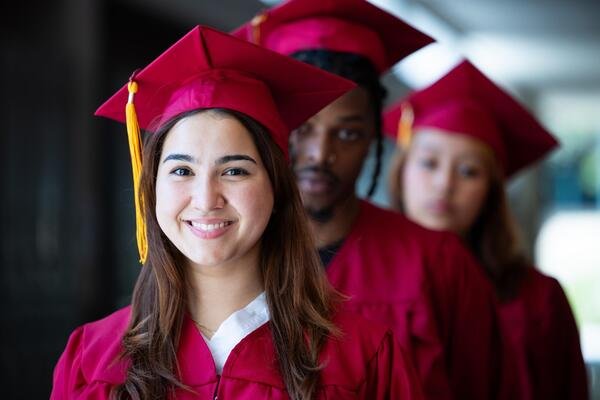
A new report from the Association of Public and Land-grant Universities chronicles how student success initiatives at colleges and universities nationwide have evolved from isolated programs into institutionwide strategies.
The report defines success as students completing their academic programs with a degree and examines how institutions have shifted from focused interventions to more holistic approaches to degree completion.
Released yesterday, the report draws on applications submitted between 2015 and 2024 for APLU’s annual Degree Completion Award, which recognizes public universities for improving undergraduate completion. Researchers analyzed completion strategies at 90 public and land-grant institutions across 41 states.
An analysis of the applications revealed several recurring approaches tied to college completion, including data-informed advising, structured degree pathways, coordinated campus systems, removal of financial barriers and holistic student wellness services. Institutions also developed targeted strategies aimed at reducing barriers for transfer students, adult learners and students who stop out.
Levi Shanks, assistant vice president for academic and student affairs at APLU and author of the report, said the findings illustrate the gradual steps institutions have taken to systematize disparate student success programs and integrate them into broader institutional strategies.
“The maturation process [reflects] the recognition that reactive services aren’t always the best way to ensure that students are successful,” Shanks said. “If you wait for a student to be in crisis, that reaction takes more institutional bandwidth, more money and more response because the student is already there.”
Proactive student support: Key takeaways from the report include that structural alignment across institutional units led to sustained improvement in degree completion. The report also pointed to a growing emphasis on personalized support strategies aimed at helping students when, where and how they need it.
Institutions have expanded support across the student lifecycle while becoming more sophisticated in how they measure progress and evaluate student outcomes. In particular, Shanks noted the growing use of early alert systems and targeted student outreach, including text messaging campaigns aimed at identifying those who may be struggling academically or disengaged from campus resources.
“We all often talk around the first six weeks of a student’s time on a campus,” Shanks said. “It’s a big time where a lot of information is given to them, but maybe it’s not always understood or deciphered.”
He emphasized the growth of data dashboards that support those early alert systems.
“The use and proliferation of data dashboards to inform the ways that our institutions identify and step in with very customized, individualized or personalized approaches for students help promote the students feeling like they belong, but also gives the services that they need at the time that they need it,” Shanks said.
Those systems represent a major shift from earlier student support models, which often relied on students independently seeking help through campus websites or phone numbers on brochures, Shanks added.
“This deployment of data dashboards, early alerts, tracking, certainly allows for a much more proactive approach,” he said.
Shanks also noted that a growing number of institutions are creating graduation help desks—centralized services designed to help undergraduates overcome obstacles to timely degree completion.
“They are helping to get students not only the information that they need to get to completion, but also the comprehensive services of explaining this is what you can expect, this is what you need to do to get you to graduation,” Shanks said.
“The graduation help desk is sort of that one-stop shop for getting you across that finish line that we certainly saw in the latter years of the award,” he added.
Student success barriers: Shanks said engaging transfer students, adult learners and students who stop out has become a growing priority for institutions nationwide as colleges navigate the enrollment cliff and declining numbers of traditional-age students.
Shanks pointed to Wayne State University’s Warrior Way Back program—a debt-forgiveness initiative for former students with outstanding balances of $4,000 or less—as one example of how institutions are working to re-engage stopped-out students.
Shanks noted that the COVID-19 pandemic contributed to an expansion of student wellness initiatives, including new wellness centers, peer mentorship programs and expanded telehealth-based clinical services. However, he said, institutions also learned that the proliferation of services did not necessarily translate into student awareness or usage.
“The best strategies that I’ve seen for re-engagement really don’t necessarily come with service proliferation, adding more things or creating more programs for intake,” Shanks said. “It is rather just getting the messaging to the student about the way that they can get re-engaged, demystifying the process, identifying the services that are already available and how that potential student could access them.”
“That is not to say in any way that it is diminished. Our institutions still care about mental health, well-being and wellness and continue to offer services that were set up as part of that time,” he added. “Institutions often recognize that students didn’t actually know specifically what their problem was. They just knew they had a problem … So making it easy and reducing barriers for getting a student what they need is certainly a priority.”
The takeaway: Looking back over the past decade, Shanks said institutions have increasingly redefined student success work as more integrated systemwide.
“Over time, our definition of what student success is has grown and outpaced what the definitions were in 2015,” Shanks said. “Our institutions have made progress. What were once niche programs addressing issues on the margins of campus are now integrated, systemic and institutionalized within universities.”
“The need to have academic affairs, student affairs, institutional research and academic support all in the same room talking about it is certainly progress,” he said. “Each brings a different vantage point on the student experience, and we need them all together.”
Get more content like this directly to your inbox. Subscribe here.
You may be interested

World Cup champs greeted as heroes in Spain as 2026 tournament comes to an end
new admin - Jul 21, 2026World Cup champs greeted as heroes in Spain as 2026 tournament comes to an end - CBS News Watch CBS…

New round of strikes targeting Iran underway, U.S. officials say
new admin - Jul 21, 2026A 10th straight night of U.S. strikes on Iran is underway as President Trump vows Tehran will pay for the…

Gas prices jump across U.S. as conflict with Iran escalates
new admin - Jul 21, 2026Gas prices jump across U.S. as conflict with Iran escalates - CBS News Watch CBS News AAA says the national…