

U.S. delegation visited Cuba last week as Trump heaped pressure on island, official says

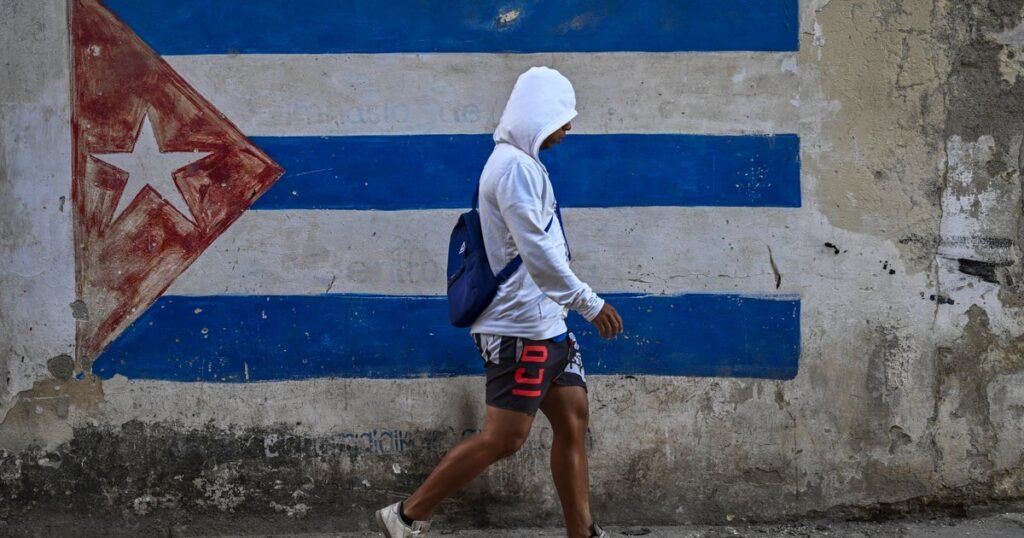
A delegation of senior State Department representatives traveled to Cuba via a U.S. government plane last week, a department official and two U.S. officials told CBS News, a diplomatic opening as the island nation struggles with months of intense pressure from the Trump administration.
While in Cuba, one U.S. diplomat met with Raúl Guillermo Rodríguez Castro, the grandson of former President Raúl Castro, who is widely seen as a key power center within the Cuban government, the State Department official said.
It is unclear who else participated in the talks on the U.S. or Cuban side.
Axios was first to report on the visit, which marks the first time a U.S. government plane has landed in Cuba since former President Barack Obama traveled to the island in 2016.
During the meetings, the U.S. delegation discussed the Trump administration’s push for political and economic reforms, as well as the U.S.’s demands for the release of political prisoners, the State Department official said. The Americans also floated offering Cuba access to Starlink, a satellite internet service operated by Elon Musk’s SpaceX.
“The delegation reiterated that the Cuban economy is in free fall and that the island’s ruling elites have a small window to make key U.S. backed reforms before circumstances irreversibly worsen,” the official told CBS News.
The official added that President Trump is open to resolving the U.S.’s concerns through diplomacy, but he “will not let the island collapse into a major national security threat if Cuba’s leaders are unwilling or unable to act.”
Cuba is in the throes of a months-long energy crisis following Mr. Trump’s threat to impose heavy tariffs on any country that exports oil to Cuba. Oil shipments to the island have effectively stopped, though the U.S. allowed a Russian-flagged tanker to dock in Havana last month for what the administration described as a humanitarian reprieve.
Meanwhile, Mr. Trump has repeatedly floated the idea of intervening in Cuba. Last month, he called Cuba a “failing country” and suggested it could “be next,” following the U.S.’s removal of Venezuelan President Nicolás Maduro and war with Iran.
Earlier this week, the president told reporters, without elaborating, that “we may stop by Cuba after we’re finished with this.” And on Friday, he said he is seeking to “bring about a day 70 years in waiting — it’s called a new dawn for Cuba,” likely referring to the revolution that brought Fidel Castro and the country’s communist movement to power some 67 years ago.
Both Cuba and the U.S. have acknowledged that talks are underway, but it’s unclear how close the two sides are to a resolution. Cuba said earlier this year it will loosen some restrictions on foreign investments, a move Secretary of State Marco Rubio called insufficient.
Cuban President Miguel Díaz-Canel rebuffed Mr. Trump’s rhetoric during a rally Thursday, and vowed that the country will “be ready” for a possible U.S. military offensive.
“We do not want it, but it is our duty to prepare to avoid it and, if it becomes inevitable, to defeat it,” Díaz-Canel said.
You may be interested

Fired Over Speech, Professors Take Their Employers to Court
new admin - Jul 30, 2026[ad_1] Rima Kapitan is busy. An employment lawyer focused on academia, Kapitan is currently representing more than a dozen faculty…

Montana man, impaled by trekking pole, hikes out of mountains to get help
new admin - Jul 30, 2026Billings, Montana — David Cifaldi and his two hiking companions were crossing Montana's ominous Froze-to-Death Plateau and approaching the top…

Gates Foundation New Goal Focuses on Credentials of Value
new admin - Jul 30, 2026[ad_1] The Gates Foundation will focus on redesigning introductory college courses to improve passage rates and promoting stronger credit-transfer programs,…