



Why Waymo is having a hard time time stopping for school buses

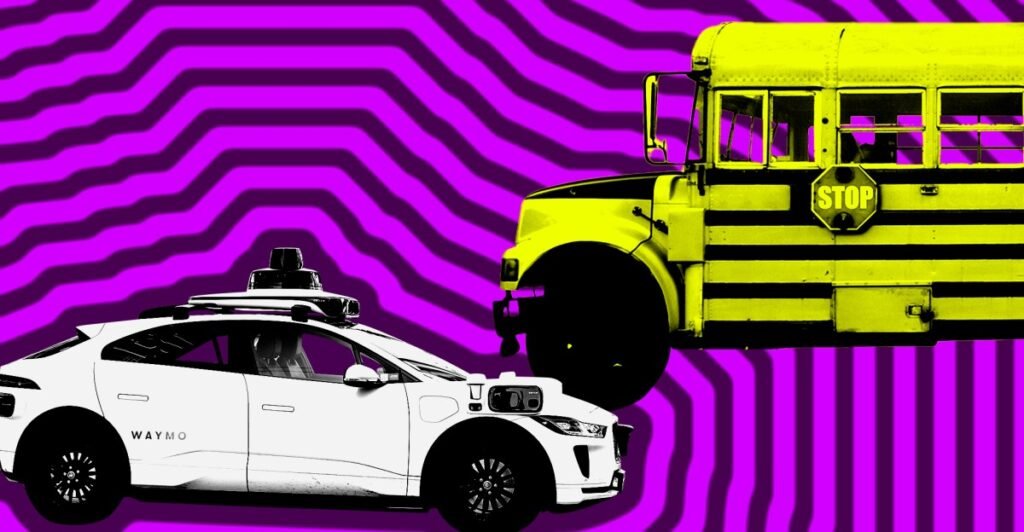
For years, Alphabet-owned Waymo has tried to set itself apart from other self-driving startups by emphasizing a culture of caution and safety. Now, just ahead of major planned rollouts across the country, it is facing a recurring failure in one of the most sensitive places imaginable: school zones.
In December, the National Highway Traffic Safety Administration (NHTSA) opened an investigation into Waymo after Austin’s largest school district reported at least 19 incidents where the company’s robotaxis failed to fully stop for school buses during loading and unloading — an illegal violation in all 50 states. Waymo quickly responded by issuing a voluntary software recall and rolling out updates intended to fix the problem.
But the patch didn’t work. Since the update, Austin Independent School District (ISD) says at least four additional violations have occurred, including one as recently as January 19th, when a Waymo vehicle was filmed breezing through the opposite lane of traffic as children waited to cross the street and board a bus with its stop arm extended. In total, at least 24 safety violations involving Waymo vehicles and school buses have been reported in Austin since the start of the 2025 school year.
Waymo has defended itself, in part, by noting that none of the Austin school bus incidents resulted in a collision or injury. But that’s no longer strictly the case nationwide. Last week, Waymo published a blog post acknowledging that one of its vehicles struck a child outside a Santa Monica elementary school on January 23rd. Although the school district told The Washington Post that the child sustained only minor injuries, the outcome could have been far worse: Waymo says the vehicle slowed from 17 mph to 6 mph in the instant before impact.
Experts specializing in autonomous vehicle safety and pedestrian interaction told The Verge that these incidents were concerning, particularly given the company’s stated goal of making its vehicles drive more “confidently assertive.” In an effort to shed the stereotype of driving like a cautious grandparent, the vehicles have been spotted playing looser with traffic rules. But making robotaxis seem more humanlike also risks having them inadvertently inherit some of our more dangerous driving habits.
“These technologies are still being developed and tested in a real world environment because there’s a lot of things that happen in the real world that’s hard for companies and engineers to anticipate,” Cornell Tech professor and and expert in human-robot interaction Wendy Ju tells The Verge. “Unless you have some understanding of all the things that might happen, it’s hard to know what to design around.”
Waymo did not respond to repeated requests for comment. On Wednesday, Waymo’s chief safety officer Mauricio Peña responded to safety concerns raised during a Senate hearing. He said Waymo is evaluating each of the school bus incidents and is developing fixes, some of which have already been incorporated into its software. Peña also said they are working with Austin ISD to “collect data on different lighting patterns and different conditions.” Waymo notably didn’t commit to stop operating around school buses while that data collection and testing occurs.
School bus stops put autonomous vehicle ‘logic’ to the test
Navigating around school buses is one of the more dangerous aspects of driving, for both humans and robots alike. NHTSA attributed 61 fatalities to vehicles illegally passing school buses between 2000 and 2023, almost half of whom were pedestrians under the age of 18. That danger has less to do with the bus drivers themselves, who are typically licensed and careful, and more to do with the chaotic, improvisational nature of the situation. Buses are often double-packed, and kids, being kids, might not wait to cross the street when they are supposed to.
“Waymos are having an issue because every driver has issues around school buses,” Ju said
As a result, drivers navigating around buses need to rely on experience and intuition in addition to following the firm set of rules they learned in driver’s ed. That kind of common-sense logic, which comes naturally to skilled human drivers, Wu says, is particularly challenging for self-driving cars.
“There’s all these moments in time where you actually have to make a judgment call between different things that you’re supposed to do,” Ju said.
Waymo running a ‘public beta test’ with pedestrians?
On a technical level, there may be more at play. According to George Mason University professor and director of the Mason Autonomy and Robotics Center Missy Cummings, the apparent spike in robotaxi safety issues involving school buses may be linked to what she describes as Waymo’s increasing shift away from traditional, modular machine-learning toward a greater emphasis on end-to-end learning, a technology she calls “faddish” and “still nascent.”
Waymo, publicly, says it uses a mixture of the two, but some speculate that that balance is shifting.
Earlier autonomous-vehicle systems relied on more conservative, layered architectures, with separate modules responsible for detecting objects, classifying them, and applying explicit safety rules governing how a vehicle should respond. End-to-end learning, by contrast, collapses much of that process into a single model that takes in all of the information gathered by a car’s sensors at once and produces driving decisions probabilistically, based on patterns learned from large swaths of human driving behavior. The result is something that can seem more “natural” and humanlike, though Cummings argues it can also introduce additional risk, especially in high-stakes scenarios like school bus stops.
The safety incidents demonstrate “all the hallmarks of problems when you change architecture,” Cummings said. “I suspect many [robotaxi companies] are doing it.”
Schools asked Waymo to pause
Regardless of what is causing the mistakes, Austin ISD has made its position clear. Officials reportedly asked Waymo to cease robotaxi operations around schools during loading and unloading hours until the issue is resolved. But Waymo refused and has continued operating, a decision experts say seems both shortsighted and at odds with the company’s public image of promoting safety and caution.
“I think it’s concerning that Waymo wouldn’t agree to that,” Cummings said. “You’re only talking about truly an hour and a half, 45 minutes in the morning and 45 minutes in the afternoon, so it’s not a heavy lift to not do that.”
Philip Koopman, a Carnegie Mellon Professor and AV safety expert, echoed that sentiment in a recent edition of his Substack newsletter Autonomous System Safety.
“Waymo is making an explicit choice to gamble with children’s lives,” Koopman writes. “They say they like the odds, but it is not their gamble to make.”
And while the vast majority of issues involving school buses occur in Austin, that’s likely partly due to the city recently outfitting each of their stop arms with cameras. In other words, similar incidents could be happening elsewhere but are simply going unnoticed. Austin ISD did not respond to our requests for comment. (Axios reported that the problem is happening in Atlanta as well.)
The school bus incidents, along with the striking of the child in California, have sparked three federal investigations in as many months. Though unlikely in Texas’ loose AV regulatory environment, incidents like these could put Waymo at risk of having its operating license revoked. Even now, as investigators reportedly head to Austin in person to probe the company, robotaxis continue to operate in the school zone. At the very least, that cavalier approach could make other municipalities think twice before welcoming the company’s cars to their streets.
“Waymo brought this on themselves,” Cummings said. “If they had done the responsible thing and self elected to stay out of school zones until they fixed it, then they wouldn’t have this big [public] investigation because the big investigation is made public.”
You may be interested

3/4: The Takeout with Major Garrett
new admin - Mar 05, 20263/4: The Takeout with Major Garrett - CBS News Watch CBS News White House defends evacuations of Americans in the…

Stefon Diggs expected to be released by Patriots after one season
new admin - Mar 05, 2026[ad_1] NEWYou can now listen to Fox News articles! It appears Stefon Diggs is going to have to find his…

Sister of U.S. service member killed in Iran: "I still don't fully think it's real"
new admin - Mar 05, 2026Five of the six American service members who were killed in the Iran war have been positively identified. The father…