


White House scrambles after tariff loss as Trump unloads on Supreme Court

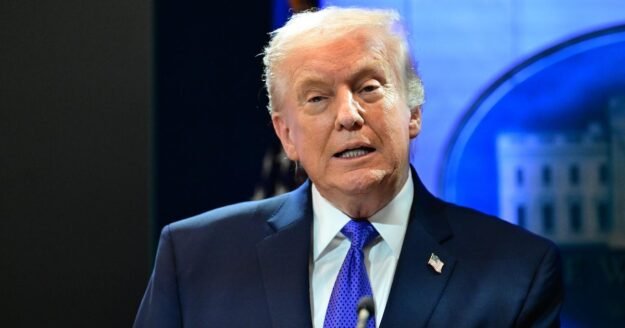
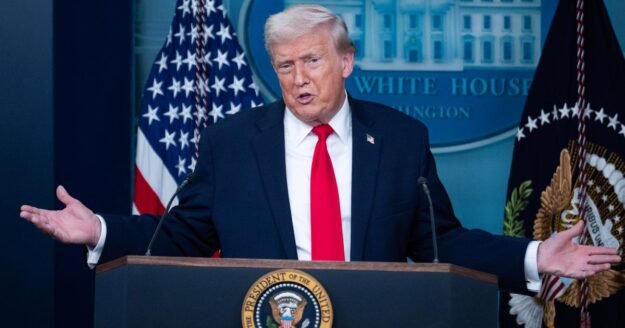
A visibly irritated President Donald Trump blasted the Supreme Court on Friday for striking down tariffs he had imposed under an economic emergency law. He vowed to bolster the broader policy — a central part of his agenda — by using alternative powers to levy import duties on foreign goods.
“The good news is that there are methods, practices, statutes and authorities, as recognized by the entire court in this terrible decision, and also as recognized by Congress” that are “available to me as president of the United States,” Trump said during a hastily scheduled news conference in the White House briefing room.
Specifically, Trump said that he would, in the next few days, put in place a temporary 10% global tariff on all imports under Section 122 powers. If Congress does not act to extend that tariff within 150 days of its implementation, it expires.
While simultaneously berating the court and claiming that its decision actually empowers him, Trump acknowledged that wielding the tariff as an economic and national security weapon will be “more complicated” as a result of the 6-3 opinion invalidating his novel claim of tariff power under the International Emergency Economic Powers Act of 1977.
Though he had long been warned that the court might rule against him, Trump and his advisers still appeared to be scrambling to put together a point-by-point plan to make up for the loss of the most efficient arrow in his tariff quiver and the potential loss of revenues.
“At this point, no one should be surprised that the courts are working against President Trump,” said one Trump adviser who spoke on the condition of anonymity to describe the mood and thinking of Trump’s team. “To say everyone here is irate would be an understatement. But this is not over. We will be heard from again on this. I don’t know that there is a specific plan as of this moment, but it’s not over.”
Longtime Trump adviser Steve Bannon, the host of the “War Room” podcast and an influential voice in the MAGA movement, replied with a four-character text message when asked what would come next on the tariff front.
“#War.”
Trump singled out two of the justices he appointed to the court — Amy Coney Barrett and Neil Gorsuch — for scorn. They voted with Chief Justice John Roberts, who was appointed by Republican George W. Bush, and the three Democratic-appointed justices to block his tariffs.
He also accused the court of being “swayed by foreign interests” but declined to provide any evidence of that.
Asked whether he regretted appointing Gorsuch and Barrett during his first term, Trump demurred, calling Friday’s decision a “terrible” one.
“I think it’s an embarrassment to their families,” he said.
Conversely, he praised Justices Brett Kavanaugh, Clarence Thomas and Samuel Alito, who voted in the minority to leave his tariffs in place. He quoted from Kavanaugh’s dissent and used it to argue that he will have more tariff power going forward.
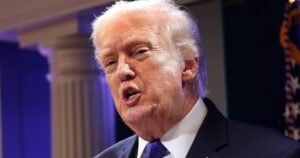
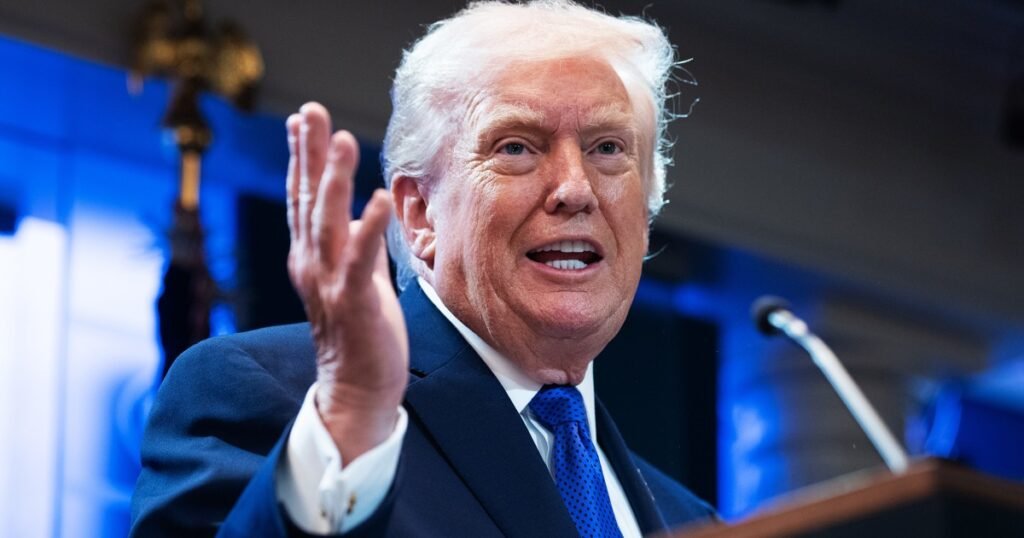
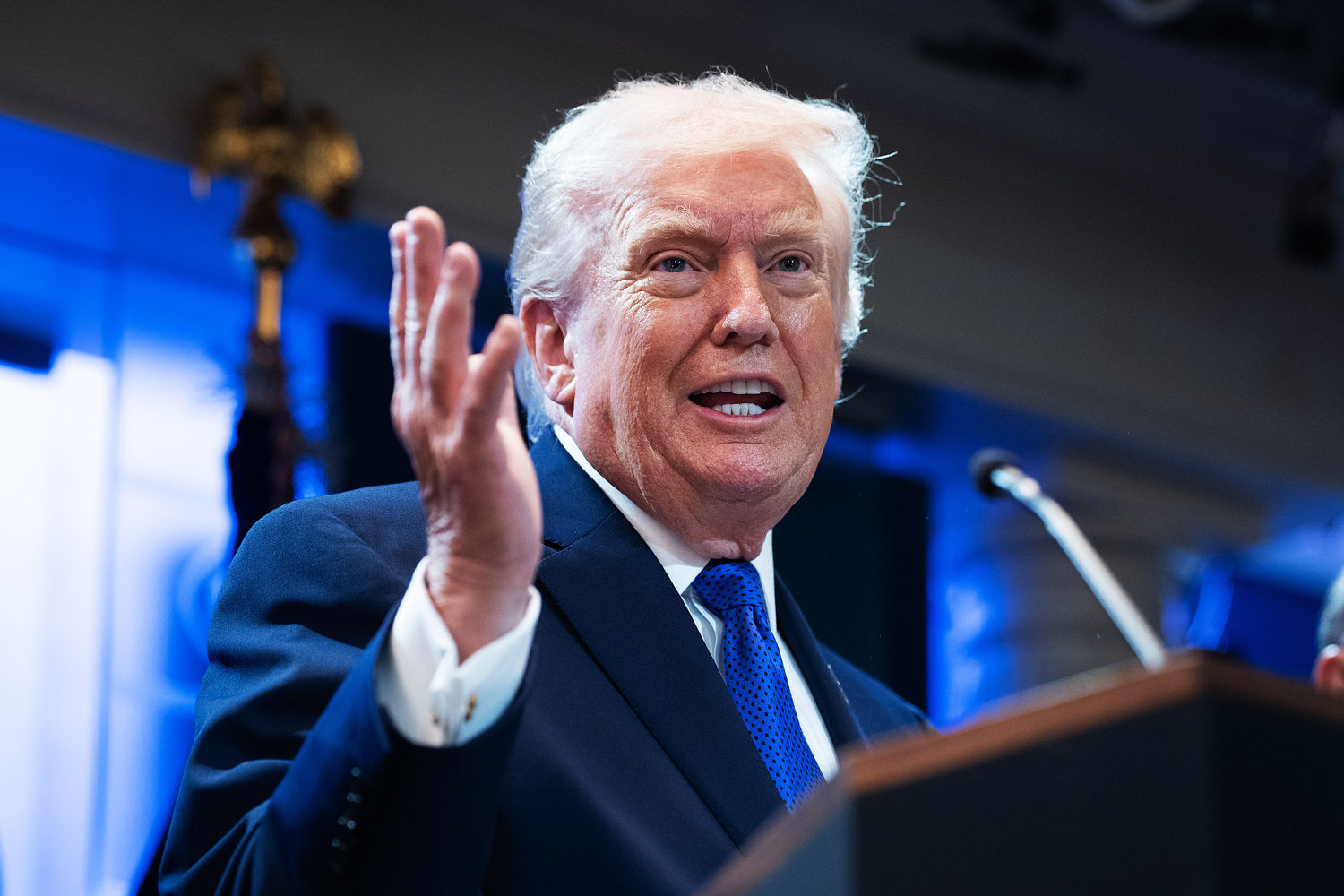
And yet, Trump’s fury was evident in his expression and his voice.
He learned about the decision while he was meeting with a bipartisan group of governors at the White House and speaking to them from a lectern. An aide handed him a note explaining the ruling, according to one governor who was in attendance, and Trump told the room that it was “a disgrace.” Before leaving the room to attend to the White House response, a fuming Trump told the governors that he had a backup plan ready, according to a second person familiar with his reaction.
Marc Short, a longtime Capitol Hill aide who served as a senior White House official during Trump’s first term, said prior to the president’s remarks that Republicans’ chances in November’s midterm elections would be improved if Trump backed down on the tariffs. The reasoning, Short said in a text exchange with NBC News, is that the tariffs are restraining economic growth and hurting consumers.
“If the administration accepts the court ruling, it could help them politically heading into the midterms,” Short said. “Tax relief and deregulation helps spur the economy. The trade agenda is holding it back.”
Still, he said that he expected the White House to push forward using sections of the law that give the president more limited tariff authority to “continue their war on trade.”
In the pivotal battleground state of Pennsylvania, J.J. Abbott, a Democratic strategist, said he felt the ruling would not provide refuge for Republicans who supported the tariffs.
State Democrats have made their opposition to Trump’s tariffs a key part of their campaign.
“Affordability is still going to be a major theme of the campaign and so much damage from the tariffs is already done to consumers’ finances, small businesses and farmers,” he said. “Democrats are still going to be able to hammer them for the impact of the tariffs on prices, jobs and trade.”
Some Republicans on Capitol Hill want to use the legislative process to give Trump the powers that the court said he does not currently have.
“This betrayal must be reversed and Republicans must get to work immediately on a reconciliation bill to codify the tariffs that had made our country the hottest country on earth!” Sen. Bernie Moreno, R-Ohio, wrote on X.
But House Speaker Mike Johnson, R-La., was more circumspect in his public response, stopping short of a promise to legislate.
“Congress and the Administration will determine the best path forward in the coming weeks,” he wrote on X.
Trump claimed that Congress would back him if he asked for additional powers but also suggested he would not make that request. It is not at all clear that he could win enough Republican votes in the narrowly divided House and Senate to implement more tariffs.
“I don’t need to,” he said. “It’s already been approved.”
But what was clear Friday was that Trump is determined to pursue the broader tariff policy that he campaigned on in both of his successful presidential bids, in 2016 and 2024, and which he has implemented in the first 13 months of his second term.
“Trump cares about tariffs more than anything domestically. It’s the cornerstone of his economic approach,” said Michael Toner, a Republican lawyer and a former chairman of the Federal Election Commission. “The White House is not prepared to give up the ghost on unilaterally imposing tariffs.”
You may be interested
Refunds from Trump’s struck-down tariffs remain up in the air
new admin - Feb 20, 2026[ad_1] The Supreme Court’s decision to strike down many of the Trump administration’s tariffs has opened a question with a…
Trump says 32,000 killed in Iran anti-government protests
new admin - Feb 20, 2026President Trump on Friday said that 32,000 people were killed during the recent anti-government protests in Iran. The president's comments…
The best e-reader for 2026
new admin - Feb 20, 2026Any ebook reader will let you cram a Beauty and the Beast-sized library’s worth of books in your pocket, but…