



When Funding Gets Scarce, Savvy Scientists Get … OnlyFans?

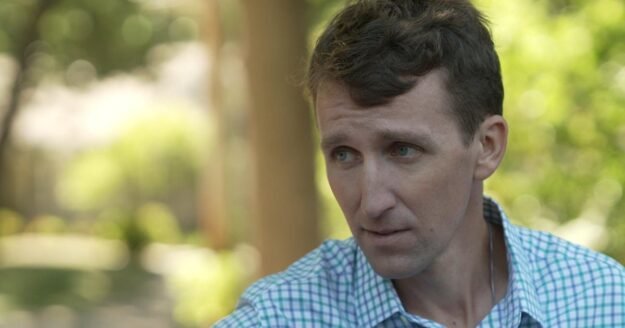
Ecologist Daniel Blumstein has spent much of his career studying marmots, whose behaviors offer scientists insights into how animals respond to climate change. A professor of ecology and evolutionary biology at the University of California, Los Angeles, he also co-directs the Rocky Mountain Biological Laboratory Marmot Project, which is the world’s second-longest-running study of individually marked mammals.
But lately, he’s been worried about the future of the project.
For years, the lab failed to secure a key grant from the National Science Foundation. And when the Trump administration began cutting and freezing funding for federal science research last year, the situation got worse. Now, Blumstein’s team is struggling to hire the staff it needs to ensure the project stays alive long-term.
Blumstein was racking his brain for potential solutions when a new show on Apple TV, Margo’s Got Money Troubles, hit him with some inspiration. The series stars Elle Fanning as a young, single mother who launches an account on OnlyFans—a subscription site known for its explicit adult content—to help pay her bills.
“So I went back to the lab and suggested an OnlyFans page for the marmots. It was a move out of desperation,” Blumstein told Inside Higher Ed. “At first our account was rejected because OnlyFans had to verify everybody’s age and all we had was a picture of a marmot on the site. They didn’t think I looked like a marmot. Then I wrote to them and explained that we were trying a novel way to come up with funding given the cuts we’re facing, and they approved it.”

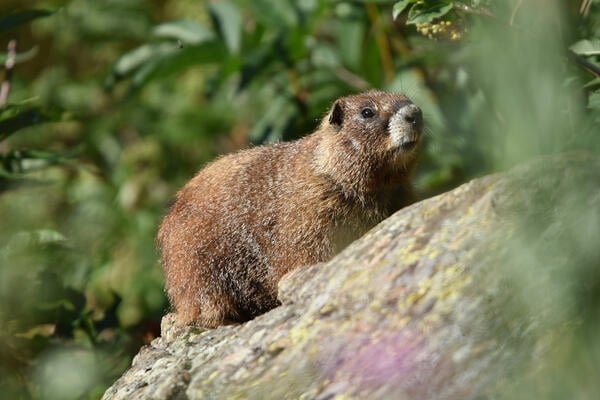
A yellow-bellied marmot chews on some food.
OnlyMarms, which launched in May and now has more than 2,000 subscribers, features short (G-rated) videos of marmots in action, along with information about the furry creatures, which live in holes all over Asia, Europe and North America. OnlyMarms has become so popular that Blumstein and his team have also secured a partnership with Marmot, the outdoor clothing and equipment company, to host the inaugural Fat Marmot Week later this month—a bracket-style competition to determine which yellow-bellied marmot gains the most weight leading up to hibernation season.
Although the fundraising efforts have already yielded thousands of dollars, Blumstein said he hopes the positive response sends a larger message about science funding to the Trump administration.
“This is a story about the failure of funding higher education and research that made us rich,” he said. “People are willing to put their own money up—and they’re certainly willing to put their tax dollars up—to support this sort of long-term ecological research.”
Blumstein spoke with Inside Higher Ed last week about his efforts to save the Marmot Project.
(This interview has been edited for length and clarity.)
Q: What inspired you to study marmots for a living?
A: I’ve always been interested in studying animals in the wild. Before I started graduate school, I was mountain-biking through northern Pakistan and stumbled on these marmots right on the Chinese border. The visibility was amazing—they were social, they were big and they were interacting with the predators. I decided that I wanted to think about predation risk and ended up studying these guys.
I worked with Ken Armitage [the late ecologist who started the ongoing Marmot Project at Rocky Mountain Biological Laboratory in 1962] and did my postdoc with him for three years. After that, I studied marmots in Kansas and Australia before I got a job offer at UCLA. That’s when Ken, who had been working with marmots for 41 years at that point, asked if I wanted to take over the Marmot Project, which I’ve directed since 2001 and now co-direct with Julien Martin, a colleague and friend based at the [University of Ottawa].
We’re trying to keep it going.
Q.: Marmots are adorable to look at, but what are the benefits of conducting long-term scientific research on them?
A: There are 15 species of marmots around the world, and I’ve been fortunate to study eight of them. They’re good to study because they’re diurnal—they’re active during the day. They’re big ground squirrels that live in holes, so if you know where those holes are, you know where to find them. You can then sit and watch them and learn a lot.
For example, marmots have different alarm calls, and I’ve used them as a model system to try to understand the evolution of language-like communication. Marmots are also the largest of the true hibernators, and that hibernation is a major source of mortality. Being able to distinguish predation-related mortality from hibernation-related mortality is one of the insights that we have been able to do that is giving us deeper insights into how organisms respond to climate change.
This is our 65th summer of studying marmots, which gives you the long view. You get insights. You can ask deeper questions and look at change over time. It’s only with long-term studies that you can study evolution in action and understand the adaptive value of traits that may change in different environmental conditions.
But this is just one of many long-term studies that has value. Studying not just marmots, but also plants, insects, mammals, birds for long periods of time yields the data we need to understand some of the most compelling questions we’re asking today about how organisms respond to environmental change.
Q: What’s causing the lab’s money troubles, and what are the implications for the future of the Marmot Project?
A: Ken Armitage had 41 years of consistent National Science Foundation support, and I was able to get 11 years of support from an NSF program called Long-Term Research in Environmental Biology. We’ve been turned down for renewal three times. The last time we applied—which was before the Trump administration’s changes to science funding—we heard from an NSF program officer that they’ll never fund us because they think we have too much data. They gave us some suggestions about how we could create a new data stream, which is what we’re doing now. But that’s neither here nor there, because if “climate change” or “environmental change” are trigger words for the NSF now, we don’t even know what to write about in our grant applications.
We’ve also been getting support for about 30 years through the Research Experiences for Undergraduates program, which the NSF has reduced funding for. REU provides priceless and vital labor for keeping this project alive. We almost didn’t get our renewal last year, and we have no idea if we’re going to get this one—I can’t imagine them funding it.
And now because of the Trump administration’s attacks on higher education, universities are admitting fewer graduate students. UCLA put a cap on grad students, and our department lost about a third of our TA-ships. So we can admit fewer grad students with departmental support. I need to get a new student every two years to have overlapping generations of knowledge in the field to sustain this project, and I’m looking at a hard edge.
We’ve always been gritty and had diverse sources of funding, but the risk of not getting the undergraduates and only getting a graduate student every three to four years has really tipped us over the edge.
It’s not like we’re going to shut down tomorrow, but the writing is on the wall. Some things go extinct with a bang, but a lot of things go extinct with a whimper. The first thing we’ll have to do is reduce the number of days we work in the field, and at some point, we’ll probably have to shut down.
Q: How did your team settle on using OnlyFans—which has an X-rated reputation—as a fundraising tool?
A: GoFundMe doesn’t let you post videos. We’re also not influencers, and Instagram doesn’t give you direct monetization. We wanted to share things, not just beg. We wanted to give people something to learn and get something in return.
I’m absolutely not an OnlyFans apologist, but it was initially established to provide a place where people produce something and viewers can tip them or they can get subscriptions, similar to how people subscribe to Substack. It only became mostly a porn site after they started allowing nudity.
The other benefit we saw with using OnlyFans was reaching a new audience. Ultimately, whether we have federal funding or not, my lab really believes in public communication of science.
Q: What’s been the reaction to OnlyMarms? How much money has it raised so far?
A: It had a slow launch but started taking off in June.
We now have 2,000 subscribers and more than 100,000 views. It’s kind of enlightening that so many people are excited about learning about marmots and being so generous. People have donated about $5,500 and OnlyFans takes 20 percent, so we’ve got about $4,500, and every bit that I don’t have to pay taxes on will go to UCLA. It’s also resulted in the creation of an $ONLYMARMS meme coin, which has so far generated more than $50,000 in transaction fees we can cash in to support our research.
A lot of other people email us and say they don’t want to donate to OnlyFans, so I’ve directed them to donate directly to UCLA, which is a tax-deductible donation and almost all the money will go to our project. As of a couple of days ago, we had 200 donors. People are also donating to the Rocky Mountain Biological Laboratory.
But none of this is going to replace federal funding.
Q: What do you want other researchers who are navigating the same precarious federal funding environment to take away from OnlyMarms?
A: I hope we’ve helped raise awareness of the problems we’re facing, and particularly for the value of federal funding of science and the value of federal funding of long-term ecological research. But I think we’re in a hard spot right now, and you know we all have to try to do whatever we can to keep our research going.
You may be interested

60 Minutes Transcript: The data center uproar
new admin - Sep 21, 2026America, and the world, are in the midst of one of the most profound technological revolutions in human history, with…

Tariffs, inflation, trade wars taking toll on American farmers
new admin - Sep 21, 2026America's farmers face a tough harvest this year with trade wars, tariffs and inflation all taking a toll. The cost…

I asked an expert when you’re entitled to a refund vs a voucher — your rights explained
new admin - Sep 21, 2026It can be frustrating when you try to return an item and a retailer refuses to give you a refund…