


Under Secretary Kent Says Higher Ed Needs a “Hard Reset”

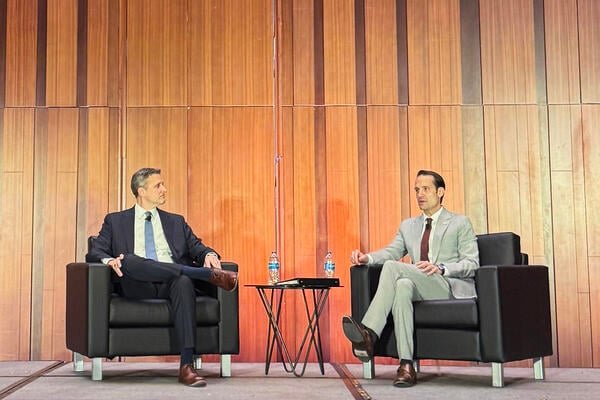
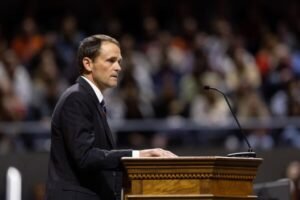
WASHINGTON, D.C.—Education under secretary Nicholas Kent opened day two of the American Council on Education’s annual meeting with a clear and pointed statement—American higher education needs a “hard reset.” And much of that reset, he said, is already underway.
Once a collaborative partnership funded by taxpayers to promote innovation and merit-based social mobility, higher ed has been tainted by ideologically driven universities that accept billions while “resisting any meaningful accountability for results,” the under secretary said. Now, “those days are over.”
“If you want a partnership with the federal government, it must be a real partnership, grounded in transparency, measurable outcomes and a commitment to students and taxpayers alike,” Kent explained, adding that change is coming whether institutions like it or not. “I hope that you all are ready, having made it through the five stages of grief and, most importantly, reaching the final state of acceptance.”
He also cited several public opinion polls showing declining trust in the value of a college degree.
“To paraphrase James Kvaal … ‘This is not a PR problem; this is an actual problem for you,’” Kent said, drawing from a separate session the previous evening that was closed to the media and deemed off the record.
But many college leaders in the room appeared to take issue with Kent’s comments. Throughout the under secretary’s speech, many shared murmurs of disagreement and at times laughed, scoffing at his remarks. A few left the room.
After Kent’s speech, Jon Fansmith, the council’s senior vice president of government relations, took to the stage and offered a sort of rebuttal.
“I will point out the irony with [Kent’s] concluding remarks that they want to work with us,” he said. “Working generally involves a partnership, not acquiescence.”
Kent’s Friday morning keynote captured the tensions between the sector and government officials over what flaws exist in American higher education and how to fix them. Very few—be they lawmakers, university presidents or accrediting agencies—disagree that mounting student debt, struggles to keep pace with workforce demands and threats to campus free speech are problems. Where opinions diverge is on what changes need to be made in response to these issues, who should make them and how solutions should be regulated.
Actions and statements made by the administration throughout its first year suggest that in many cases, it will use executive action and regulation to force reform.
Congressional Republicans fell in line with Trump’s agenda by passing a sweeping spending bill that dramatically limited loan access and launched a new earnings test that could cost hundreds of thousands of students access to federal aid. Kent boasted that his department reached consensus on every provision of the bill when ironing out the details in a process called negotiated rule making, though some of the negotiators who sat at the table say that unanimous agreement was strong-armed.
Meanwhile, since the president’s first days in office, multiple executive agencies have opened civil rights investigations and frozen billions in funding to crack down on the so-called mismanagement of accusations of antisemitism, failure to protect female athletes and illegal diversity, equity and inclusion programs.
“The question isn’t whether change is coming—it is whether you will help lead it,” Kent said during his speech.
There is no denying the speed and intensity with which the administration has worked to enact the changes in last summer’s reconciliation bill and bring higher education institutions to heel. Sector stakeholders remain concerned about their ability to be in compliance with the new regulations by the July 1 deadline and the consequences that might follow.
Fansmith advised college leaders to stay alert and informed through the remainder of the Trump administration. While the upcoming midterm elections, economic challenges and international affairs may draw the attention of Trump and his immediate White House advisers away from higher ed, that doesn’t mean the war is over, he said.
Instead of Truth Social attacks on individual faculty members or wealthy universities from the president himself, the entire sector should expect a more widespread, pervasive ambush, Fansmith warned.
“The president’s not going to be talking about Harvard nearly as much as he did last year, but the Department of Education is going to be doing more and more to implement systemic change,” he said. It will be “putting the things in place that will impact 4,000 institutions rather than 50. And we saw that across all of the under secretary’s proposals that he laid out.”
Still, just as it had the day before, the council urged institutions not to give in. Instead, Fansmith encouraged them to resist the “federal takeover.” Circling back to the under secretary’s remarks about grief and acceptance of change, he reminded the audience that grief is about permanent loss, while “nothing that has happened in the last year is permanent.”
“This administration wants us to move to acceptance of all of their policies … [And] of course, we’ll follow the law to the best of our ability,” he said. But “the one thing I didn’t hear in any of the conversations we’ve had over the last couple days is acceptance.
“We can deal with change. We always do,” he added. “But we don’t have to accept a view of who we are or what we do that is so misleading and misrepresentative.”
You may be interested

Dutch police probe explosion outside a pro-Israel Christian center
new admin - Apr 04, 2026A small blast outside a pro-Israel Christian center in a central city in the Netherlands is under investigation.The explosion on…

1 dead, dozens injured in crush during rally at Peru soccer stadium
new admin - Apr 04, 2026At least one person died and 60 others were injured in what seemed to be a crush of fans at…

Dunelm’s £29 camping chair dubbed perfect for gardens
new admin - Apr 04, 2026With the weather at last beginning to feel spring-like, many of us will be attempting to secure a spare few…