


UNC Board OKs Definition of What Academic Freedom Is—and Isn’t


The UNC system Board of Governors has now defined academic freedom in its policies.
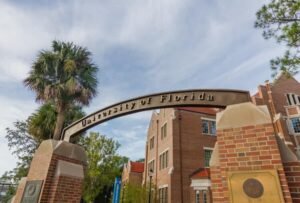
Ryan Herron/iStock/Getty Images
The University of North Carolina Board of Governors voted Thursday to approve a lengthy definition of what academic freedom does and doesn’t protect throughout the state university system. It says academic freedom includes the right to teach and research “controversial or unpopular ideas related to the discipline or subject matter,” but also says “academic freedom is not absolute.”
The move came despite opposition from the American Association of University Professors, which, alongside the American Association of Colleges and Universities, wrote the seminal 1940 definition of the concept. In a statement, AAUP said UNC’s definition “will chill speech on campus and lead to more retaliation against faculty teaching or discussing politically contentious topics. The imprecise language in this policy will open the UNC System to lawsuits when faculty are retaliated against or fired.”
The feelings of the statewide, elected UNC Faculty Assembly appear more complicated. Assembly chair Wade Maki, along with the UNC system, started the push to write the definition. His body approved sending a definition to the system in October, but the system added extensive language to that, including that “academic freedom is not absolute” and definitions of what academic freedom isn’t.
After the board put out the latest iteration for public comment last month, it heard feedback both for and against. In response, the system incorporated more edits “mostly proposed by leadership of the Faculty Assembly,” said Andrew Tripp, the system’s senior vice president for legal affairs and general counsel. Among the changes was editing a line that said teaching “clearly unrelated to the course description” wouldn’t be protected to instead say teaching that “lacks pedagogical connection to the course, discipline, or subject matter” wouldn’t be protected.
Maki told the board Thursday that, “while there was a faculty consensus in our work defining what academic freedom is, there is not faculty consensus on the additions describing what academic freedom is not.” But, he still said, “This has been a bold project, challenging and worthy.”
“It will serve as a model for other states,” Maki said.
The board approved the definition in a voice vote, with no dissent heard.
Peter Hans, the system’s president, said this is the first time the UNC System has adopted “an actual definition of academic freedom.” The system had a two-paragraph “Academic Freedom and Responsibility of Faculty” policy, which the new definition significantly expands.
Hans said having a definition “as opposed to simply referring to a vague concept” will help to guide the system, which includes 16 public universities.
“Commonly held definitions help us all share the same reality,” he added. “By strengthening the UNC System Code to include more detail about the purpose and the parameters of academic freedom, we hope to make it easier for everyone to appreciate the privileges and the obligations that come with serving our public universities.”
The new UNC policy promises many of the same protections found in other descriptions of academic freedom, in addition to the caveat about how “academic freedom is not absolute.” It lists three elements that academic freedom doesn’t include:
- “Teaching content that lacks pedagogical connection to the course, discipline, or subject matter.”
- “Using university resources for political activity in violation of university policy.”
- “Refusing to comply with institutional policies.”
The policy also stresses that administrators also share in implementing the university’s mission, including, at times, regulating faculty. It says administrators have the responsibility to ensure “faculty activities align with the university’s mission as established under UNC policy and meet accreditation standards” and to “intervene when faculty conduct violates professional norms, creates a hostile learning environment as defined by policy and law, or undermines the institution’s educational objectives.”
Further, it says, “Management is responsible for resource allocation and program viability,” including approving and eliminating programs and setting “broad curricular frameworks.” It also contains a section on student academic freedom, which says that “students are responsible for learning assigned course content” but are also “free to take reasoned exception to concepts and theories presented in their classes.”
Maki, who is set to leave his Faculty Assembly chair position after four years, defended his tenure in his presentation to the board, which was complete with references to Niccolò Machiavelli’s The Prince, his Havanese dogs and the musical artist Prince. (Some faculty have criticized Maki as too deferential to authority.)
“Representing faculty, the temptation exists to come in and tell the system board and chancellors how it ought to be or what you need to do,” Maki said. “That would’ve been a strategic mistake. The point is that too many of us are focused on the ideal of what ought to be done that we neglect the realities of how things actually work and what is possible.”
“While some faculty might prefer to have a fight than win one, I believe we have shown how to get a win without a fight,” he said.
And he wasn’t done suggesting that the UNC board define long-contentious faculty-related topics in its code. He suggested they take up a new quest: defining shared governance.
“If we don’t clearly define shared governance,” he said, “outsiders will.”
You may be interested
DHS reportedly detained a Columbia University student and content creator
new admin - Feb 26, 2026Students are seen on the campus of Columbia University on April 14, 2025, in New York City. An immigration judge…
Pentagon officials sent Anthropic best and final offer for military use of its AI amid dispute, sources say
new admin - Feb 26, 2026Pentagon officials on Wednesday night sent Anthropic their best and final offer in negotiations for use of the company's artificial…
We asked experts how to build a resume for the AI hiring era
new admin - Feb 26, 2026With AI-backed hiring on the rise, tips for "hacking" your resume are all over social media. As job search companies…