



Trump wants other countries to help reopen the Strait of Hormuz. That might not be so easy.

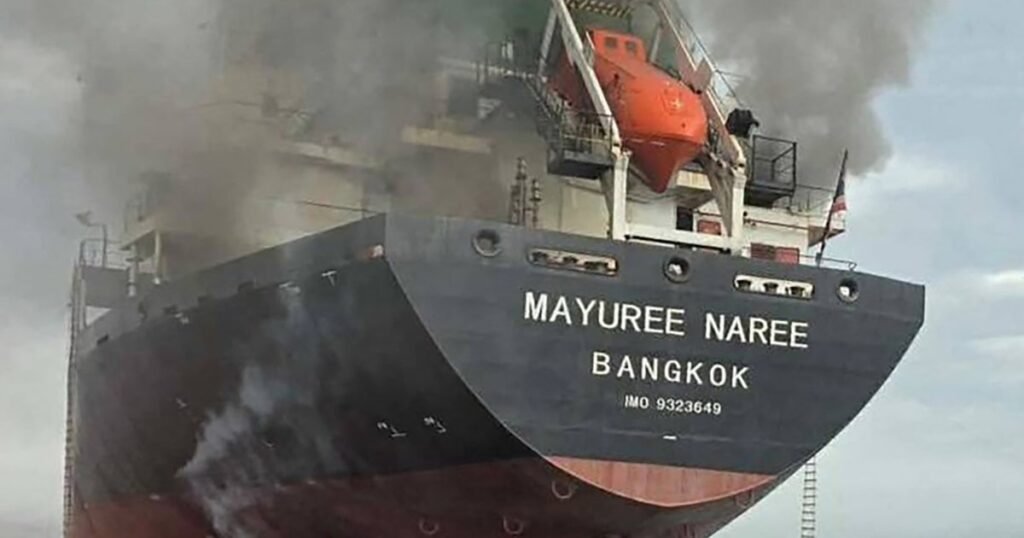
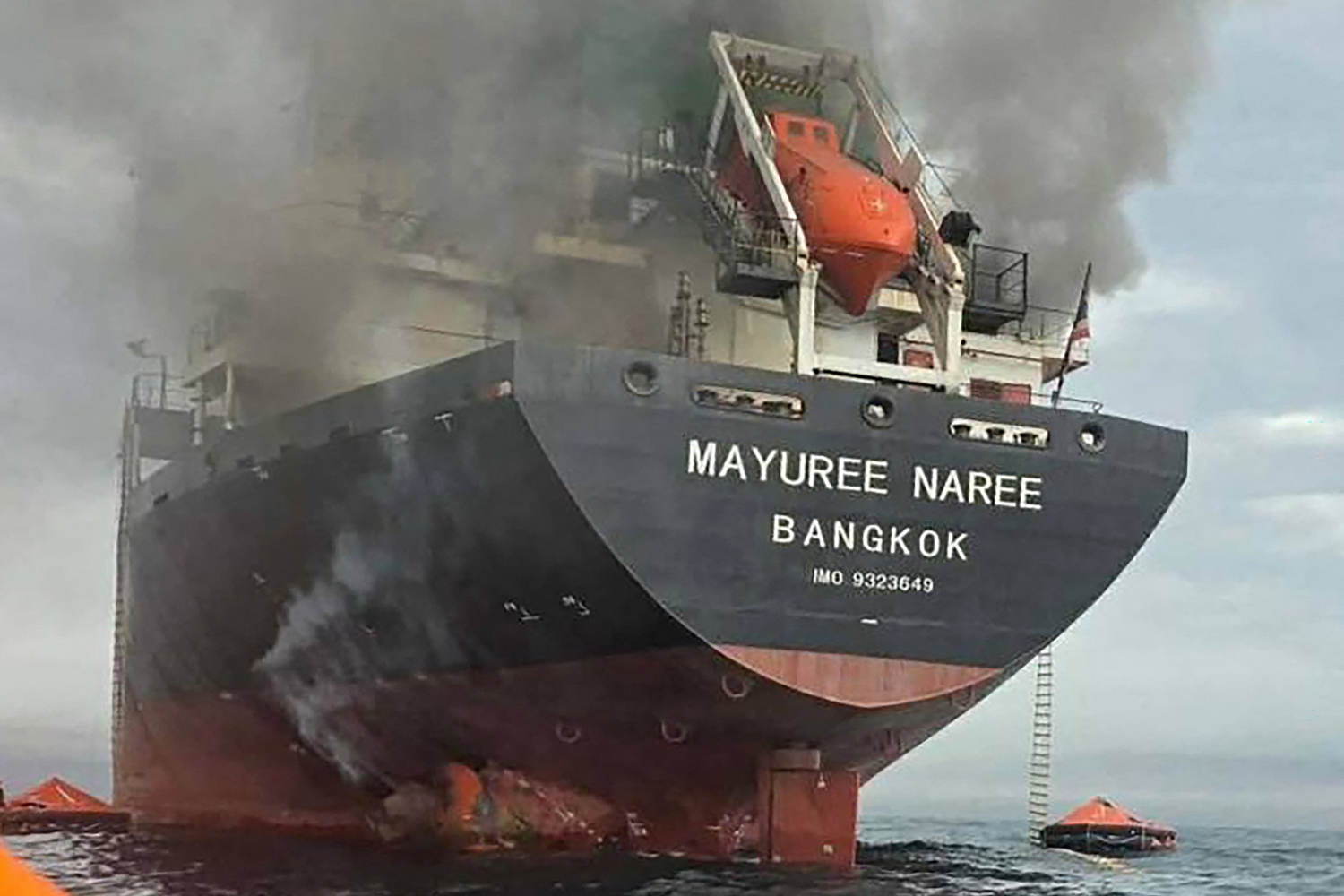
U.S. allies and rivals responded cautiously after President Donald Trump said they should police the Strait of Hormuz, as Iranian threats to strike shipping on the vital trade route continue to cause chaos in global markets.
“Many countries, especially those who are affected by Iran’s attempted closure of the Hormuz Strait, will be sending War Ships” to secure the shipping route, he posted Saturday on Truth Social, listing China, France, Japan, South Korea, the U.K. and “others” among the nations he hoped would provide support.
“The U.S. will also coordinate with those Countries so that everything goes quickly, smoothly, and well. This should have always been a team effort, and now it will be,” he added in a subsequent post.
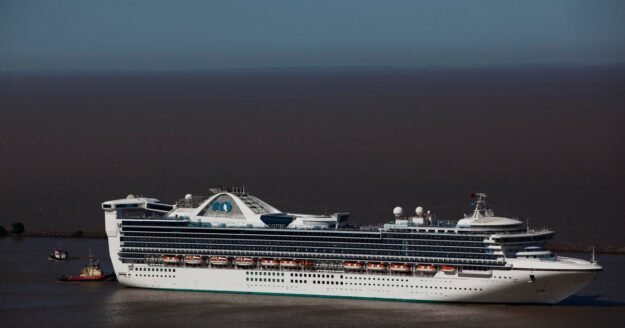
The Strait of Hormuz, which links the Persian Gulf to the open ocean, is a key trade artery through which around a fifth of the world’s oil passes, carried by about 3,000 ships sailing through the corridor each month. But numerous ships have come under attack in the area since the war began two weeks ago, all but bringing a halt to the trade and leading to a dramatic rise in oil prices.
In a phone interview with NBC News on Saturday, Trump said several countries would help secure the strait. “They’ve not only committed, but they think it’s a great idea,” he said. Energy Secretary Chris Wright told NBC News’ “Meet the Press” on Sunday that he expects China to be a “constructive partner” in reopening the strait.
But the nations Trump listed in his original post, which have all been affected by the strait’s closure, have so far responded tepidly to Trump’s request for support.
Tokyo, a close ally of the U.S., has not officially responded to Trump’s call. Its foreign ministry told Japanese outlet NHK that Japan would not immediately dispatch naval vessels at Trump’s request, saying: “Japan decides its own response, and independent judgment is fundamental.”
The French government did not immediately respond to the request. While it has already deployed ships to reassure allies in the wider region, and French President Emmanuel Macron has previously raised the prospect of escorting ships through the strait in the future, its foreign ministry said on X Saturday that its ships would remain in a “defensive” posture in the eastern Mediterranean.
A spokesperson for the Chinese Embassy in Washington told CNN that China is calling for an immediate cessation of hostilities, without any direct response to Trump’s request.
British Energy Secretary Ed Miliband told NBC News’ British broadcasting partner Sky News on Sunday that “the best and most conclusive way to get the Strait reopened is to get this conflict to come to an end,” though he said the U.K. was “talking to our allies, including the U.S.” on any help that could be provided.
He said there are “a range of things” being looked at, including the provision of “autonomous minehunting equipment.”
South Korea’s presidential office said Sunday that it would carefully review the request.
“We are taking note of President Trump’s remarks on social media. South Korea and the United States will continue to communicate closely and carefully review the matter before making the decision,” South Korean’s presidential office told NBC News on Sunday.
While it remains to be seen what action these nations could eventually take in response to any looming economic crises, their lukewarm response appears to pour cold water on any hopes Trump may have had for a quick resolution to the blockade.
“The countries Trump named have all gone quiet, which is quite telling,” H.A. Hellyer, a senior associate fellow at the Royal United Services Institute in London, told NBC News. France is “the closest thing to a yes,” he said, though even Macron is talking about something “purely defensive.”
“That’s a long way from an actual mission, and I don’t expect one to happen. More investment will go into de-escalation efforts in my opinion,” he added.
Hellyer said that even if a coalition did form, “safe passage isn’t guaranteed,” with mines, drones, boats and anti-ship missiles all a threat, thoughts echoed by Michael A. Horowitz, a geopolitical and security analyst.
“Protecting ships is a very big gamble,” he said. “On the operational side, you’re putting military assets inside a very narrow corridor, giving Iran multiple opportunities to hit at short distance.”
To suppress these threats, Horowitz told NBC News, “you need more than aerial and naval power: You’d need boots on the ground, along key areas of the coast.”
In any case, Horowitz said he was skeptical that such a force could stabilize markets. “Just one attack is enough to suspend traffic,” he said. “The bar is really high to create enough confidence to lift the de facto closure.”
Trump, who has previously been bullish about reopening the shipping route through military might as the U.S. bombs Iran, appeared to acknowledge Saturday that it would be more challenging to stop Tehran from attacking ships.
“We have already destroyed 100% of Iran’s Military capability, but it’s easy for them to send a drone or two, drop a mine, or deliver a close range missile somewhere along, or in, this Waterway, no matter how badly defeated they are,” he wrote on Truth Social.
The acknowledgement came a day after Defense Secretary Pete Hegseth suggested that the blocked strategic waterway was not a major concern. “We have been dealing with it and don’t need to worry about it,” he told a press conference on Friday.
Trump’s call on European allies for support in the war, meanwhile, comes a week after he told the U.K.’s Prime Minister Keir Starmer that British aircraft carriers were not needed in the region.
In a Truth Social post addressing Starmer last Saturday, Trump said: “We don’t need them any longer — But we will remember. We don’t need people that join Wars after we’ve already won!”
Tensions with European allies have been high amid the conflict, with Trump having earlier clashed with the U.K. and Spain over the use of their military bases.
“This is not Winston Churchill that we’re dealing with,” Trump said after Starmer refused to allow the U.S. to use British bases as part of its initial strikes, only later allowing the use of its bases for “defensive” actions.
A day later, after Spain barred U.S. military planes from using its jointly operated bases in Andalusia, Trump said the U.S. would seek to “cut off all trade with Spain,” a member of the European Union’s single market.
You may be interested
Iranian foreign minister says “we don’t see any reason why we should talk with Americans”
new admin - Mar 15, 2026Iranian Foreign Minister Abbas Araghchi said Sunday that "we don't see any reason why we should talk with Americans" as…
Sen Eric Schmitt calls for legislation as sports ticketing prices rise
new admin - Mar 15, 2026[ad_1] NEWYou can now listen to Fox News articles! Sports fans hoping to follow their favorite team throughout the season…

Behind the Music of the Show
new admin - Mar 15, 2026[ad_1] Six days before the 98th Academy Awards, at the Eastwood Scoring Stage at Warner Bros. Studios in Los Angeles,…