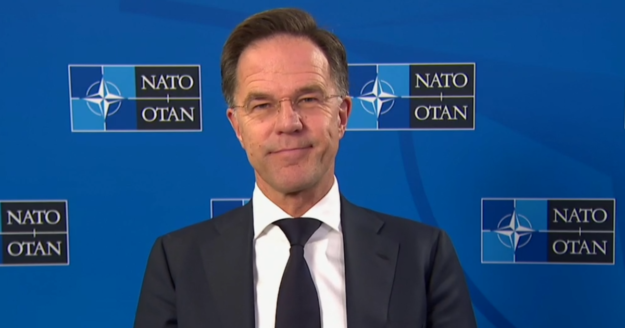


Transcript: NATO Secretary General Mark Rutte on “Face the Nation with Margaret Brennan,” March 22, 2026

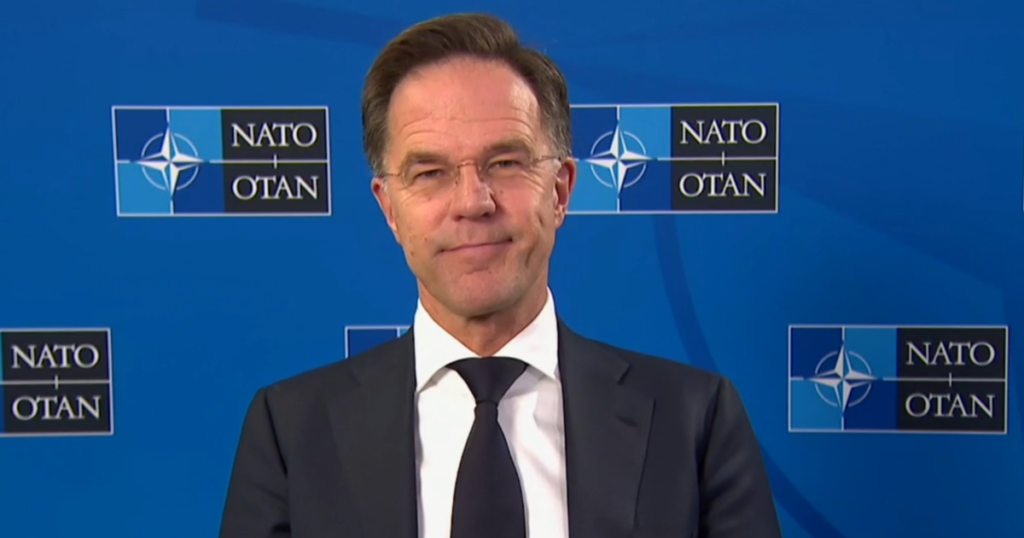
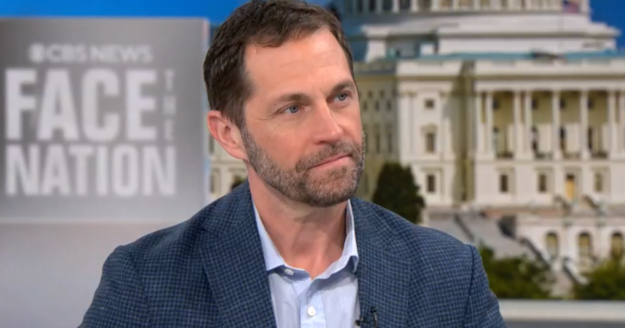
The following is the transcript of the interview with NATO Secretary General Mark Rutte that aired on “Face the Nation with Margaret Brennan” on March 22, 2026.
MARGARET BRENNAN: We turn now to NATO Secretary General, Mark Rutte, who joins us this morning from The Hague in the Netherlands. Welcome back to ‘Face The Nation.’
NATO SECRETARY GENERAL MARK RUTTE: Margaret, good to be back on the program. Good morning.
MARGARET BRENNAN: Good morning. We did see that Iran fired two missiles at Diego Garcia. That’s that island in the Indian Ocean, which houses a U.S. UK joint base. That was 4000 kilometers from Iranian territory, furthest Iran has ever gone. You just heard Ambassador Waltz say there might be a difference there in how Israel and the U.S. assess that capability Iran has in terms of what they fired. But Israel says these were intercontinental ballistic missiles that could hit Berlin, Paris and Rome. Does NATO share that Israeli assessment?
SECRETARY GENERAL RUTTE: We cannot confirm that at the moment, so we’re looking into that. But if this would be true, it is the more evidence that what the President is doing here, taking out the ballistic missile capability, taking out the nuclear capability from Iran, is crucial. And exactly as the ambassador just said, Ambassador Waltz, we have seen with North Korea, if we negotiate for too long, you might pass the moment where you can still get this thing done, and North Korea now has the nuclear capability. If Iran would have the nuclear capability, including, together with the missile capability, it will be a direct threat, a existential threat, to Israel, to the region, to Europe, to the stability in the world. So the president doing this is crucial, and I’ve seen the polling, but I really hope the American people will be with him, because he is doing this to make the whole world safer.
MARGARET BRENNAN: So but just to be clear at this hour, do you believe that Iran could bomb Berlin, Paris and Rome? Are they all within direct threat range?
SECRETARY GENERAL RUTTE: What we know for sure is that they are very close to having that capability, whether this case with the UK base, Diego Garcia, we are still assessing. But if it is true, it means they already have that capability. If it is not true, we know they are very close to having that capability. And that is exactly why I feel in Europe, that most politicians, it resonates with them. What the President is doing here, which is taking out- degrading Iran’s capability to be, again, an exporter of chaos, sheer chaos to the region, to the world.
MARGARET BRENNAN: Well, I’m sure the president appreciates your praise, but he has been very frustrated, and made that clear this week with NATO and the European allies. He called NATO quote a paper tiger without the US. He said they complain about high oil prices when they forced to pay but they don’t want to help open the Strait of Hormuz. Easy for them cowards. We will remember.
SECRETARY GENERAL RUTTE: I’ve been in several conversations this week with the president, and the good news is that, look, we had the U.S. for weeks planning for Epic Fury and for reasons of security and safety, they could not share with European allies and allies around the world and partner countries what they were doing, because that would have jeopardized the effect of the first- first attack–
MARGARET BRENNAN: –Or it would have allowed you to plan
SECRETARY GENERAL RUTTE: So it is only logical that European countries needed a couple of weeks to come together. But at this moment, the good news is this, that since Thursday, 22 countries, most of them NATO, but also Japan, Korea, Australia, New Zealand, Bahrain, the UAE, have come together to basically answer three questions, what do we need? When do we need it? And where do we need it? These three questions are now worked through to answer the president’s call, to make sure that we secure the free sailing through the Strait of Hormuz.
MARGARET BRENNAN: To be clear, the president has said four to six weeks for this war, that would put us in early April for an end to combat operations. But then he’s also sending troops. He’s also possibly asking Congress for more money. What’s the when part? When did he tell you your support from these European countries will be needed because from the sources I speak to, they are not willing to send in the midst of combat.
SECRETARY GENERAL RUTTE: Obviously, I cannot in a program which is aired around the world, and you have a lot of viewers, discuss with you what is discussed in secrecy, but I can assure you that, of course, and the UK is- is at the forefront of leading this effort of the 22 countries on the leadership of Prime Minister Starmer. I’ve been in the phone call this week with Prime Minister Starmer and President Macron, and again, this has led to 22 countries now signing up to this initiative. And indeed, one of the key questions is not only the what question and the where question, but also the when question. And this is why military planners are now working together to make sure that we are ready, to make sure that that street- that Strait of Hormuz, that we secure the free sailing there, which is crucial for the world economy.
MARGARET BRENNAN: The president seemed to say, though, that this will go beyond Iran in terms of the impact on his thinking about NATO and his willingness to help Europe. Take a listen to this.
[DONALD TRUMP SOT]
DONALD TRUMP: I think NATO is making a very foolish mistake. And I’ve long said that, you know, I wonder whether or not NATO would ever be there for us. So this is a this was a great test, because we don’t need them, but they should have been there.
[END SOT]
MARGARET BRENNAN: The president continues to frame this as sort of like a quid pro quo, and he’s also mentioned Ukraine in the same context, saying, I help Europe with Ukraine. Why aren’t they helping me? Are you worried that this is going to hurt NATO’s goals elsewhere?
SECRETARY GENERAL RUTTE: What I know is that we always come together. It was under President Trump’s leadership that we had the extremely successful Summit in the Hague where we agreed to spend 5% of our GDPs on defense, and therefore equalizing for the first time since Eisenhower. So this is quite some time- some time back in history, equalizing what the Europeans are spending and what Americans are spending, not only because it is fair that we all spend the same, and this was a wish from Trump 45 and now is Trump 47 he got this done, but also because we need it, because of the Russian threat and our other adversaries. Then on Ukraine, it is again the U.S. providing critical intelligence support and weapons flow, working together with Europeans to secure Ukraine’s fight against the Russians, making sure they have what they need. And now with Iran, I’m absolutely convinced, and I understand the president’s frustration that it takes some time, but again, I also ask for some understanding, because nations had to prepare for this, not knowing and for good reasons about the initial attack on Iran, but now coming together to make sure that we can be able to secure the Strait of Hormuz.
MARGARET BRENNAN: No but to be clear, I’ve spoken to some NATO members who say this is a defensive alliance, not an offensive one. We didn’t sign up to go do what the president is asking us to do. But on the Russia point you just made, the European Council president said the U.S. decision to lift sanctions on Russian oil exports. Is very concerning as it impacts European security. This is part of what President Trump’s doing to try to stop the spike in oil prices here at home, the Treasury Secretary says this means about $2 billion is going to Russia now, President Zelenskyy says it’s more like 10 billion. Doesn’t this benefit Vladimir Putin?
SECRETARY GENERAL RUTTE: Well, this is the thing the president has to balance all these different interests. I know that he is with his team, with Jared Kushner and Steve Witkoff and Marco Rubio. They are constantly working with the Ukrainians to put maximum pressure on the Russians to come to a deal. I know–
MARGARET BRENNAN: This isn’t maximum pressure.
SECRETARY GENERAL RUTTE: –I spoke an hour and a half with President Zelenskyy in London. He wants to get the deal done, and we have to make sure that we also take this to the Russians, to make sure that they are willing to play ball. It is the president putting that pressure together with the Europeans. But again, he has to balance all these different interests. So I’m not going to comment on each element of what is happening here, but his effort to bring the war in Ukraine to a successful end is crucial. He was the only one who was able to break the death lock with Putin when he made the first phone call in February last year, and he has consistently, with his team, done what is necessary to put that pressure, of course, on the Ukrainians, and they want to play ball. They show this. They want to end the war, and are also with the Russians.
MARGARET BRENNAN: Well, we’ll see if Vladimir Putin wants to play ball. Secretary General, thank you for your time, and we’ll be right back with a lot more ‘Face the Nation.’ Stay with us.
You may be interested

Chappell Roan ‘really sad’ over claims her security guard upset footballer’s daughter | Ents & Arts News
new admin - Mar 22, 2026Chappell Roan has said she is "really sad" after claims her security guard made the daughter of footballer Jorginho cry.…
Democratic Rep. Jason Crow says “what I’m not going to do is just throw money at the Iran war”
new admin - Mar 22, 2026Democratic Rep. Jason Crow of Colorado, an Afghan war veteran, told "Face the Nation with Margaret Brennan" that he would…
Senate advances Markwayne Mullin’s nomination for DHS Secretary in procedural vote
new admin - Mar 22, 2026Washington — The Senate advanced Sen. Markwayne Mullin's nomination for Department of Homeland Security secretary on Sunday after the president…