


Transcript: Govs. Laura Kelly of Kansas, Andy Beshear of Kentucky, Mike Braun of Indiana and Mike DeWine of Ohio on “Face the Nation with Margaret Brennan,” Feb. 22, 2026

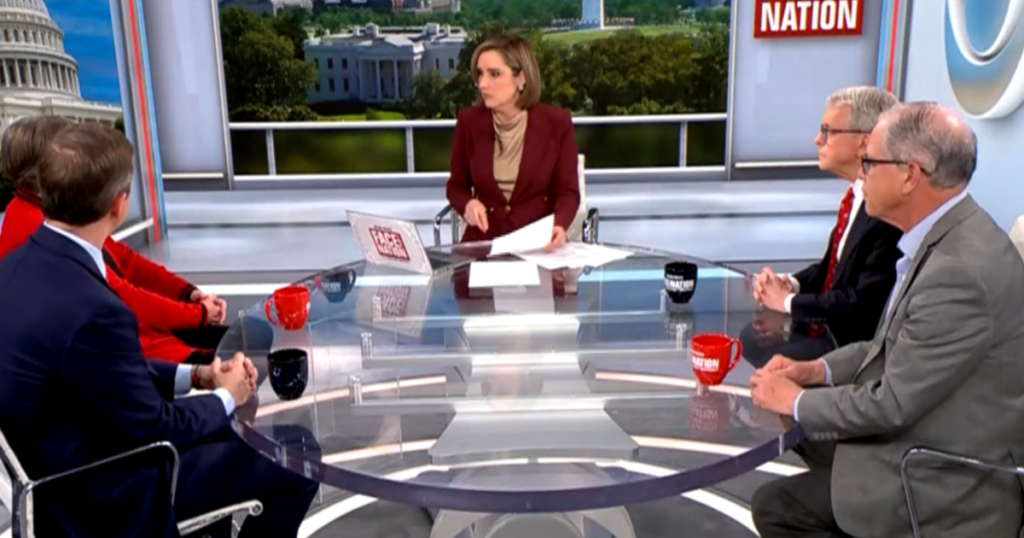
The following is the full transcript of the interview with Govs. Laura Kelly of Kansas, Andy Beshear of Kentucky, Mike Braun of Indiana and Mike DeWine of Ohio that aired on “Face the Nation with Margaret Brennan” on Feb. 22, 2026.
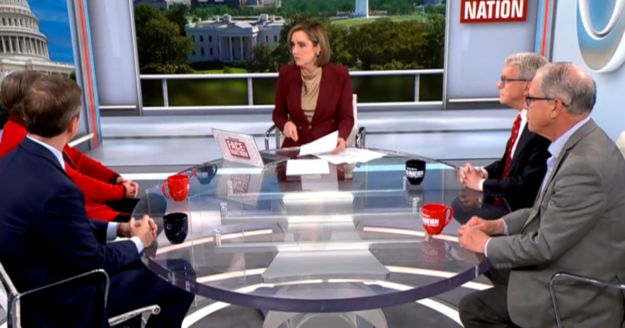
MARGARET BRENNAN: Every year, America’s governors gather here in Washington, and we’re joined now by Kansas Democrat Laura Kelly, Kentucky Democrat Andy Beshear, Ohio Republican Mike DeWine and Indiana Republican Mike Braun. Thank you all for being here and having a bipartisan conversation, they are rare these days, and we enjoy them. I- There’s so much to talk about, but I need to start on this big decision from the Supreme Court, because it has a huge impact on the economy, including in many of your states. It was a 6-3 ruling from the court that President Trump exceeded his authority when he imposed tariffs on certain items by using this 1977 law. A dozen states and a handful of small businesses had sued over these tariffs, which is how it ended up in the courts in the first place. So let me start with you, Governor Kelly, what impact will this have on your state? Do you know yet?
GOVERNOR LAURA KELLY: I don’t know the specifics, but I’m hopeful, optimistic, that it will settle some of the issues that we have, particularly in our agricultural industry. You know, they’ve been hit very, very hard by these tariffs, and I’m hoping that this court decision will reverse some of those and allow them to get back to business again.
MARGARET BRENNAN: Governor Beshear, Kentucky bourbon, had been hit hard by those retaliatory tariffs. Does this ruling do much for that industry, or, more broadly, for your state?
GOVERNOR ANDY BESHEAR: I hope so. Tariffs are a tax on the American people. We’ve seen studies that show that 90% of these tariffs are being borne by American business. Those are all in our states, as well as our people. We’ve seen parts of the economy slow down because of it. It can add 30% more cost to a major new construction project, which could slow down new jobs coming to our communities. Bourbon has been hit hard, and now this is the second straight time, and this is from a state where both of our U.S. senators and this governor, despite being in different parties, are all against tariffs.
MARGARET BRENNAN: Governor Braun, for you, what are you seeing out in Indiana? Because we checked the stats and it looked like your auto and machinery manufacturing have lagged a bit. The Indiana business review says your farmers were hit hard by retaliatory tariffs. Is this going to bring relief?
GOVERNOR MIKE BRAUN: So Indiana’s along with Wisconsin, the two biggest states per capita manufacturing, so tariffs would have been a plus due to the industries that have been kind of hollowed out. You look at Gary, Indiana, that was the largest, second largest city in Indiana. Steel goes overseas. I think the key is-is trade has to be fair and free, and from the Marshall Plan through rebuilding the global economy, we did some things that got that out of balance. I mean, we were in a trillion dollar, give or take, annual deficit in trade, $2 trillion on our fiscal account. That turns you into a debtor nation. So ideally, through reciprocity, you get things down and even free and fair and get back on an even playing field over those 40-50, years, it got imbalanced, and I think that’s where Trump was coming from.
MARGARET BRENNAN: But the court said he over, over reached–
[CROSS TALK]
GOV. BRAUN: Well, that’s that’s a constitutional issue, and–
MARGARET BRENNAN: Yes.
GOV. BRAUN: And you’re going to have to deal with it.
MARGARET BRENNAN: In your state, though you said you believed this theory, that it might actually help bring back some of those manufacturing jobs. Did you see that it did any of that?
GOV. BRAUN: Yes, it was starting, I mean, the amount of investment that’s coming back to this country that whooshed out of it, that created chronic trade deficits, that needs to be rectified. And you can do that through tariffs. You can do it through trade negotiations, and we were going the wrong way for a long time.
MARGARET BRENNAN: So you think this is a negative?
GOV. BRAUN: I think the other ways to continue what’s already occurred, it’ll be interesting with the countries they’ve already done deals with, whether they’ll try to renege. I got a feeling a lot of them will stay put with the trade deals they put in place.
MARGARET BRENNAN: Governor DeWine for you in Ohio, the Cleveland Fed said the tariffs drove price increases across multiple sectors in your state, including in manufacturing and including in retail. Do you believe their analysis, or do you believe the President’s analysis?
GOVERNOR MIKE DEWINE: First of all, Margaret, I don’t think we know what’s going to happen–
MARGARET BRENNAN: Now after this ruling?
GOV. DEWINE: You know, look, the President, I’m sure, is going to look for any way he can to basically go back and do-do this-
[CROSSTALK]
MARGARET BRENNAN: He pretty much said that, right, at 10% global tariffs.
GOV. DEWINE: One of the dissents certainly said he had the authority to do it. We’ll have to see. So I don’t think anybody knows. It’s been mixed for us. I think you know, for agriculture, particularly soybeans, for example, it was not, it was not helpful. But we are, we are a manufacturing state. And I think one of the things that we learned all of us who were governors at the time during Covid Is that the supply chains, we got to make more- We’re not- we’re broken. We have to make more things back here in the United States, but I think that’s a general feeling of the, of the public. So I think as- as a manufacturing state, you know, we’re seeing some new investment coming in. It’s hard to tell sometimes. Do you attribute it to the fact that they now have to be investing more and don’t want to have the tariffs or not? But my feeling is that we’re getting a lot that’s coming in because frankly, because of those tariffs.
MARGARET BRENNAN: But the administration also says, though, that those manufacturing jobs are going to be replaced by robots, right? That we’re going through a huge technological shift, that we’re moving forward towards non human manufacturing.
GOV. DEWINE: We’ve been doing that, We’ve been doing that for decades–
MARGARET BRENNAN: So how do you explain that to your state when you go home?
GOV. DEWINE: And for companies, for companies to be efficient, they have to do that. But that doesn’t mean they’re not employing people. That doesn’t mean they’re not selling so, you know, we want our businesses to survive, and they will use the tech, the new technology that’s not new, that’s been going on for a long time.
GOV. BRAUN: And Margaret, real quickly. I ran a business for 37 years before I got into the Senate, and technology is something we’ve woven into our own business, distribution, logistics. It creates jobs in many ways. What AI is going to do, where you take a lot of the mundane things that just take a lot of time, it’s hard to tell where it goes, but if it increases productivity, it’s going to be a blessing. And that’s really how you bring prices down in the long run.
MARGARET BRENNAN: Let me quickly ask you both, since you were in the room at the White House when the President was passed this note that the Supreme Court had just ruled, did he give you any sense of what he’s going to do next? Was it exactly what he said from the White House podium, or was it different?
GOV. DEWINE: It was very quick, frankly, you know, he expressed his displeasure. He read it first to everyone to express some displeasure–
GOV. BRAUN: Took questions, and left.
GOV. DEWINE: Yeah, and said, basically, I have to go out and get ready to give a speech. And that’s, then he left.
GOV. BESHEAR: Margaret, my hope is that this decision stops the chaos in how these tariffs are being implemented. Because business needs stability. Trade needs stability. And if a president can wield this authority that he was trying to, then you see the chaos we’ve seen, where we had, first across the board, then reciprocal tariffs, then industry specific tariffs, then we had tariffs on a- on a country for non economic reasons. What this should say is the President has to go to Congress. We have former members of Congress here and actually work it through in a thoughtful way.
GOV. KELLY: And what I’d like to see is I do think there are ways that the President can work around this and get where he wants to go on tariffs. I’m hoping, though, that the approach will be, what about his tariff policy before worked, you know, in the manufacturing arena, for instance, but where did it not work? And be very careful when you’re looking at what impact it has on small businesses and agriculture. So I hope whatever comes next is more thoughtful.
MARGARET BRENNAN: Well and- and they’re not going away, right? The President did announce at the White House podium a 10% global tariff above the normal tariffs, and he’s talking about these temporary authorities. So the story is still developing at this point, no doubt. But is–
GOV. BESHEAR: Is this a story of him potentially defying his own Supreme Court?
MARGARET BRENNAN: That is a great question that I would love to put to that to the President and perhaps some members of his administration. But on this, broadly speaking, I don’t hear one clear view from you that you would ask the president to hold off. It sounds like, in some ways, you governor, thought maybe the tariffs are working in certain sectors.
GOV. KELLY: I wasn’t- I wasn’t trying to come across this as a-as a proponent of the tariffs at all. No, I, you know, I was probably the only Democratic governor who actually signed on to the USMCA, the trade agreement between Canada and Mexico and the United States. Those are our two biggest trading partners. That was working really well for us.
MARGARET BRENNAN: That was in the first Trump administration.
GOV. KELLY: Exactly. And so, you know, I’d like to get back to doing business that way. But if you know, just given the reality of who’s President right now and what likely to come, if we can’t go back to that exactly, then you know, then what I said before about let’s if there were any good things that came out of the approach he took to tariffs, let’s focus on that, but let’s not reinsert all of the things that were really horrible.
GOV. DEWINE: Margaret, I think you’re going to see the President remain a tough negotiator. He’ll figure out a way to do that. You know, we all believe in free trade, but I think that we have not let countries run over us, to some extent in the past, and I think the President was correct in that regard. Did it all work out? No. Some of them did. Maybe some of them did not. But I think that being tough a negotiator. I think the vast majority of the American people want to see a tough negotiator.
GOV. BESHEAR: But my concern is that these other countries aren’t paying the tariffs. We are. 90% percent of all the costs borne by American families and American businesses, at a time when people struggle just to get by to pay the bills at the end of the month, this is adding $1,000 plus in costs.
GOV. BRAUN: And on the other hand, in the big picture, you cannot become a debtor nation because you’re nursing a chronic trade deficit and fiscal deficit.
MARGARET BRENNAN: Isn’t that your old job, though, over in Congress?
GOV. BRAUN: But try getting 60 senators to agree to anything, and we had to do all that through reconciliation. But the- where we’re headed as a country, and that is my background, finance, macro economics, we’re on a bad business plan because we’re turning into a debtor nation in our trading account and in our fiscal account, and that wouldn’t sell well in Kentucky or Indiana.
GOV. BESHEAR: But if we allow a president to do this, he can tax the American people on his own, without Congress.
MARGARET BRENNAN: We’re going to talk about this as the story develops, but I want to ask you about another big issue many of you are facing, and that is how to deal with immigration and immigration policy as it affects your states. Governor Kelly, you’re a Democrat, but you did sign a bill to get state law enforcement to work with federal authorities when it comes to immigration enforcement. That’s unusual, as many Democrats or cities and states have what the president refers to as sanctuary city policies, or policies of not necessarily being aligned in enforcement on detentions. And one of the complaints is often that having local authorities involved is a drain on their resources, or it’s a distraction for them. Why isn’t that the case in your state?
GOV. KELLY: I didn’t say it wasn’t. We haven’t–
MARGARET BRENNAN: You think that cooperation is a drain on locals?
GOV. KELLY: I think when ICE comes into your state, that it creates some problems and creates some problems for your local law enforcement, because it’s sort of a who’s on first. Who’s in charge here? And I think that that’s been a problem. My approach has always been, you know, when we work with the federal government on anything, whether it’s disaster relief or with our National Guard, you know, we-we look for ways to to cooperate and partner. That’s what we want to see. You know if they’re going to come in and try to do enforcement- immigration enforcement in our state.
MARGARET BRENNAN: Have you had that communication from federal authorities about–?
GOV. KELLY: No, no, we- no, I mean, and we have had, they’ve started now- we’ve seen some ICE in some of our communities, and we are, you know, I mean, the whole idea of, you know, picking up criminals who are illegal, here illegally is nothing new, that- that happens on an everyday basis and has for years. So we don’t have any problem with that. What we would like is for ICE to then work with our local law enforcement, so that, if they want to come into Kansas communities, work with us, so that we can go after the- those targeted folks, not sort of what we saw in Minnesota, where it’s just a free for all.
MARGARET BRENNAN: Governor Beshear, in your state, the Republican legislators want to pass a bill to force the state to work with ICE as I understand it. You’re not a fan of this idea. Why?
GOV. BESHEAR: We’ll see what happens in my state legislature, because at the end of I think last week, two of our Republican senators got up on the senate floor and talked about how they thought this immigration enforcement had gone too far. For me, I believe that border security is national security, and we need it to tighten our borders. We also have to enforce our laws as a nation, but how we do it shows our humanity or our lack thereof. Shackling people’s legs, putting them in cages that we would not put animals in is wrong.
MARGARET BRENNAN: Where have you seen that?
GOV. BESHEAR: Well, you see it in the pictures coming out of the Alligator Alcatraz or other facilities. We read about kids getting sick and not getting the health care they need in the Texas facility. But the tactics of ice show that there is a significant training problem, far too aggressive, and there is now an American body count. They believe they can go into an American citizen’s home with just an administrative warrant, they cannot. So I’ve called for the retraining of all ICE agents, and in the meantime, if they think there’s a violent criminal in Kentucky illegally, send us his or her name. We’ll go get him.
MARGARET BRENNAN: You’re talking there about administrative versus judicial warrants and the ability to enter. Do you then appreciate what’s happening here in Washington with Democrats cutting off some of that short term funding for Homeland Security on that issue, along with others?
GOV. BESHEAR: I do, and I wish we didn’t have to be at this point. But we have an American body count. We have at least two ICE agents that are being investigated for perjury. We have others- Americans that have been injured or hurt that shouldn’t have been. I was the top law enforcement official in Kentucky. I’ve never seen a law enforcement agency, state, local or federal act with the same tactics that ICE does. And these are on our streets. These are in our cities.
MARGARET BRENNAN: They would argue that the amount of immigration was at such unprecedented levels that new operational things had to be adapted. That’s what the administration argues right? That they have to do the tough business now. You’re not buying
GOV. BESHEAR: Watch the videos. This is not how law enforcement acts. This is not respecting our rights as Americans. It’s wrong.
MARGARET BRENNAN: Governor DeWine in Ohio, your state has been the focus of the Trump Vance campaign during 2024 and of their administration now, particularly the Haitians that you have, tens of thousands in the state of Ohio. You said this week, ICE has not been clear on when they’re going to surge to your state. Did you bring that up when you were at the White House?
GOV. DEWINE: I did not. I really didn’t have that- have the opportunity to do that. Look, Margaret, my position has been very clear in regard to TPS for Haitians, I think–
MARGARET BRENNAN: Temporary Protected Status.
GOV. DEWINE: Yes.
MARGARET BRENNAN: Which the President is trying to revoke right now.
GOV. DEWINE: I think the policy to revoke that is wrong. I think there’s a consensus in this country. As we all have said, let’s get rid of the violent offenders. Get them out of here. I think there’s a consensus behind the need to do a good job on the border, and I think the president gets high marks for doing that on the- on the border. But once you get beyond that, I don’t think there’s a consensus for taking people who are working, who are supporting their family, and we’ve kind of seen it, almost in a micro way, with the Haitian community that’s come into Springfield. Springfield is an industrial city, manufacturing city that was down. It has been coming back. And frankly, one of the reasons it’s coming back is because of the Haitians who are working there. These are people who, if you talk to the employers, they were filling jobs that were not being able to be filled in any other way. So it’s been a big boost to the economy. So if one day they know that TPS is taken away, no- no employer can hire them anymore. And so you gotta have all these people who are unemployed. So I think the policy there is-is wrong. If I could just say this, I think that this is a real opportunity for the president in regard to immigration, probably after the election- after the election, because nothing’s going to get done before
MARGARET BRENNAN: Before the midterms of 2026
GOV. DEWINE: That’s right, but I think there’s an opportunity here. He sealed the border. You know, I was in Congress in the 80s when the Mazzoli bill, Simpson bill was passed- excuse me. I’ve been through all the arguments. I think there’s an opportunity here to get reform in legal immigration and make a decision who we really want to come in. I’ll give you- if I could just one example. We have our last count, 22,000 foreign students in the state of Ohio. We educate them, and then guess what happens? They go back home, or they go someplace else. We’ve already educated them. They would be a great asset to the state of Ohio. That’s the type of reform–
MARGARET BRENNAN: You’re talking about comprehensive immigration reform and legal pathways.
GOV. DEWINE: I think the president has a chance to do something that no president has done for four decades. If you- if you would take that opportunity, and I think after the election, he’ll have a chance.
MARGARET BRENNAN: Because you think there’s going to be a switch in the political hold of one of the chambers of congress? .
GOV. DEWINE: No, no, no- either- no, no, either- however the election comes out, I just think the time is now right, because we’ve always said, we can’t do legal immigration because the illegal is such a mess and the border such a mess, and the president, frankly, has fixed the border. So I think it’s an opportunity for all of us to go forward. I think it’s an opportunity for the president to do as sort of a Richard Nixon going to China.
MARGARET BRENNAN: I hear you on that, and we’d all love to talk about policy–
GOV. DEWINE: But we’ll see. We’ll see.
MARGARET BRENNAN: But respectfully, the president’s not talking about any of what you just laid out, particularly when he’s talking about Haitians in Ohio–
GOV. DEWINE: Well I’m an optimist you know.
MARGARET BRENNAN: – everyone remembers that campaign with the claim they’re eating cats and dogs. You’re talking about hard working people who are legally here and continuing to work.
GOV. DEWINE: And my position has been very clear. I’m against them losing–
MARGARET BRENNAN: You are clear. But are you making that clear to the president’s immigration team? Are you coordinating or anything? Because we hear the complaints that Democrats and Republicans are not coordinating.
GOV. DEWINE: Margaret, I don’t- I don’t discuss my contacts with the president or what I tell the president, but I think it’s- the administration knows my position on this. And I think you know, if they were there, they would see that this has been good for our economy. It’s been good for our community. We have people who are fixing up houses, opening up restaurants, spending money and filling jobs that couldn’t be filled before. They’re doing- we need them in Ohio. We’re a state that- that as far as our influx of people coming into the state last year, 70% of those individuals were foreign born. They’re giving us vibrancy and helping us and the fact that they’re working creates other jobs frankly.
MARGARET BRENNAN: Governor Braun, Indiana also had exceptionally high levels of immigration in recent years when we checked the data, according to the census bureau, nearly 10% of your lab- labor force are immigrants. What are the president’s policies doing? Are you having a similar experience to, to Governor DeWine?
GOV. BRAUN: So Indiana, among the pair states, has the lowest unemployment rate, and we’ve got the highest economic growth rate too. That’s due to certain policies. But let’s get back to the border, it was the same legislative template under the prior administration that encouraged tens of millions to come into the country. So just like when we were talking about the trade issues, go back to the source of why it occurred. Here, it was bad policy calculated, I think, in a very political way, to maybe think it’s going to benefit you down the road electorally. Put that aside, it’s a whole other issue, I think–
MARGARET BRENNAN: Sorry just to be clear here, you’re not talking about illegal people who cannot vote.
GOV. BRAUN: No, I’m talking about how the census is determined, who- who- how your congressional districts are put together. All I can tell you, it was a mess in those four years, and the same legislative template was in place during the Biden administration that the Trump administration has used. I think everybody agrees that we’ve got to have border security. And what we’re hearing here is that immigration is definitely important, legal immigration and the country was built upon immigrants. And when you’re in a state like ours, where you’re constantly looking for workforce, need to do it. There was even a conversation in an executive session at the NGA about governors getting more involved in work permits and bringing people in coordinated, you know that- I think that’s a good idea.
MARGARET BRENNAN: Wait how would that work? What do you mean?
GOV. BRAUN: Well, that would mean that governors would have some say so like the dairy industry in our own state, many other industries need certain workforce that generally is coming legally across the border, and many now illegal that are not documented. So there’s a lot to get fixed, but we got to look at why the problem we’re dealing with now, you know, occurred in the first place.
MARGARET BRENNAN: But just to put a button on it, because I don’t want us to speak past each other, what Governor DeWine was talking about was legal immigration, and people with legal status, Temporary Protected Status, not people who were–
GOV. BRAUN: No I know that–
MARGARET BRENNAN: –crossing illegally–
GOV. BRAUN: –And I think we all agree on legal immigration, all I’m saying–
MARGARET BRENNAN: but you would like to keep that temporary protected status?
GOV. BRAUN: If that was something that was aimed at a particular workforce need, yes, it occurred, so I think you have to respect it. But I think it was all part of a really kind of chaotic approach that allowed a lot of illegal immigration to come across. That’s what we’re dealing now with ICE enforcement. And I’ll agree too, that’s got to be done in a way that has humanity to it. I think the reason Tom Homan went up to Minnesota is maybe that was for that reason. But again–
MARGARET BRENNAN: –to bring humanity?
GOV. BRAUN: To do something other than what we were seeing, to try to put some- something together that was going to be different from what was occurring there. But again, I think you got to respect why did it happen? And this was due to bad policies in the prior administration. That’s why we’re dealing with all this.
GOV. KELLY: If I could just jump in here. You know, I’ve been governor now for seven years. I was a state senator for 14 years. So we’re looking over 20 years. Immigration, legal immigration and workforce have been issues forever. These are decades old. This didn’t start in the Biden administration. And you know, not only the Trump administration, and this is just and- and I’m I hope you’re right, Governor DeWine, that when this election is over, that we can sit down and have that really important conversation and get something done so that we do have a common sense responsible immigration policy that meets the needs of our businesses and our communities.
GOV. BESHEAR: There’s bipartisan agreement on that one.
MARGARET BRENNAN: That cooler heads prevail and policy making actually happens?
[CROSS TALK]
GOV. BESHEAR: Yes, and we actually do the math and get the law right.
MARGARET BRENNAN: Yeah. Just want to move us along here, because you touched something that I want to bring to the table as well, which is just the environment we are in and how difficult it is to get things done. Governor Braun, there were at least 12 state senators in Indiana targeted with swatting or bomb threats this fall, and that happened after the president faulted you as well by name in a social media post for not–
GOV. BRAUN:– And I was one of those targets as well.
MARGARET BRENNAN: You were, and that’s why I want to bring it up to you. You were being faulted by him for not getting the votes to redistrict your state and carve out a more favorable voting map for Republicans.
GOV. BRAUN: That’s because he didn’t understand all I could do is call a special session. Okay, so be clear on that.
MARGARET BRENNAN: That the president didn’t understand Indiana law?
GOV. BRAUN: Well, I- the only thing I as governor could do that was the call, which I did.
MARGARET BRENNAN: Okay, I’m not faulting you, sir. But the elected officials, though, who don’t deliver the President what he wants, at risk. I mean, that is difficult for you. You’re having to explain that–
GOV. BRAUN: I think there’s a political consequence to anything that you do. And in this case, —
MARGARET BRENNAN: — and you bucked the president–
GOV. BRAUN:– Well, in this case, every other state that was requested to do it, did it. That doesn’t mean that the next state has to. But let’s look again. I always like to look at the root of the issue. The root of the issue is that Massachusetts, which is a same size state, we are for 20 years, 60-40 blue, red. We’re 60-40 the other way, has gerrymandered to where there isn’t a seat. In New England, the place where there are a lot more electoral votes than the four or five western states that hardly have any congressional districts. They’ve done it. I think what he was looking for is an even playing field, and now it’s kind of back and forth. I don’t know what we’re going to end up with.
MARGARET BRENNAN: He was looking for a Republican majority.
GOV. BESHEAR: He said it out loud.
GOV. BRAUN: Because I think if you look at it, the other side is gerrymandered more effectively over the years, and that’s what he was after–
MARGARET BRENNAN: And Democrats, no doubt, are gerrymandering as well.
GOV. BESHEAR: I want to give Donald Trump credit. He owns his policies, and he just said out loud, I want more Republican seats.
GOV. BRAUN: And that’s because of this- best example cited. New England. been gerrymandered for years. They’ve been faster footed than we’ve been on that issue.
MARGARET BRENNAN: And California as well jumping in on that. But Governor DeWine, we’re talking about the environment we’re in right now. And when I brought up the Haitians in your state, I mean, you have also brought national- that has brought national attention to Ohio. The President’s messaging around this. You’ve had bomb threats you’ve talked about recently. How do you deal with that, with this level of rhetoric and managing that?
GOV. DEWINE: Well, when that came up a year ago–
MARGARET BRENNAN: — But it’s continued.
GOV. DEWINE: I understand. I mean, you ask, how we deal with it. We deal with it. The schools– the Superintendent wanted to close the schools. Felt he needed the school- close the schools. They were getting bomb threats every day, and so I called him up. I said, what do you need? And we put in the highway patrol in the schools, and we kept them in for three weeks. Look, you do what you have to do. That’s what all governors do. You do what you have to do. We want those kids in school, and that’s- that’s what we did. I mean, the bigger question is, how do we tamp down the rhetoric from both sides, and how do we, you know, get things done. And I think one of the things coming out of the last three days at the National Governor Association, whenever we get together, it’s pretty clear we’re all problem solvers. We deal with problems every day. We solve problems or we try to solve problems every single day. And I think, you know, to me, that’s where our focus needs to be. But solve the different problems that we have.
MARGARET BRENNAN: Well, and that’s what’s interesting in the dynamics both of you have in your states as Democrats, but with states that voted overwhelmingly for Trump and states where you’re dealing across the aisle with Republican controlled legislatures. How do you govern as a Democrat in this environment? And are there lessons? I mean- is that too simplistic to say that there are lessons on the state level you can bring to the national level?
GOV. KELLY: Well, my approach has always been to go across the aisle, form relationships and get things done. I started- the day I walked into the state Senate in 2005, I was one of eight Democrats and 32 Republicans. It was very clear to me, if I didn’t make some friends across the aisle, that I was never going to get anything done. And just like Governor DeWine said, we’re problem solvers. We get into these jobs because we want to do something. And so that was the approach I took then. I think that’s- that’s carried over into my time as governor. The relationships that I formed in the legislature has boded well for my time as governor. I’ve been able to continue those relationships. And clearly, we don’t agree on a lot of things, but I think we have enough respect for one another to sit down and to listen and to not always, but at times, come to some consensus on legislation. You know, at the times we don’t, I work with the super majority, you know, and they can easily override my vetoes.
GOV. BESHEAR: (unintelligible)
GOV. KELLY: But even even there, you know, because of the relationships I have, we’ve been able to, if it comes to that, you know, been able to go down and work with some of the Republicans to get them to perhaps sustain the vetoes, because it’s in the best interest. And think most legislators, regardless of party, really are interested in doing good things.
MARGARET BRENNAN: Can you bring this to the national stage? This idea?
GOV. BESHEAR: I think governors can. I mean, my approach is to spend 80% of my time on things that matter to 100% of the people of Kentucky or the American people. Those are things like your job and whether you make enough to support your family, your next doctor’s appointment for yourself, your parents or your kids, the roads and bridges you drive, the school you drop your kids off at, or whether you feel safe in your community. Those aren’t bipartisan issues. They’re non-partisan issues. I’m working with both of these governors on building bridges, actual bridges between our states. You know, infrastructure, something that’s good for everyone, that everyone benefits from, and maybe if we all spend 80% of our time on things that matter to 100% of the American people. We get a lot more done.
MARGARET BRENNAN: Governor, thank you for having this conversation today. It’s good to have you all here at the same table. We’ll be right back.
You may be interested

Brandi Carlile on Resisting Trump, Protesting ICE in Minneapolis
new admin - Feb 22, 2026[ad_1] Nearly two-and-a-half hours into a monumental gig on her “Human” arena tour in support of her 2025 LP, Returning…
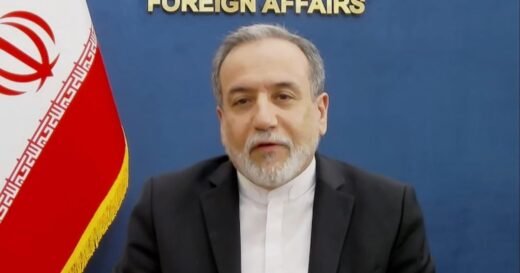
Iranian foreign minister says they “have every right” to “nuclear energy, including enrichment”
new admin - Feb 22, 2026As diplomatic talks in Geneva between the U.S. and Iran continue amid heightened tensions in the Middle East, Iranian Foreign…

Dave Grohl Talks Foo Fighters’ Split With Josh Freese for First Time
new admin - Feb 22, 2026[ad_1] Dave Grohl discussed Foo Fighters parting ways with Josh Freese for the first time, saying that their decision to…