



Town vs. Gown Battles Brew in Pennsylvania, Colorado

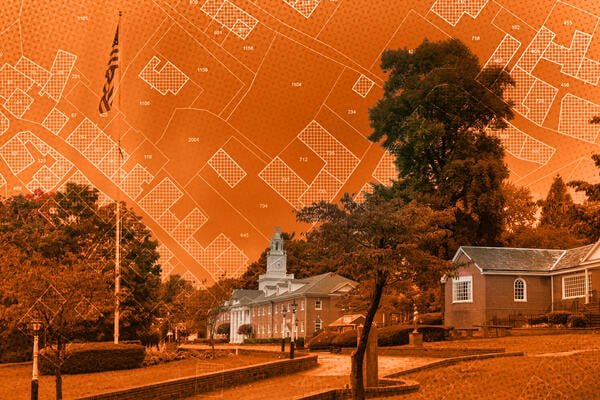
Historically, colleges have few friends closer than their local community.
Localities tend highlight institutions of higher learning in their areas as a means for workforce development, and colleges routinely brag about their economic impact on the area—often pumping millions of dollars into the community and supporting hundreds or even thousands of jobs at larger universities. Colleges also provide rich cultural opportunities, especially in small towns, where they may house the only local theater, orchestra or other fine arts offerings.
But what happens when that symbiotic relationship breaks down? Two recent examples offer some insights as colleges square off with localities and lawmakers over campus property and signage, showing how relationships can go from harmonious to heated in some cases.
Fighting Eminent Domain
In Pennsylvania, 17 acres are at the heart of a brewing battle between Radnor Township and Valley Forge Military College.
Local officials have begun the process of taking the college’s land by eminent domain. But college leadership says the land, which houses integral parts of the campus, isn’t for sale. They feel blindsided by the effort to seize the property, which the town wants for a recreational center.
John English, chairman of the Board of Trustees of the Valley Forge Military Foundation, compared the situation to President Donald Trump’s efforts to acquire Greenland. Like Greenland, Valley Forge’s land isn’t for sale—but the township wants to take it anyway.
“We’re still in a state of shock,” English said.
Particularly galling for English is the fact that the property that Radnor Township wants to take by eminent domain includes the college’s health center, gym and dining hall. He argues that those facets of campus are exceedingly important for a military college such as Valley Forge, which has around 100 students. The campus itself spans more than 70 acres.
“Last time I checked, it’s hard to run a college where you can’t feed them, you can’t house them and—for a military college—you can’t work them out. And if anyone gets injured or they get sick, you have nowhere to send them. All of this for what, open space and a basketball court?” English said.
Jack Larkin, the member of the Radnor Township Board of Commissioners who is behind the eminent domain push, said he was under the impression that the land was for sale. Larkin notes that Valley Forge has sold off other parcels of land in the past and fielded a recent offer from a developer.
“It’s impossible for me to tell the difference between posturing in an arm’s-length transaction and the reality of the situation with the school. All I can tell you is that there was another bidder, and the bid was being considered by the school with some degree of seriousness,” Larkin said.
(Phil Rosenzweig, a lawyer for Valley Forge, noted at the board’s Feb. 9 meeting that while a developer had extended a $20 million deal for a parcel of land, “that offer was not pursued.”)
Larkin also noted that township officials engaged in prior talks with Valley Forge as it looked for a site for a new recreational center. But Rosenzweig emphasized at the board meeting that those conversations included a “less ambitious” plan and smaller plot.
Although college officials insist the targeted parcel is not for sale, Larkin argues they are “trying to weaponize the media” to get a better price. He expects a deal to come together in the end.
English, however, said Valley Forge is resistant to the sale and has appealed to both local and federal officials given the unique nature of the small, private military college, which offers a fast-track program that allows students to commission as a second lieutenant in the U.S. Army. English said that he informed the U.S. Army that “we are under attack.”
He also suggests that town officials sensed “blood in the water” after the foundation voted to close the affiliated Valley Forge Military Academy, a private prep school that the foundation oversees in addition to the college. English also questioned how supportive local officials are of Valley Forge’s presence.
“The question I have that I will be asking the township officials is: Do you even want us here?” English said.
A Sign of the Times
Meanwhile, 1,700 miles to the west, Colorado State University’s decision to install electronic billboards, which are prohibited by city ordinances, has stirred anger in Fort Collins and prompted legislation to bar additional signage.
Colorado State officials have used the billboards to plug sporting events and advertisements for local business but also other uses, such as weather advisories. Local media reported that at least eight of 12 planned electronic billboards have been installed, the largest of which are 11 by 22 feet. Seven of the billboards are visible to the community off campus property.
Located on state property, Colorado State is legally within its rights to install the electronic billboards. While Fort Collins prohibits such billboards, the state does not—even if they are clearly visible to the city. But, some locals are still heated about the decision, including State Sen. Cathy Kipp, who authored a bill to block such billboards.
Kipp told student media her bill stemmed from complaints about the billboards as well as noise related to campus events, particularly home football games. Her bill would require CSU to comply with local noise and sign ordinances but also allow the city or county to grant waivers.
Colorado State officials told Inside Higher Ed they hope to reach an agreement on the issue.
“CSU has been in dialogue with Sen. Kipp regarding her proposed noise and signage legislation and has sought for months to reach a compromise on this issue. We have great respect and appreciation for the senator and her point of view,” spokesperson Nik Olsen wrote by email.
Olsen added that the bill “would set a concerning precedent for the management of state lands throughout Colorado,” would have a negative economic impact on the region and would erode “public safety infrastructure the campus has put in place to support students and the broader community.”
A hearing for Kipp’s bill is set for Friday.
Fixing Fractured Relationships
Stephen Gavazzi, an Ohio State University professor who runs a firm focused on town-gown relationships, argues that college and community connections are somewhat akin to a marriage.
“The difference between a marriage and a town-gown relationship is you can’t get divorced,” Gavazzi said.
But, like a crumbling marriage, he believes strained town-gown relationships can be repaired. Gavazzi calls disputes like those unfolding in Radnor Township and Fort Collins classic “edge and wedge issues”—flashpoints that arise at the physical edge of campus and drive a wedge between institutions and their neighbors. The two big issues are student misbehavior and land-use. But often, he said, the concerns have more to do with how the university plans to use or acquire land, thus rendering it untaxable. Eminent domain cases are exceedingly rare, he said.
Like any relationship, healing requires partners to come together in good faith. The work is hard, but he cautions against fatalism, noting leaders should work proactively to keep relationships strong. But when they do break down, it’s up to leaders to essentially kiss and make up lest those relationships further deteriorate and cause additional problems.
“Campuses and communities can get themselves out of binds if they can cooperate and collaborate with one another, even in the midst of a crisis. But it’s very difficult to do,” he said. “It’s easy to say, harder to do in practice.”
You may be interested

Shoppers hail £30 Jones Road eyeshadow as ‘great on mature skin’
new admin - Feb 25, 2026[ad_1] Beauty fans are going wild for a new eyeshadow launch from Jones Road that has been praised for being…

‘I found item worth £2,900 in charity shop and paid £8.50 for it’
new admin - Feb 25, 2026When you love to shop but don't want to spend too much money, charity shopping is the way to go.…
How High Schoolers Are Using AI in College Search
new admin - Feb 25, 2026[ad_1] More than half of respondents said they would react negatively to correspondence from a university that was created by…