


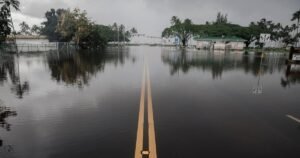

Top FEMA official Bob Fenton says “we’re ready for hurricane season”

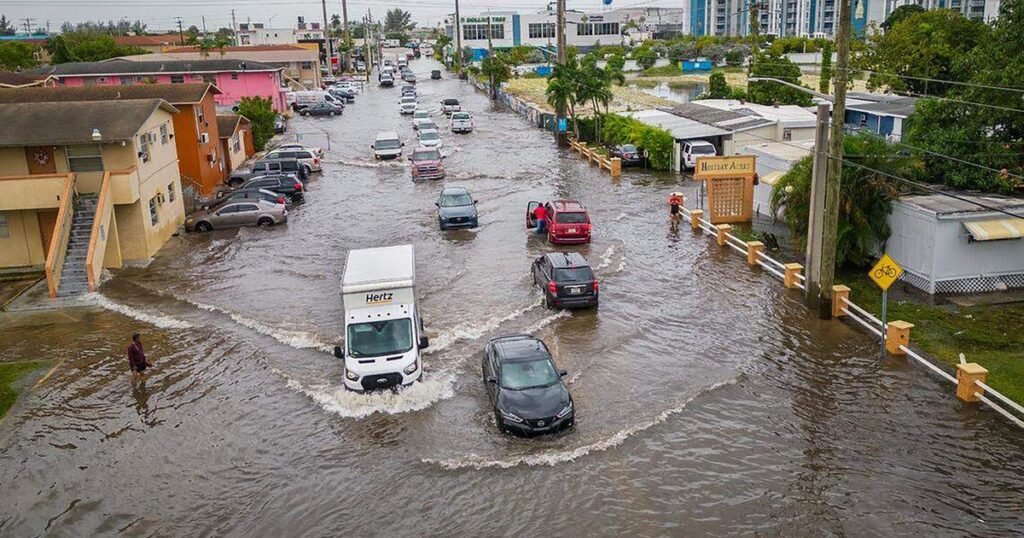
Washington — Inside FEMA Headquarters’ National Response Coordination Center, as a hypothetical Category 2 hurricane bore down near Creole, Louisiana, maps of the storm glowed on television screens. Staff announcements rang out on a PA system. Emergency managers leaned over laptops and traded updates in sidebars.
FEMA staff, the Salvation Army, the American Red Cross, the Department of Interior, the National Guard, the Coast Guard and state and local coordinators sat in rows — a whole disaster response ecosystem rehearsing days before the 2026 hurricane season begins on June 1.
But the exercise, dubbed “Silent Echo,” unfolded at a moment when FEMA itself is being tested.
The agency, which is emerging from a bruising government shutdown while dealing with wildfires and the FIFA World Cup, now also faces a Trump-appointed review council’s proposal to redesign the federal government’s role in disaster response.
Bob Fenton, FEMA’s acting administrator, stands in the middle of it all.
Is FEMA ready for hurricane season?
“I’m here,” Fenton said when asked about fears that FEMA has been hollowed out. “And I have over three decades of experience.”
Fenton is not FEMA’s last man standing, but the career emergency manager and longtime Region 9 administrator is the only FEMA regional director to remain in place through the Biden administration and the second Trump administration. Over the years, he has coordinated DHS Operations Allies Welcome, helped lead FEMA’s COVID-19 response and worked on disaster recovery on every scale. He recently returned from ongoing recovery efforts in Guam and the Mariana Islands, following the landfall of a Category 4-equivalent super typhoon.
Now he is trying to reassure the country that FEMA is ready.
“Oh, we’re ready for hurricane season,” Fenton told CBS News in an exclusive interview. “This is something we do every year. It’s in our DNA,” he said, gesturing to the personnel busy behind him.
But his confidence came with caveats about the need for state and local governments to take the lead on recovery.
A May 14 letter from House Homeland Security Committee Democrats warned that FEMA has lost more than 5,000 employees since January 2025 and that nearly half of FEMA’s top 38 leadership positions are vacant.
Last year, the Government Accountability Office separately found that FEMA began the 2025 hurricane season with just 12% of its incident management workforce available. These are the personnel who can be deployed to active disasters or sent to staff response operations to coordinate federal support, assist survivors or carry out logistics, planning, operations and recovery work. They are currently supporting more than 91 major disaster and emergency declarations around the country.
But Fenton said the numbers are healthier now.
“We have a little bit over 30% of our disaster workforce ready right now,” he said. “Between 30 and 40% is normal availability.” He estimated that another 30% of FEMA workers have been deployed, with another 30% in training, credentialing, on leave or otherwise assigned.
“I’m comfortable with where we’re at,” Fenton said. “We have a very experienced staff here.”
“We are playing catch-up”
Still, Fenton acknowledged the agency is recovering from disruption.
“The lapse had a significant impact on us,” he said, referring to the record DHS partial government shutdown. “Any time that you’re closed for 70-something days and then 40-something days this year — over 100 days in total this year — it has an impact.”
FEMA also ran low on its Disaster Relief Fund, triggering Immediate Needs Funding — a financial red zone that limits spending to urgent, lifesaving needs. CBS News reported in April that the DRF dropped below $3 billion, forcing FEMA to restrict spending just weeks before hurricane season.
“We are playing catch-up,” Fenton conceded. “But we play catch-up pretty quick here.”
He said FEMA is now pushing out funding for past disasters after receiving money from Congress and restarting preparedness work that had been delayed.
“It impacts our readiness ability,” Fenton said of the shutdown, “which translates to the readiness of the nation — whether that’s the individual or that state and local government, or whether that’s our team.”
Fenton said FEMA still trained more than a million state and local personnel over the last year, but admitted that the agency lost time, travel and face-to-face coordination.
“We need to catch up from that at all levels,” he said, “including the private sector and nonprofits.”
Refilling the ranks
FEMA is on a mission to rebuild its workforce, after the agency recently moved to bring back roughly 200 disaster response employees who had been let go, saying it was taking steps to “stabilize” its personnel ahead of the 2026 hurricane season and the FIFA World Cup.
Recent court depositions indicate DHS had previously ordered FEMA to develop plans to cut as much as 50% of its personnel. Fenton did not directly say that plan is dead, but he emphasized that FEMA is now hiring.
“We have a secretary that very much cares about our mission, cares about our workforce, and has given us authority to start the hiring process,” he said. “We are aggressively hiring right now.”
The workforce question is not just about headcount. It is about experience — the kind of institutional knowledge that helps emergency managers know who to call, what to move, which state systems are brittle and which local officials may already be overwhelmed.
Fenton’s message to employees was simple: believe.
“My first all-hands meeting here, I used the song ‘Just Believe,'” he said, explaining that he borrowed the idea from San Francisco Giants games. “I want everyone here to believe not only in our mission, which they do, but believe in leadership.”
Another concern heading into hurricane season is HURREVAC, the free, web-based hurricane evacuation planning tool used by local emergency managers nationwide to track hazards, tailor reports and plan evacuation timelines. The May 14 congressional letter urged FEMA and DHS to restore the HURREVAC contract after a stalled renewal jeopardized access to the tool ahead of hurricane season.
“The HURREVAC system, I think, is ready to go this year,” Fenton said, when pressed on whether the platform is up and running. FEMA will test the system during an exercise with NOAA, the National Weather Service and the National Hurricane Center on Monday.
“We’re going to give the best information we can to local and state governments to enable them to make the best decisions,” he said.
FIFA: “It’s not knowing what comes next”
FEMA’s hurricane preparations are unfolding alongside another major test for the agency: the FIFA World Cup, which demands enormous security and emergency management resources in cities nationwide.
Fenton told CBS News that the shutdown delayed millions in grant funding to state and local governments preparing for the games, including for training, equipment and counter-drone technology.
“We’ve almost pushed out almost $900 million in grants,” he said, putting the figure at roughly $875 million. “But you’re right. Because of the lapse, it was delayed.”
The acting administrator said FEMA now has teams out at venue sites with state and local partners, but acknowledged that the overlap with hurricane season illustrates FEMA’s larger challenge. Hurricanes won’t wait for wildfire season to end. A hazmat event can happen the same weekend FEMA is preparing for the World Cup. Earthquakes give no warning. Floods now cut through communities far from the coast.
“It’s not knowing what’s coming next,” Fenton said. “We need to prepare for all hazards here.”
COVID bills and leftover disasters
FEMA is still working through a backlog of COVID-19 response reimbursements. Last year, the National Association of Counties reported roughly $11 billion in delayed reimbursements to 45 states, tied to COVID-era emergency costs. More recently, FEMA has announced billions in new reimbursement approvals.
Fenton said the agency is now “more than 90%” through COVID funding, though he did not give an exact remaining dollar amount. “There’s still some decisions to be made,” he said. “There’s some work we’re still going through.”
Fenton said FEMA had recently put out “almost $5 billion” in disaster and COVID funding since the DHS funding lapse ended, noting that disaster response impact is cumulative. Communities still waiting on reimbursement from one emergency risk having less capacity to front costs for the next. Counties, hospitals and states that spent heavily during COVID are also now facing the need to prepare for floods, hurricanes, wildfires and extreme heat.
“Disasters are expensive,” Fenton said.
In post-hurricane Helene North Carolina, frustration with FEMA takes a different form: not in the shape of uncertainty over whether the agency will show up, but whether it can move fast enough.
Asked about communities recovering from what feel less like 100-year floods than 1,000-year floods, Fenton acknowledged FEMA’s red tape.
“There is bureaucracy over the years that’s been built in FEMA,” he said. “Some of that is through legislation that’s been put on us. Some of that is through policies that we’ve put in place.”
He added that DHS Secretary Markwayne Mullin’s decision to rescind a prior DHS policy requiring review of contracts and grants over $100,000 put in place by former Secretary Kristi Noem should help move things faster.
FEMA piloting AI use for individual assistance
Fenton said FEMA is beginning to use artificial intelligence, including in its Individual Assistance program — the system that helps survivors apply for aid after disasters.
Right now, he said, FEMA workers have to search through “tons of documents” to answer survivor questions. AI offers the possibility of helping FEMA staff quickly retrieve information, support automated calls and improve grant work. Fenton said FEMA is running pilot programs now and hopes to begin using AI in Individual Assistance by the end of the fall.
“It’s about a 20-something-year-old system that will be modernized and start to leverage AI,” he added.
Pressed about privacy, Fenton said FEMA would not be using public tools for survivor data.
“Our AI is a DHS internal AI system,” he said. “We’re not going out to the World Wide Web.”
The promise is faster service. The risk is whether disaster survivors — often at their most vulnerable — can trust a federal agency in transition to modernize without compromising privacy, accuracy or access.
Flood insurance and the limits of FEMA aid
Future of FEMA
Earlier this month, the FEMA Review Council’s final report recommended shifting more responsibility to states and local governments.
“There’s a misconception that FEMA is going to make you whole when you get hit by a disaster,” Fenton said.
FEMA grants, he added, are meant for immediate needs: sheltering, temporary housing, and help getting into safe and sanitary conditions. He said the average individual grant over the last five years has been about $6,000.
“The best way to protect yourself is insurance,” Fenton said. Flood insurance, Fenton noted, generally takes 30 days to become active. “Go ahead and do that now if you’re trying to do it for this season,” he said.
Fenton also warned Americans not to confuse FEMA assistance with insurance. The Review Council also recommended in its findings to transfer Americans’ flood insurance coverage from the federally managed National Flood Insurance Program toward the private market. The NFIP is currently authorized only through Sept. 30, 2026, unless Congress acts again.
“I think there’s a move to ensure states are supported and take on more of the responsibility for managing these events,” Fenton said. “That will happen over time. It’s not an immediate turn of the light switch.”
Asked whether governors should worry FEMA might not show up in the same way it has in the past, Fenton was direct.
“Look behind me,” he said. “We are here. We are training. We are preparing for the next event.”
You may be interested

Anthropic explains how Claude’s invisible text watermarks will work
new admin - Aug 17, 2026Take the sentence “The weather today was cold and…”. The next word is very unlikely to be “sugary.” But it…

Duchess Sophie's 'pretty' summer dress is still in stock – shop now
new admin - Aug 17, 2026[ad_1] Duchess Sophie has stepped out in the perfect cotton summer dress - but her exact royal-approved style is selling…
NIH Wants to Remove Peer Review Scores From Grant Applications
new admin - Aug 17, 2026[ad_1] The National Institutes of Health has proposed changing how it evaluates grant applications in a way that would make…