

The Odyssey symbolism explained – From Cyclops eye to sleeping with deadly gods | Films | Entertainment

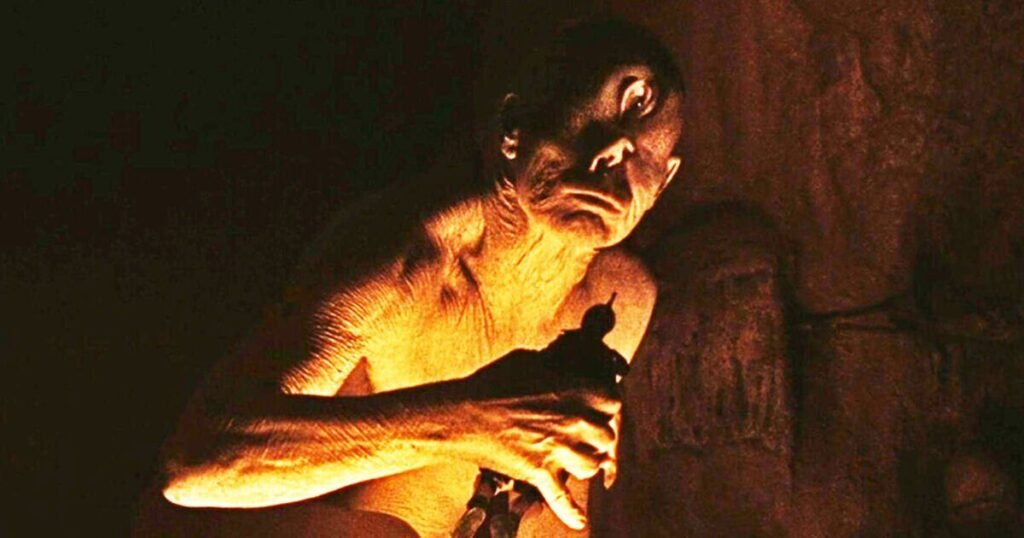
Homer’s second epic is one of the world’s oldest and most famous stories. Few have dared attempt a Film or TV version, but now Sir Christopher Nolan’s blockbuster adaptation of The Odyssey lands in cinemas today, met with glowing reviews. Spanning a decade with gods and monsters inhabiting fantastical islands, there’s so much strangeness in this 2800 year old poem that could easily go over our modern heads. To help us understand the fascinating true symbolism of the Odyssey, I recently spoke exclusively with ancient myth expert Jonathan Pageau, who previously shared the true meaning of the Snow White fairytale.
What is it about the Odyssey that has helped it survive as one of the great pre-Christian works of the Western canon?
What’s great about The Odyssey is that it’s a story of returning home. It has a parallel to the book of Exodus because it’s a story of exile and return, with a lot of the tropes. The story of exile and return has in it, you could say, what Odysseus represents. If the story of the Iliad is a story of valour and the type of compromises you need to make in order to attain glory and win the war, the story of Odysseus is a story of what happens when it’s not war and what happens when you’re in a strange land and acting like a stranger using trickery. It plays the other side of the story trope. That is, it’s not a story of conquest, but it’s a story of exile and return.
From Jason and Sinbad to Moana and One Piece, why are seafaring adventure stories to fantastical and mysterious islands so popular across history?
A good way of understanding them is actually thinking of something like Star Trek. The story of space exploration and the idea of the diversity of extraterrestrials has replaced what the seafarer story used to do, which was to present to us idiosyncrasy, difference, and sometimes inversion as a foil to what is expected of normality. And therefore, what you encounter in the mariners’ tales is always either something of a foil in the positive sense. That is, peoples that are better than us and that kind of show us up in the things that we expect of civilisation and we act scandalously towards them. Or the opposite, which is that you encounter a cannibal, or you encounter monsters that are kind of half human or have that kind of idiosyncrasy. So that’s really what the story is about. It’s about moving out into periphery, into a place where you’re not connected to your home, and therefore you encounter difference and strangeness in both the positive and negative aspects of that.
What is the symbolism of the different giants Odysseus encounters, from the Cyclops to the Laestrygonians?
The ancients saw the Cyclops as the notion of being monomaniacal, the idea of having a single vision that lacks subtlety. And so you could see, to some extent, the Cyclops as a parasite on order and what it means to have purpose and therefore it becomes a monstrous version of that. In the story of the Cyclops and of the giants, one of the issues that happens is always the question of xXenia (ancient hospitality) and the transgression of it. As in the story of Jack and the Beanstalk, where the giants want to eat their host, the story of the Cyclops is another version of that. But often it can also be sexual transgression, if you think of the story of Sodom and Gomorrah, or the story of the kidnapping of Helen as a transgressing of Xenia and as a problem of encountering the stranger.
On the flip side of those masculine monsters, what is the symbolism of the various deadly goddesses Odysseus encounters, from the sirens to Circe and Calypso, who he ends up sleeping with?
The sea itself has a basic feminine symbolism of temptation that is kind of drawing you away from your purpose. And especially in The Odyssey, is the idea of the temptress, or the woman, that draws you away from where you should be and draws you away from your home. Now there’s a parallel of that in Proverbs 5, where there’s this image of the strange woman. Solomon says the strange woman’s lips are as smooth as honey, but her feet go down into death. And that is the image of these feminine characters that appear in Homer. Calypso keeps Odysseus prisoner and, in the new movie, uses drugs (the lotus plant) to basically kind of make him forget and live in a world of dilapidation. And, of course, the siren is the ultimate version of the temptress. The image of the strange voice that is beautiful, but is ultimately going to lead you to your doom. In The Odyssey, many of the places where he stops will end up representing these excesses. There’s the incapacity to go home, but then there’s also the unwillingness to go home, the falling into forgetfulness and distraction, which happens in the wandering.
Why is Odysseus’ marriage bed, which was omitted from the new film, a kind of Edenic tree of life?
Odysseus finally goes home and then is joined with his wife on the bed that he made, which is the tree with the roots that go down into the land. So it’s this idea of the return of the king to his own where his wife becomes his bed, becomes his home, becomes his land. It all kind of connects together as this place in which he’s able to find some kind of rest.
Jonathan Pageau’s Universal History Masterclass is available to register for here.
You may be interested

Have U.S. and Iran negotiations reached a standstill as strikes continue?
new admin - Jul 17, 2026Jonathan Wachtel, a global affairs analyst and a former spokesperson for the U.S. Mission to the United Nations, joins to…

Lionel Messi Has A Message For Critics Of Argentina Ahead Of World Cup Final
new admin - Jul 17, 2026[ad_1] NEWYou can now listen to Fox News articles! Lionel Messi has a message for Argentina's detractors: "Nothing was handed…

Apple Music is getting a price hike
new admin - Jul 17, 2026Apple Music is more expensive now. In the US, an individual plan now costs $11.99 per month, a $1 bump…