

Symptoms and Concerns – American Society for Metabolic and Bariatric Surgery

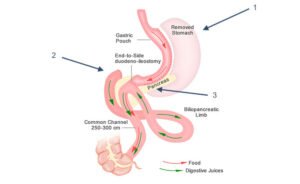
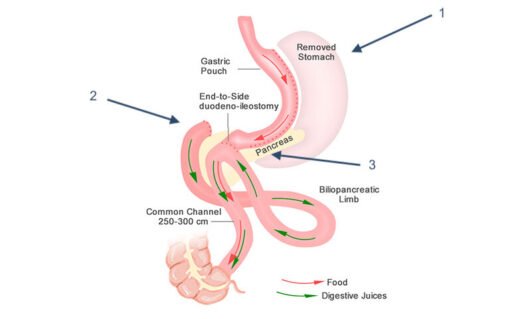
With the Duodenal Switch (DS), bowel movements are more commonly affected, and the usual alteration is the likelihood of developing soft or loose stools. Frank diarrhea is related to fatty acids passing directly into the colon. These fatty acids would normally have been absorbed in the small intestine. Once in the colon they induce irritation. Diarrhea can also be produced by relatively undigested food passing rapidly through the gastrointestinal tract. A third contributing factor is sorbitol, found in fruits, berries, and also used as an artificial sweetener. Sorbitol is not well absorbed in the GI tract, and when in the colon, it is fermented. This fermentation will result in increased gas and diarrhea.
The average patient after the DS has 2-3 soft bowel movements per day. However, as with most side effects, there is a wide spectrum. At one end of this spectrum are patients who have a single bowel movement a day. At the other end are patients who have more than ten (and sometimes up to twenty) bowel movements a day. For the majority of patients after the DS, the bowel movements are only a mild inconvenience, but for those at the high end of the spectrum the diarrhea can be quite problematic. DS patients may also have a problem with foul-smelling flatus, which can be a serious issue.
Diet is a major influence on bowel movements after a DS. Reducing the amount of fat will usually have a direct beneficial effect on the number and quality of bowel movements a patient may have. Usually, with close questioning, it can be revealed that a patient has not been watching his or her diet as carefully as he or she should. If they can be identified, there are other “trigger” type foods that may induce diarrhea, and the patient should attempt to avoid or minimize these foods.
Both the DS and the RNYGBP may unmask previously unidentified lactose intolerance. This can result is diarrhea and gas complaints. An early step in the assessment of diarrhea after surgery is to eliminate dairy products from the diet completely.
Management of diarrhea (provided there is no identifiable pathologic etiology or dietary factor) is varied. A dose of Imodium at bedtime can decrease the number of early morning bowel movements. It may also delay the onset in those who have been previously awakened early in the morning by urgent bowel movements. If beneficial, some patients may stay on a maintenance dose of Imodium® or Lomotil® for long term control.
Many patients will benefit from a course of probiotics. They are a form of natural colonic flora that is administered orally to restore the natural bacterial milieu toward the normal state. Typical probiotic products include Lactobacillus Acidophyllus® and Ultraflora® lactose-free. The more complex and inclusive the product, the better it seems to work. Unfortunately, these products may not be covered by third party payer insurance companies. However, the probiotics usually only need to be taken for a brief period of time to restore the colon to a more normal bacterial state.
In any postoperative patient with especially watery diarrhea, extremely foul flatus, and abdominal cramping, one needs to consider a Clostridium difficile (C. diff.) colitis or antibiotic-associated diarrhea (AAD). This may occur after DS, RYGBP or LAGB. It may manifest itself early after surgery, or it may take 2 or 3 months. Treatment of AAD is with a 10-14 day course of Flagyl®. Not uncommon relapses can be treated with a repeat course of Flagyl® or with oral Vancomycin®. In treating C. diff. colitis, it is important to replenish the colonic flora as the therapy is proceeding with probiotics as described above. Flagyl® is effective in the management of bacterial overgrowth not related to C. diff. infections as well.
Cholestyramine (Questran®) and similar products such as Welchol® and Cholestid® are used to bind bile salts. This may decrease the frequency of diarrhea and the severity of gas. Start with a low dose and gradually increase weekly until a beneficial effect is seen. Cholestyramine has been used to treat C. diff. infections as well, but only with Flagyl® not Vancomycin®.
Rarely, with the above management strategies a patient may continue to have an unacceptably high frequency of bowel movements. It is reasonable to give the bowel time to compensate and adapt, so that fat absorption increases. This will allow diarrhea to improve. If after one year there is no improvement in diarrhea, then the situation requires intervention. Surgical lengthening of the common channel can be entertained. This is usually a relatively straightforward surgical procedure that may be done laparoscopically with an overnight hospital stay. Subsequently, diarrhea will be controlled without causing significant weight regain.
Before making changes in diet, vitamins and medications, be sure to consult your physician.
You may be interested

‘Unpredictable masterpiece’ horror comedy on Film4 tonight
new admin - Sep 22, 2026Fans have described the underrated horror comedy gem as 'thrilling' and 'refreshing' - it airs on Film4 tonight, September 22.…
Single Anastomosis Duodeno-Ileal Bypass with Sleeve Gastrectomy
new admin - Sep 22, 2026Overview The Single Anastomosis Duodenal-Ileal Bypass with Sleeve Gastrectomy, referred to as the SADI-S is the most recent procedure to…

Bill Gates says it may take a catastrophe for the world to act on AI dangers
new admin - Sep 22, 2026Bill Gates says it may take a catastrophe for the world to act on AI dangers - CBS News Watch…