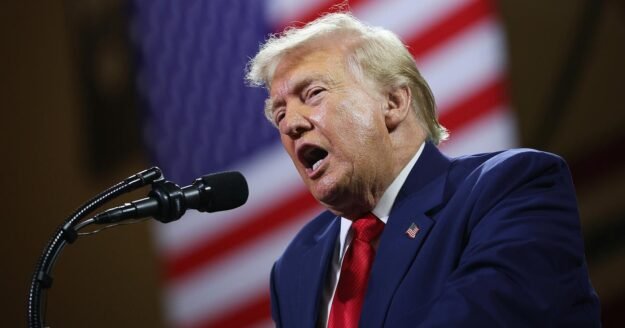




Supreme Court allows firing of FTC commissioners, ends agency independence

The Supreme Court just placed once-independent agencies more firmly under presidential control. The court ruled in Trump v. Slaughter with a 6-3 vote that President Donald Trump had the authority to fire the Federal Trade Commission’s two Democratic commissioners, even though it broke with decades of prior legal precedent at the time.
The justices have officially killed that precedent, based on a 1935 Supreme Court case known as Humphrey’s Executor, which determined that independent agency commissioners could only be fired for cause. The ruling represents the latest expansion of presidential power, this time under the principle of the unitary executive theory, whose subscribers believe that the president ultimately has all the power over the executive branch.
“Although it is up to the Senate to decide whether to confirm those with whom the President would prefer to work, neither Congress nor the courts may saddle him with those with whom he cannot work,” says the syllabus for the majority opinion, delivered by Chief Justice John Roberts. “Subordinates who exercise the President’s power are subject to removal by him. Then, and only then, can they remain accountable to the President, and the President to the people.” The framework of Humphrey’s “has not withstood the test of time,” and “independent agencies are not ‘independent’ in the sense that they are free of the President and thus responsive ‘only to the people of the United States.’”
In a separate ruling, the Supreme Court determined with a 5-4 vote that Trump can’t fire Federal Reserve member Lisa Cook for now, saying Congress “permitted removal” from the agency only “for cause.” In the Slaughter ruling, it cited the Federal Reserve as an agency that might not fall under the same level of control as the FTC.
The ruling in Slaughter may not change much immediately, given that the two Democratic commissioners Trump fired from the agency, Rebecca Kelly Slaughter and Alvaro Bedoya, have mostly been barred from returning while the case has played out. Slaughter continued pursuing the case while Bedoya eventually formally resigned his post in order to take on new work. And Republican Chair Andrew Ferguson has publicly positioned the agency as a direct part of the administration, calling it the “Trump-Vance Commission” and telling staff to stop calling itself independent in legal complaints.
In her dissent, Justice Sonia Sotomayor writes that the opinion “distorts the structure of the government:”
The result is a President who emerges with far greater power than ever before. It is a power, however, that neither the People, nor Congress, nor the Constitution bestowed upon him. In granting the President this unbridled authority, the Court upends its precedent, misconstrues our history, and sheds any pretense of judicial modesty.
The justices’ ruling solidifies executive power over agencies once considered independent, which also include agencies like the Federal Communications Commission, Federal Election Commission, National Labor Relations Board, and National Transportation Safety Board.
Correction, June 29th: A previous version of the article incorrectly referred to the case as Slaughter v. Trump, when it’s actually Trump v. Slaughter.
You may be interested

Google now lets you sign in to your account using a selfie video
new admin - Jul 23, 2026Google announced yet another way to gain access to your account if you get locked out, forget your password, or…

Tenisha Warner, widow of actor Malcolm-Jamal Warner, opens up about being a single mom amid lawsuit over estate
new admin - Jul 23, 2026One year after actor Malcolm-Jamal Warner drowned in Costa Rica at the age of 54 while on vacation with his…
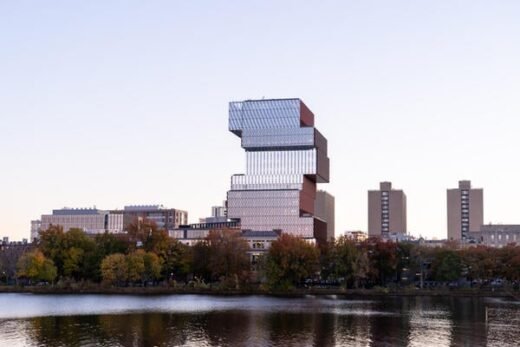
Boston University Inks $104M PILOT Deal With City
new admin - Jul 23, 2026[ad_1] BU will make annual cash payments to Boston, up to $8.3 million in fiscal 2030. Boston University will pay the…