



Strait of Hormuz disruption threatens to shake global economy

The near shutdown of the Strait of Hormuz is beginning to ripple through the global economy, threatening energy supplies, raising fuel prices, and reshaping geopolitical dynamics.
The narrow waterway along Iran’s southern coast is one of the most important shipping lanes in the world. It connects the oil-rich countries of the Persian Gulf to international markets, and tankers that pass through it carry roughly a fifth of the world’s oil, along with significant volumes of natural gas.
Now, as war in Iran has brought shipping through the strait nearly to a halt, energy analysts say the consequences are being felt far beyond the Middle East.
“The longer that this goes on, the greater impact it’s going to have across industries, across regions,” said oil market analyst Matt Smith.
Smith, who works for the commodities data firm Kpler, has been closely monitoring tanker movements in the region. He says millions of barrels of oil move through the strait each day — and for many Gulf countries, it is the only viable export route.
One country with a contingency plan is Saudi Arabia. The kingdom built a pipeline stretching across the country during the Iran-Iraq war in the 1980s to prepare for exactly this kind of disruption. Its East-West Pipeline allows Saudi oil to bypass the Persian Gulf and travel west across the country to the Red Sea port of Yanbu.
“It was concerned about the Strait of Hormuz being this choke point…” Smith said. “We’re seeing those flows really starting to increase.”
The pipeline allows Saudi Arabia to reroute millions of barrels of oil per day to the Red Sea, though it cannot fully replace exports normally shipped through the strait. Other Gulf producers, including Iraq, Kuwait, and Qatar, lack similar alternatives and have already been forced to reduce production.
A “keystone assumption” collapsing
Energy market watchers say the disruption is challenging one of the most basic assumptions underpinning the global economy: that oil will continue flowing freely from the Persian Gulf.
“We are seeing a collapse of a keystone assumption in economics and energy markets,” said Bob McNally, who advised George W. Bush during the Iraq War and now consults on oil and gas markets.
“If Hormuz is shut for a month,” McNally said, “one of the most important bedrock assumptions in how the global economy works will have collapsed.”
While many economies are struggling with the disruption, some countries are benefiting from higher oil prices. McNally says Vladimir Putin and Russia are among the short-term winners.
“This conflict and the oil price increase has done two things to help Putin,” McNally said. “It’s lifted the overall price of crude oil, and it’s eliminated that discount, that penalty price he had to sell his oil at. Now everybody wants his oil.”
The Trump administration on Thursday briefly eased restrictions on Russian oil shipments. It issued a 30-day license allowing energy traders to buy Russian crude that’s already been loaded onto tankers without worrying about getting hit with secondary sanctions.
The idea is to help keep oil prices from spiking. But for Russia, it also provides a short-term break from sanctions that were meant to limit the Kremlin’s ability to pay for its war in Ukraine.
A blow to Asian economies
The disruption in the Strait of Hormuz threatens to hit Asian economies particularly hard.
About 40% of the oil China imports passes through the Strait of Hormuz. “This is a real gut punch for their economy,” McNally said.
China has stockpiled large strategic reserves of oil, which could help cushion the immediate impact. But analysts warn the broader economic costs could still be severe if the disruption drags on.
Other countries are even more vulnerable. India, for example, relies heavily on energy shipments through the strait but has far smaller strategic reserves.
“For India, this is an acute crisis,” McNally said, noting that the country also depends on liquefied petroleum gas from the region for cooking fuel.
Despite the disruption, some Iranian oil shipments appear to be continuing — often covertly.
Smith said that, since the war began, Iranian tankers have been known to turn off their tracking transponders as they pass through the strait, making them harder to detect. Much of that oil, he said, appears to be heading to China.
Higher prices already hitting consumers
The economic consequences are already reaching consumers.
In the United States, gasoline prices have jumped by more than 65 cents per gallon since the conflict began. Jet fuel and diesel prices have also surged roughly 25 percent, raising the prospect of more expensive airline tickets and higher shipping costs that could push up grocery prices.
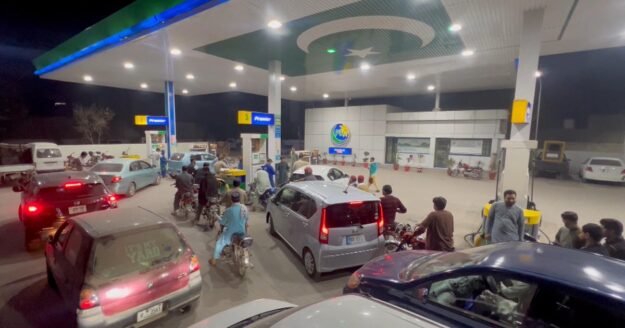
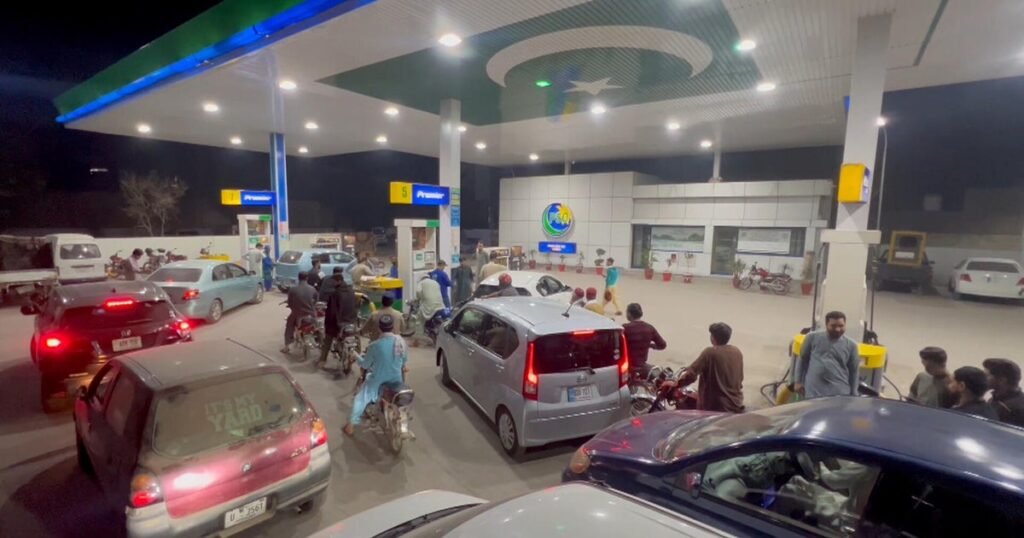
In parts of Asia — including Thailand, Pakistan, and Bangladesh — fuel shortages and long lines at gas stations have already begun to appear.
The risk of a global recession
If the disruption lasts long enough, the consequences could be far more serious. According to McNally, a prolonged closure of the Strait of Hormuz would almost certainly trigger a global recession.
“The world economy cannot grow without 20 percent of its energy supply,” McNally said.
For now, analysts say the world is watching the narrow strait to see whether tanker traffic will resume.
“We are experiencing, just as a factual matter, the biggest energy disruption in history,” McNally said. “We have to just hope and pray that it doesn’t go on for too much longer.”
The video above was produced by Brit McCandless Farmer and edited by Scott Rosann.
You may be interested

Oscars 2026: Bridesmaids, Baby Yoda and ballet bites back – the bits of the Oscars you might have missed | Ents & Arts News
new admin - Mar 16, 2026One Battle After Another led the night, taking six Oscars, including best picture, best director and best supporting actor.Sinners followed…

Mitch Albom's Haiti orphanage, a small oasis for children inside a gang-controlled city
new admin - Mar 16, 2026In Port-au-Prince, Haiti's gang-controlled capital, there's an orphanage taking in the most at-risk kids. It's run by bestselling author Mitch…

Jamie Lee Curtis doesn’t “think it’s possible to have a perfect union” | 60 Minutes
new admin - Mar 16, 2026Jamie Lee Curtis doesn't "think it's possible to have a perfect union" | 60 Minutes - CBS News Watch CBS…