



Stop making mistake with thermostat or risk high bills

With temperatures continuing to plummet this January, it’s likely that you’ll be utilising your central heating and radiators as much as you can.
Of course with that comes an increase in energy usage and greater bills. Indeed, Ofgem’s new price cap, which took effect in October 2025, pushed the average dual-fuel bill from £1,720 to around £1,755 a year.
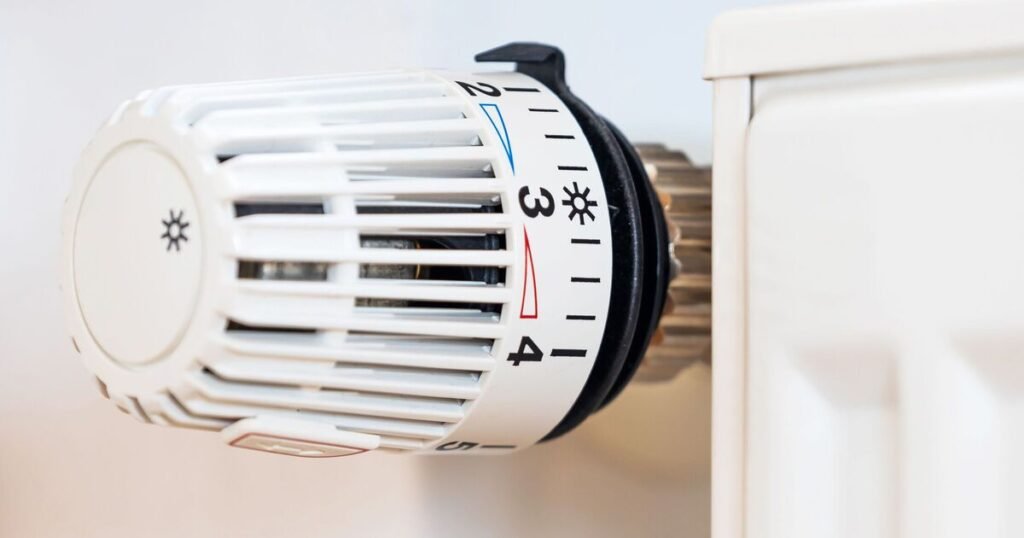
However, experts from Which? have a trick you can apply to the valves of your radiators that can help cut costs. Taking to TikTok, they recommended in a video that thermostat valves and dials should never be turned to more than three – unless it’s the room where your thermostat is.
They elaborated: “Whacking your valve up to five opens the valve to the max, letting loads of hot water into the radiator when your central is heating on.” Whilst that might be a good thing if you want to heat a room quickly, if every thermostat is set to five, your heating bills could end up much higher than they need to be.
“In bedrooms, you should keep the dial between two and three,” Which? continued. “This will keep the room temperature between 15 and 20 degrees, which is comfortable and could save you money.”
If you are about to spend a prolonged period away from your property, the advice is much different.
“Set it [thermostat] to the frost sign,” Which? said. “When your heating is on, this will allow just enough water into the radiator to keep the room above seven degrees so your pipes don’t freeze.”
According to a second energy expert, where you choose to position your sofa could potentially add hundreds to your heating bill.
Matt Oberle from Utility Rates says that while there are plenty of complex ways to cut household energy costs, one of the most effective fixes takes just a minute and doesn’t cost a penny – simply moving your sofa away from the radiator.
“People don’t often think about it, but the way heat moves through a room is as much about physics as it is about boiler settings,” he said.
“Radiators work by heating the air directly around them, and that warm air rises and circulates throughout the room. If you’ve got a large object, like a sofa, pressed against the radiator, you’re essentially blocking that convective airflow.”
Matt continued: “The heat is absorbed into the furniture rather than being distributed evenly, which forces your system to work harder to reach the set temperature.”
He went on to add that the effect can be more pronounced depending on the type of sofa, pointing out: “Dense, dark fabrics such as leather or thick upholstery act like heat sponges.
“They soak up the energy your boiler is generating and hold it in the material, instead of letting it move into the living space. From an efficiency perspective, it’s a complete waste.”
You may be interested

Meghan Markle’s ‘beautiful’ bag could make a comeback as she returns to Britain
new admin - Aug 21, 2026[ad_1] The Duchess of Sussex has long been a fan of Strathberry, and this timeless style is perfect for autumn.…

New York Times defamed ex-college basketball player Kai Spears, must pay him $9.25 million in damages, jury says
new admin - Aug 21, 2026Tuscaloosa, Ala. — An Alabama jury on Thursday awarded $9.25 million in damages after finding that The New York Times…

Clarks £55 trainers 'comfortable to walk in' now reduced to £5 in three colours
new admin - Aug 21, 2026There's a way to get the £55 Clarks trainers for even less than the £20 sale price Source link