



States warn SNAP benefits may stop in November if government shutdown continues

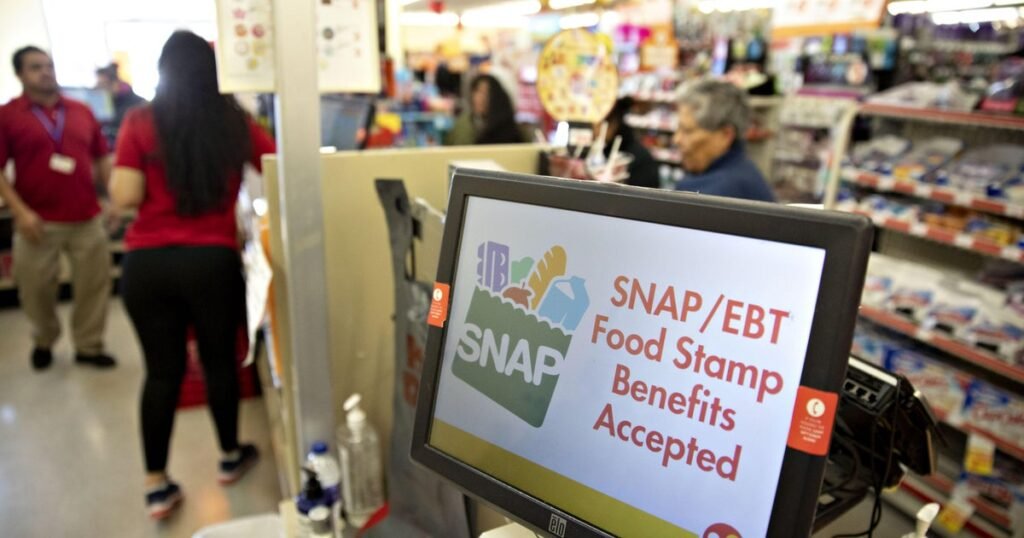
States are warning struggling Americans who rely on food stamps to pay for groceries that they may miss out on benefits come November.
“Starting October 16, SNAP [Supplemental Nutrition Assistance Program] benefits will not be paid until the federal government shutdown ends and funds are released to PA,” reads a notice from the Pennsylvania state website.
New Jersey, Maryland, New York and Texas are among the other states that have issued similar notices.
The wave of announcements come after the U.S. Department of Agriculture, which oversees the federal food stamps program, issued a letter to state agencies on Oct. 10 saying that if the lapse in appropriations continues, there will be “insufficient funds” to pay full November SNAP benefits.
Reached for comment, the White House referred CBS News to the USDA, which then shared the letter it sent to states. Both declined to comment on what a lapse in funding could mean for the millions of Americans who rely on the program. Advocates, meanwhile, have warned the effects could be devastating.
“These are, for the most part, working individuals who still are living paycheck to paycheck,” said Gina Plata-Nino, interim director for SNAP at the Food Research & Action Center (FRAC), a nonprofit focused on ending hunger.
How SNAP benefits are normally administered
Over 40 million Americans are enrolled in SNAP. Recipients, on average, receive a payment of $187 (or roughly $6 per day) on prepaid cards that they can use to buy produce, meat, dairy and other household food staples.
While SNAP is a federally funded program run by the USDA, states are responsible for administering benefits and setting their own disbursement dates. As described by The Food Research and Action Center (FRAC) on its website, the program is a “delicate partnership of public and private entities.”
To ensure benefits are available at the first of every month, states send electronic case files with information on SNAP recipients on a monthly basis to an electronic benefit transfer (EBT) vendor so they can process the data and load recipients’ cards.
“EBT processors have to get all of this data in time,” Plata-Nino explained. “They need to be able to process the payment so when that person utilizes their card at that EBT retailer, the money will be there for the retailer to be able to swipe.”
The shutdown, however, has thrown a wrench in the process. In its letter to state agencies on Oct. 10, the USDA directed states to hold off on sending electronic files to EBT vendors “until further notice.” The pause opens the door to possible delays and disruptions in November benefits.
“Letting people go hungry is a choice, and it’s not a good one,” Deb Powers, a 66-year-old Massachusetts resident and SNAP recipient, told CBS News.
Contingency funding
One way for the USDA to cover SNAP costs, explained Plata-Nino, would be for the agency to tap into its contingency funds. According to FRAC, the reserve stood at $6 billion during the Biden administration.
After Democrats and Republicans failed to come to an agreement to extend government funding on Oct. 1, 2025, the USDA said in its Lapse of Funding plan that the SNAP program has been provided for with multiyear contingency funds that could be used to cover state administrative expenses during a federal government shutdown.
“These multiyear contingency funds are also available to fund participant benefits in the event that a lapse occurs in the middle of the fiscal year,” the plan states.
However, it’s unclear if the USDA plans to utilize those funds to ensure November SNAP benefits. The agency did not respond to CBS News’ request for comment on whether that option is under consideration.
During the government shutdowns in 2018 and 2019, the USDA disbursed SNAP funds early to prevent benefits from running out, Plata-Nino said.
“This administration didn’t do any of that [this time], but they still have the contingency funding …” Plata-Nino said. “They have the money, so it really is a policy choice.”
It’s also possible states could attempt to free up money from their own budgets to bridge the gap, although approval would be an uphill battle given that it costs tens to hundreds of millions of dollars monthly to cover SNAP benefits. Whether states would get that money back is unclear.
Peter Hadler, the deputy commissioner of Connecticut’s Department of Social Services, told lawmakers in his state Thursday that he doesn’t expect the federal government to ever reimburse states.
You may be interested
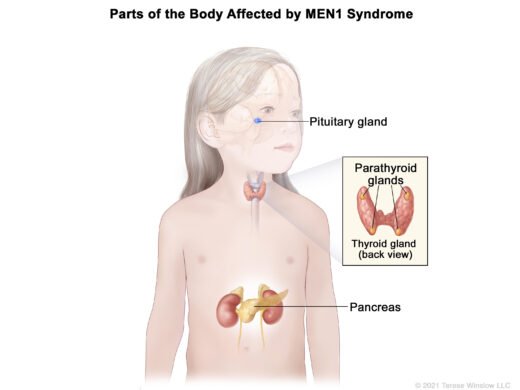
Childhood MEN1 Syndrome – NCI
new admin - Feb 13, 2026Causes of childhood MEN1 syndrome MEN1 syndrome is an inherited disorder, meaning it is caused by an inherited, harmful genetic change…

DOJ drops charges against men accused of assaulting ICE officers in Minneapolis, citing “inconsistent” evidence
new admin - Feb 13, 2026The Justice Department moved to drop federal charges against two men charged with assaulting Immigration and Customs Enforcement officers in…
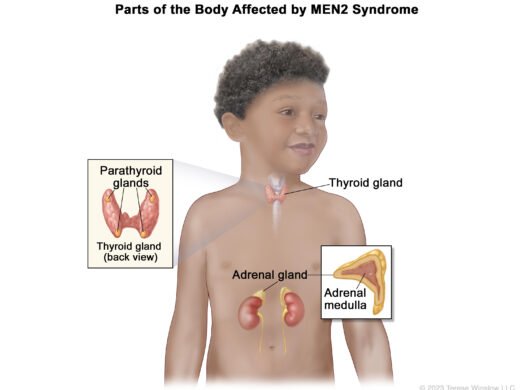
Childhood MEN2 Syndrome – NCI
new admin - Feb 13, 2026Causes of childhood MEN2 syndrome MEN2 syndrome is an inherited disorder, meaning it is caused by an inherited, harmful genetic…