

Rethinking the Traditional College Student

The image of a college student who enrolls immediately after high school, attends full-time for four consecutive years and has few significant responsibilities outside school doesn’t reflect the experience of a large share of today’s students.
If the students higher education has historically called “nontraditional” make up an ever larger share of today’s college population, how should institutions change the way they define and support student success?
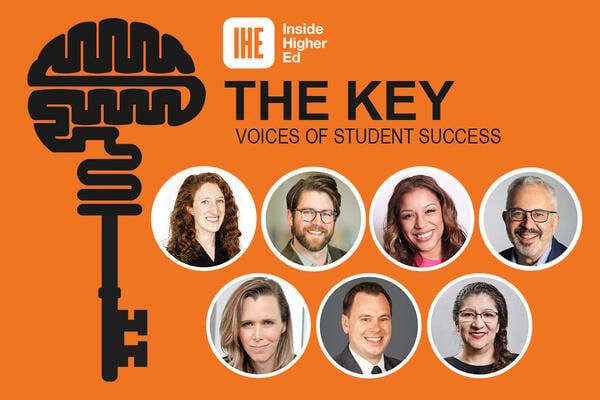
That question was at the center of a six-part Voices of Student Success podcast series that explored the experiences of adult learners, working students, student parents, transfer students and first-generation students—and the different ways higher education is, or isn’t, designed to accommodate their lives.
Here are the key takeaways from each conversation about how today’s college students are reshaping higher education.
- Today’s college students don’t fit the traditional mold.
For generations, colleges were largely designed around the idea of an 18-year-old who enrolled straight out of high school and followed a relatively linear path to graduation. But today’s students increasingly look different, forcing institutions to rethink long-held assumptions about whom college is designed to serve.
Sara Weissman, senior reporter at Inside Higher Ed, discussed how higher education demographics have changed, why the traditional student model no longer reflects the reality on many campuses and what institutions must do to better serve today’s learners.
Weissman noted that roughly one in five college students is a parent or has childcare responsibilities, about a quarter are adult learners, and many are balancing college with full-time employment. At the same time, the number of traditional-age students is declining, prompting many institutions to reconsider what the typical college student looks like.
“We’re seeing drops in the numbers of traditional-age students, that classic 18-year-old, and so I think colleges are really courting adult learners in a new way,” Weissman said. “There’s really been a shift in who the typical college student is.”
Weissman also reflected on the language higher education uses to describe these students. While “nontraditional student” remains the most common term, she said she prefers “post-traditional” because it better captures the idea that the traditional model is no longer the norm.
“That term does speak to me a little bit because it at least signals that we’re in a point where maybe who we thought was traditional is not what’s traditional anymore,” Weissman said. “This is millions of our students. It’s not a small fringe group who aren’t having that typical 18-year-old, dorm, four-year university experience, and the terminology we use reflects how aware we are of that.”
- Stopping out doesn’t have to mean giving up on a degree.
While many students stop out before earning a credential, they often plan to return. Yet re-enrolling can prove just as challenging as enrolling the first time around. As colleges look to reach adults with some college but no credential, they are rethinking how to support students whose educational journeys aren’t linear.
Terah Crews, chief executive officer of ReUp Education, a national organization dedicated to helping adults navigate re-entry into higher education, discussed why students stop out, what motivates them to return, the barriers colleges still place in their way and what it will take to build institutions that truly serve today’s adult learners.
Crews said referring to students as “stop-outs” rather than “dropouts” better reflects the reality that, for most, leaving college is a pause, not a permanent decision to abandon higher education. She noted that family responsibilities, health challenges, financial pressures and the complexity of balancing college with life circumstances often interrupt students’ educational journeys.
“The most important thing to understand is most of these learners don’t quit thinking they’re never going to come back,” Crews said. “But once they’re out for about a semester, inertia takes over and it really gets challenging.”
Recognizing that stopping out is often temporary should also shape how institutions engage students after they leave, Crews said, yet many colleges stop actively reaching out once students have been away for an extended period.
“This sort of nuance is really important, because for the vast majority of institutions, they do nothing once learners have been out for more than a year,” Crews said.
- Student parents need colleges designed around their lives.
Student parents face a unique set of barriers that can shape their ability to persist and ultimately earn a degree, including finding affordable childcare and stable housing, navigating time poverty, battling financial insecurity, and working to create a sense of belonging.
Nicole Lynn Lewis, founder and chief executive officer of Generation Hope, discussed what colleges still misunderstand about student parents and the challenges they face both in and outside the classroom.
Lewis said 20 percent of undergraduates are student parents or caregiving students, underscoring that they are not a niche population in higher education, even if they are often overlooked in conversations about today’s college students.
“That’s part of the work that we have to do in higher education … to help anyone sitting around a kitchen table understand that the student-parent population is a significant population,” Lewis said. “The more awareness we bring to this, the more understanding that people have about the student-parent experience.”
She noted that student parents often juggle coursework with bedtime routines and stay up late to finish assignments, all while finding childcare and handling other responsibilities. Understanding those realities—and designing college supports around them—can have implications beyond helping individual students earn a degree, Lewis said.
“It helps people to think about all of the ancillary kinds of connected issues,” Lewis said. “Helping student parents get through college is a part of the solution to dismantling poverty. It’s part of the solution to advancing economic mobility.”
- Transfer students shouldn’t have to navigate the system alone.
Millions of students begin their education at a community college and plan eventually to earn a bachelor’s degree, but moving from one institution to another can mean parsing confusing requirements, losing credits and figuring out systems that don’t always work well together.
Josh Wyner, executive director of the College Excellence Program at the Aspen Institute, and John Fink, senior research associate and program lead at the Community College Research Center at Teachers College, Columbia University, unpacked where transfer students encounter the biggest barriers and what institutions can do to create avenues that allow more community college students to earn a bachelor’s degree.
Fink noted that about a decade ago, roughly a third of community college students transferred to four-year institutions and fewer than one in five completed a bachelor’s degree within six years. Those numbers haven’t budged much since. He said that’s particularly concerning as conversations about college affordability and postsecondary access continue to take center stage.
“Students are on their own oftentimes to navigate this complex system instead of institutions working together to make it possible for students to navigate,” Fink said. “That continues to be a challenge 10 years later.”
Wyner pointed to partnerships between community colleges and four-year institutions as one way to take more of that burden off students, including through coordinated advising that begins before a student transfers.
“They’ve decided what advising touch points they need—not just to figure out what courses to take in community college or maybe transfer, but all the way through to the bachelor’s degree,” Wyner said. “It’s those kinds of partnerships, those kinds of models, that every higher ed institution ought to be looking at.”
- First-generation students are not a monolith and shouldn’t be defined by what they lack.
Being the first in your family to attend college can mean entering an unfamiliar system without the same knowledge or networks as some of your peers—from knowing where to turn for help to managing financial aid, academics and the unwritten rules of campus life. But first-generation students also bring their own experiences, strengths and support systems with them.
Hope Pacheco, associate dean of students and executive director of the Gator Resource Center at the University of Houston–Downtown, discussed what first-generation students experience when they arrive on campus, whom they turn to when they need help and what colleges can do to make sure they don’t have to figure it all out on their own.
Pacheco said institutions often lump first-generation students together, but they aren’t a monolith.
“What I feel like we’re missing is the nuances of our traditional-age students, adult learners and older students who are coming back to complete a degree, and they can all be first-gen students as well,” Pacheco said. “[There are] nuances of what a first-generation college student experience is going to look [like] … across the age and the time that they’re coming to us.”
At the same time, Pacheco said, colleges shouldn’t define first-generation students only by the knowledge or experiences they may lack. Many are already advocates for their families and arrive on campus with skills they’ve developed in other parts of their lives.
“The advocacy skills that [first-gen] students bring is important,” she said. “Even as we talk about students maybe not having the college knowledge, they’re coming to us with financial skills, they’re coming to us with skills that they’re having to not only blaze a trail to be the first, but also be a role model to their own family.”
- Colleges need to design for the students they actually serve.
Adult learners, working students, student parents, transfer students and first-generation students are often grouped under the broad umbrella of “nontraditional” students. While their experiences differ, they also highlight the various ways higher education is, or isn’t, designed around the realities of their lives.
Many of these students are navigating similar pressures: balancing college with work and family responsibilities, managing financial challenges, and figuring out systems that weren’t necessarily built for them. And as these experiences become increasingly common across higher education, they raise a bigger question: If so-called nontraditional students reflect the reality of today’s college population, does it still make sense to call them nontraditional?
Bryan Ashton, chief strategy and growth officer at Trellis and head of Trellis Strategies, a nonprofit organization that works with colleges and universities across the country, discussed what today’s students need and how colleges can better design around their lives.
Ashton noted that employment can create a push and pull for students who need to work to afford college and their broader living expenses, even when their jobs make it more difficult to fit classes into their schedules.
“We know that [students] need to work to be able to close those gaps, but oftentimes employment and class schedules can come into conflict,” Ashton said. “Something that we lose a lot in conversation is this isn’t just students that are engaging with one employer; they’re engaging with sometimes two employers or multiple gig employers.”
For Ashton, the larger takeaway is that institutions need to flip their perspective: Instead of asking students to fit their lives into an institution’s model, colleges should ask how they can make that model fit into students’ lives.
“If we can begin to ask that question as we’re looking at institutional policies or as we’re looking at the experience that students are having on campus, that can become a really good test to say, ‘Are we evolving to meet the needs of modern learners?’” Ashton said.
Get more content like this directly to your inbox. Subscribe here.
You may be interested

Lindsay Clancy’s first hearing since mistrial in high-profile Massachusetts trial
new admin - Sep 29, 202618m ago Lindsay Clancy prosecutor asks for gag order The prosecution in Lindsay Clancy's case have filed a motion…

'Luxurious' perfume set worth £200 with Vera Wang hailed 'so affordable' now £43
new admin - Sep 29, 2026"Absolutely amazing value and a beautiful variety of products in the box, it was like receiving an exciting present" Source…

Will Chinese AI companies slow down? A top House Democrat wants answers
new admin - Sep 29, 2026As President Donald Trump prepares to meet tech and AI CEOs in Washington, Rep. Ro Khanna (D-CA) is calling for…