


Pressure grows on Iran as Trump weighs military action


Pressure was building on Iran on Friday as President Donald Trump weighed a military strike on the Islamic Republic while U.S. allies in the region, including Israel and several Arab nations, urged restraint.
The Pentagon has boosted its presence in the region and an aircraft carrier group that has moved to it was ready to “rapidly fulfill its mission, with speed and violence, if necessary,” Trump said on Truth Social on Wednesday.
“They should not pursue nuclear capabilities. We will be prepared to deliver whatever this president expects of the War Department,” Defense Secretary Pete Hegseth said, using the rebranded name for the Defense Department adopted by the Trump administration.

On Friday, The New York Times reported that the options presented to the president include American forces carrying out raids on sites inside Iran, citing multiple U.S officials. NBC News could not verify these details.
Later, Iranian Foreign Minister Abbas Araghchi told a news conference he was prepared for the resumption of talks with the U.S., but they should be “fair and equitable” and not include Iran’s defense capabilities.
Speaking after a meeting with his Turkish counterpart, Hakan Fidan, Araghchi said no talks between Tehran and Washington were currently arranged and his country was ready for either negotiations or warfare.
Trump told Politico earlier this month that it was “time to look for new leadership in Iran,” after its brutal crackdown on nationwide protests left thousands dead in one of the biggest challenges to the Islamic Republic’s hard-line government in decades.
Comparisons have been made to the U.S. operation in Venezuela to remove President Nicolás Maduro, but Iran is far more capable of defending itself than the South American country, being in possession of an arsenal of ballistic missiles that it could use on American troops and bases in the region.

Even so, Iran doesn’t “have a lot of room for maneuver” and “there are not too many options available to them at this point,” said Sanam Vakil, director of the Middle East and North Africa program at Chatham House, a London-based think tank.
She said she thought Iran would “try to buy time” while “relying on regional states to try to negotiate a way out.” Meanwhile, it will try to “build resilience internally” in terms of its domestic supply chains, she added.
“They need to manage two simultaneous crises: the potential for an external war and another possible internal round of protests,” Vakil said.

Secretary of State Marco Rubio acknowledged Wednesday that a regime change in Iran would be far more complex than in Venezuela, and could leave a power vacuum. “I don’t think anyone can give you a simple answer as to what happens next in Iran if the Supreme Leader and the regime were to fall,” he said.
Fearing the repercussions of regime collapse and U.S. intervention, Israel and Arab allies have urged the U.S. to hold off from attacking Iran, warning the regime may not yet be weakened to the point where military strikes would be the decisive blow that topples it.
In a readout of his call with Iranian President Masoud Pezeshkian on Wednesday, Saudi Crown Prince Mohammed bin Salman said “the Kingdom will not allow its airspace or territory to be used for any military actions against Iran or for any attacks from any party, regardless of their origin.” The United Arab Emirates made a similar commitment in a separate statement Monday.

Meanwhile, U.S. officials are meeting with Israeli and Saudi officials this week for discussions on Iran.
Israeli military intelligence chief Gen. Shlomi Binder was in Washington earlier this week for meetings with U.S. officials on Iran, according to a source familiar with his plans.
And Saudi Defense Minister Khalid bin Salman Al Saud was also expected to meet with Rubio and Hegseth and other national security officials after he arrived in Washington on Thursday, a senior U.S. official confirmed to NBC News.


Andrea Mitchell, Courtney Kube and Daniele Hamamdjian contributed.
You may be interested

Seven books written by celebrities fans deem so bad they can’t believeSeven books written | Celebrity News | Showbiz & TV
new admin - Mar 05, 2026Some of the biggest names have had some of the biggest fails (Image: Matt Kent, Getty Images)Over the years, numerous…
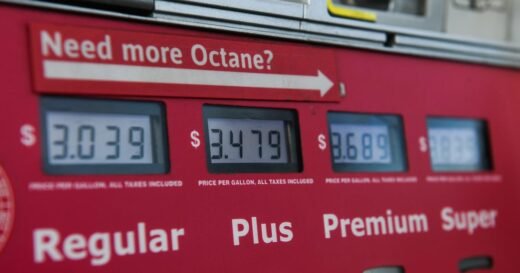
U.S. consumers already feeling impact of Iran conflict
new admin - Mar 05, 2026U.S. consumers already feeling impact of Iran conflict - CBS News Watch CBS News In just one week, the national…

From zero to Nero… first-time novelist wins prestigious book award | Books | Entertainment
new admin - Mar 05, 2026Claire Lynch became the first debut novelist to win the prestigious Nero Gold Prize (Image: Courtesy Nero Book Awards)A novel…