

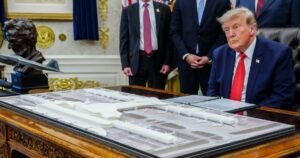
Powell will remain on Fed board until DOJ probe is over

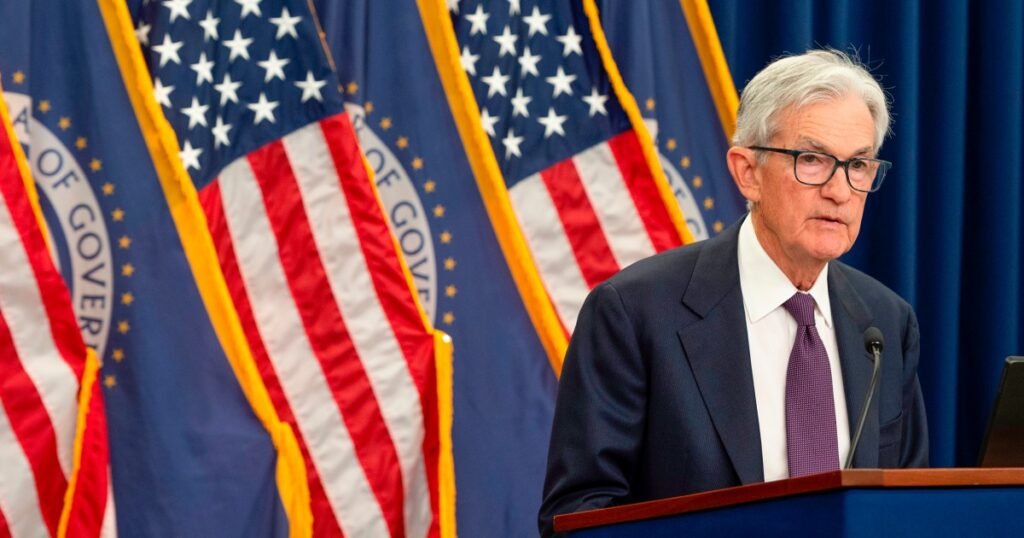
Federal Reserve Chair Jerome Powell made it clear Wednesday he’s not going anywhere just yet.
Subscribe to read this story ad-free
Get unlimited access to ad-free articles and exclusive content.

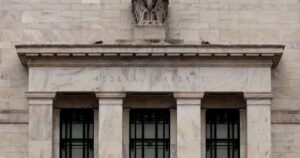
After the Fed once again held interest rates steady, Powell told reporters he plans to remain on the Board of Governors, even as he prepares to hand over the chairmanship to Kevin Warsh next month. He said he plans to maintain a “low profile.” It will be the first time since 1948 that a Fed chair has stayed on as a governor at the end of their chairmanship.
“I will leave when I think it’s appropriate to do so,” said Powell.
“My concern is really about the series of legal attacks on the Fed which threaten our ability to conduct monetary policy without considering political factors,” he said, alluding to the Justice Department’s criminal probe against him, which has since been dropped. Still, the DOJ has said it would reopen the investigation if warranted.
“I’ve said that I will not leave the board until this investigation is well and truly over with transparency and finality, and I stand by that,” he said.
“And I want to note here, this has nothing whatever to do with verbal criticism by elected officials. I’ve never suggested that such verbal criticism is a problem, and neither has anyone else here, but these legal actions by the administration are unprecedented in our 113 year history, and there are ongoing threats of additional such actions.”
“I worry that these attacks are battering the institution and putting at risk the thing that really matters to the public, which is the ability to conduct monetary policy without taking into consideration political factors,” he continued.
Typically, Fed chairs step down entirely once their term ends, but Powell’s departure comes after an unusually turbulent stretch marked by frequent political attacks, that now-dropped DOJ probe tied to renovations at the Fed’s headquarters, and continued scrutiny of the project from an ongoing inspector general investigation.
Even as those pressures mounted, Powell has long tried to project neutrality — even favoring purple ties to avoid red-or-blue signaling — while repeatedly pushing back on political pressure, including publicly rebuking calls from the president for interest rate cuts.
Now, that defiance will continue — just with a new title.
Historically, the Fed operates independently from the White House, guided by its dual mandate: achieving maximum, sustained employment while keeping inflation steady near 2%. It’s a delicate balance, and history shows the risks when politics pushes too far: cut rates too quickly and inflation can surge. Tighten too aggressively and the labor market can crack.
It’s a balancing act that’s only become more complicated in the post-COVID era after a global shutdown triggered multiple supply shocks, which sent inflation surging with mass, economic ripple effects that are still playing out to this day.
And notably, despite the public pressure that often suggests otherwise, Trump was the one who appointed Powell to the top job in 2017 — leaving him to navigate both the pandemic and its aftermath.
Now, nearly a decade later, the global economy is grappling with yet another shock: the Iran war. Gas prices are now at their highest level since August 2022, driven by a surge in oil prices as the Strait of Hormuz, a key shipping route along Iran’s southern coast, remains effectively shut down. That’s leading to greater fears inflation could become “entrenched,” meaning higher prices could become the norm as affordability pressures persist.
And that’s not all. The labor market, while not collapsing, is showing some signs of weakening — caught in a “low hire, low fire” dynamic as businesses pull back on hiring amid cost-cutting efforts and growing uncertainty around AI.
More consumers now see the odds of a rate hike, rather than a cut, rising in the back half of the year, according to the latest Consumer Confidence survey. And although Warsh has stressed the importance of maintaining Fed independence, some policymakers, like Sen. Elizabeth Warren, believe Warsh will act as a “sock puppet” for the president and easily cater to his growing demands for rate cuts — even when they’re not necessarily warranted.
One potential check on that: There are 12 voting members on the Fed’s board, so any interest rate changes would not be determined by Warsh alone but, rather, a majority vote.
And that’s where Powell could still matter. By remaining on the board, he can position himself as a potential counterweight to any further political pressure.
“I really want to turn this job over, to whoever replaces me, with the economy in really good shape,” he said in December.
Now, even after stepping down as chair, he may still have a hand in whether that outcome holds.
You may be interested

Fermín López Shares Emotional Toll Of Missing Spain’s World Cup Run To Injury
new admin - Jul 31, 2026[ad_1] NEWYou can now listen to Fox News articles! Fermín López has revealed he endured "the worst summer" of his…
Drake ‘Fraudulent Streams’ Case on Ice as Judge Orders Arbitration
new admin - Jul 31, 2026[ad_1] A federal judge has paused a lawsuit accusing Drake and streamer Adin Ross of using the online casino platform…
Los Angeles falls behind other California cities in rollout of automated speed cameras
new admin - Jul 31, 2026Los Angeles has yet to install any of the 125 automated speed enforcement cameras planned under a statewide pilot program,…