




Plagiarism Does Not Deserve Moral Prosecution (opinion)

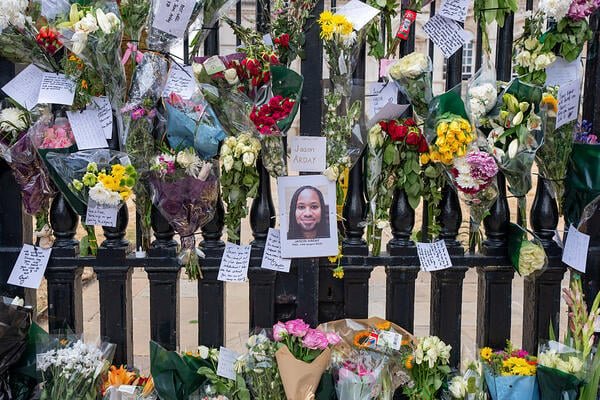
Jason Arday is dead at 41.
Police have described his death as unexpected but not suspicious. We do not know its medical cause, and it would be irresponsible to turn chronology into causation. His death does not prove that public scrutiny killed him, just as it does not settle the allegations made against him. But it would be equally irresponsible to ignore the human consequences of a process in which academic questions, institutional anxiety, media appetite, race and neurodivergence became fused into a single public judgment.
Nine days before his death, Arday resigned from his professorship at the University of Cambridge after weeks of intense allegations about plagiarism, his academic biography and parts of his public life story. His family has described a prolonged campaign of abuse, harassment and misinformation. Grief does not require us to pretend that the questions surrounding his scholarship were trivial. The textual overlaps identified in his work were serious enough to demand a rigorous inquiry.
But four different matters were repeatedly collapsed into one: demonstrable similarities with another scholar’s work, an academic finding of plagiarism, a conclusion of deliberate fraud and the destruction of a person’s reputation. Those are not synonyms. The first can often be established by comparison. The second requires the application of scholarly standards. The third requires evidence about knowledge and intent. The fourth is a punishment—one that began to be imposed before the preceding questions had been finally adjudicated.
When Fact-Checking Becomes Character Prosecution
The controversy over Arday’s claim to have run 600 miles in six days illustrates the problem. Such a feat would mean averaging 100 miles a day for six consecutive days and would approach world-class ultradistance performance. Journalists were entitled to ask for records, witnesses or routes. When the account was later described as 600 miles completed over 12 days, the discrepancy was plainly a legitimate subject for correction.
Yet what did that discrepancy prove about the attribution of sentences in a doctoral thesis? Nothing directly.
At most, it was collateral evidence about the reliability of a public biography. It could justify further checking; it could not establish academic intent. Had an otherwise obscure white professor made the same extravagant claim over dinner, many colleagues would probably have smirked, remembered him as an embellisher and moved on. In Arday’s case, it became an exhibit in a national prosecution of character.
That is the point at which fact-checking becomes something else. The press began by investigating what Jason Arday had done. It ended by prosecuting what kind of person it believed him to be. Once the public was invited to see him as a fantasist, every ambiguity could be interpreted against him. A disputed athletic story contaminated the interpretation of scholarship, questions about scholarship contaminated memories of childhood and the accumulated narrative was then offered as proof of the narrative itself.
The Gifts and Vulnerabilities of Neurodivergence
Several members of my own family are on the autism spectrum. I have sometimes wondered whether elements of the same neurotype are present in me.
What I recognize is not merely a catalog of impairment. It is an ability to see with unusual clarity and to speak without the fear that ordinarily makes people soften or withhold what they perceive. Some neurodivergent minds are less governed by convention and the social choreography through which uncomfortable truths are usually concealed. That clarity without fear can be an extraordinary gift in science, medicine and scholarship.
The same mind can also be unusually vulnerable. Directness may be read as arrogance. Literalness may be mistaken for evasion. Intense concentration in one domain may coexist with disorganization in another. Autobiographical chronology, executive function, social inference and the management of institutional politics may be far less secure than abstract reasoning. Prolonged masking and the effort of appearing conventionally competent can culminate in profound exhaustion and loss of function.
None of this proves Arday’s account of any disputed event. Autism is neither an alibi nor an accusation. It does not exempt anyone from standards of accuracy or honesty. It does, however, require that questions of communication, memory, intent and support be evaluated by people who understand neurodivergence rather than by commentators who treat every inconsistency as evidence of dishonesty.
Would the Country Have Cared if He Were Not Black?
A white Cambridge professor accused of plagiarism could certainly face serious professional consequences. But would one professor’s thesis have become a national morality play about whether an entire class of people deserved entry into elite universities? I doubt it.
Arday was not treated merely as an individual scholar facing allegations. Some coverage explicitly cast him as a symbol of diversity policy. His appointment had been celebrated as evidence of progress; his alleged failures were then used as evidence that the progress itself was fraudulent. The Black scholar is made representative twice: first when his success is displayed, and again when his imperfection is weaponized.
An ordinary white academic is usually permitted to fail as an individual. A prominent Black academic can be made to fail on behalf of a race, an appointment policy and an entire philosophy of inclusion. That does not place his scholarship beyond scrutiny. It explains why scrutiny became spectacle, and why the story traveled so far beyond Cambridge.
That distinction matters. Testing an extraordinary biographical claim may be legitimate journalism. Treating every eccentricity, disputed recollection or implausible boast as corroboration of academic dishonesty is something else. It invites a seductive but unsound inference: If one claim is doubtful, perhaps the whole person is doubtful.
There was a legitimate public interest story here. There were serious questions about attribution, academic standards and Cambridge’s appointment procedures. But somewhere along the way, investigation became excavation. His running, his charity work, his childhood, his disabilities, his memories and eventually almost the entire architecture of his life were placed in the dock.
In forensic medicine and psychiatry, one learns how easily evidence changes status as it passes through institutions. No participant in that chain needs consciously to lie. Each can say that he relied upon what came before. Yet by the end, inference has hardened into fact and the human being has disappeared beneath a biography assembled from partial truths. The record no longer describes the person; it replaces him.
That is what troubles me most in the Arday case. An academic inquiry should be forensic, not theatrical. It should ask what each item of evidence proves, what it does not prove and how much uncertainty remains. It should resist the seduction of a single totalizing explanation.
Accountability Without Annihilation
Universities need a more civilized model of accountability. Allegations should be investigated promptly by genuinely independent panels working to published deadlines. Textual overlap should be distinguished from deliberate deception. The conduct of supervisors, examiners, editors and appointing institutions should be scrutinized alongside that of the accused scholar.
Where neurodivergence is plausibly relevant, real expertise should be included—not to manufacture immunity, but to assess communication, cognition and support needs accurately. Complainants and respondents of scholarly misconduct should both be protected from intimidation. Confidential psychological support should be available independently of the investigative body. Findings should be reasoned, transparent and proportionate, with correction, sanction and rehabilitation each considered on its merits.
Jason Arday’s death neither acquits nor convicts him. Death is not evidence. What it should do is restore a sense of human scale.
Mercy is not acquittal. Due process is not indulgence. Support is not a lowering of standards.
We should be able to defend the integrity of scholarship without abandoning the dignity of the scholar. We should be able to correct a record without allowing the record to replace the person.
Let us not wait for another tragic death before we learn how to support difficult brilliance while it is still alive.
You may be interested

Your legal rights explained if a parcel goes missing from your doorstep
new admin - Aug 18, 2026It's frustrating when you're expecting a parcel, and it goes missing, and it's important to know your rights. Source link

Apple’s camera-equipped AirPods appear in leaked video
new admin - Aug 18, 2026We may have our first glimpse of Apple’s rumored camera-equipped AirPods, thanks to a video that MacRumors found in the…
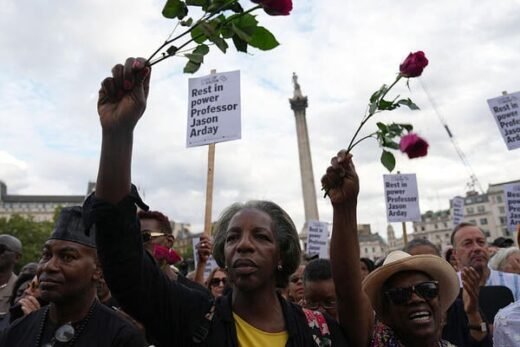
Black Academics Condemn “Ridicule and Vilification” of Arday
new admin - Aug 18, 2026[ad_1] A group representing Black academics has called on the U.K. press regulator to examine the media coverage surrounding Jason…