



Olympians going for gold juggle day jobs to bring in some green

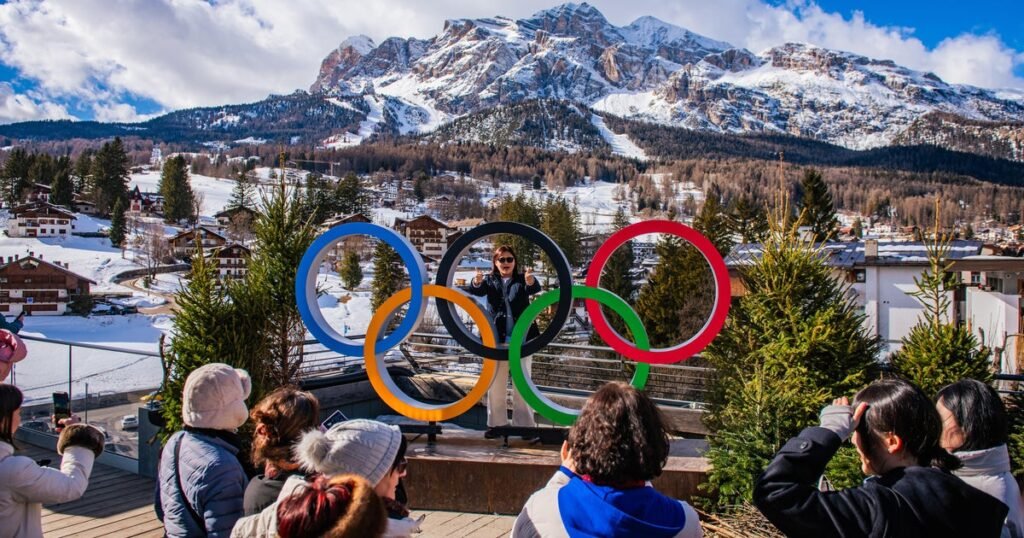
Most athletes train for years to reach the Olympics, but competing at an elite level doesn’t always come with elite pay. Some U.S. Olympians must also hold down a job to help fund the years of training required to compete on the world’s biggest stage.
Some athletes competing in the 2026 Milan-Cortina Winter Olympic Games, including Americans vying for gold in their respective sports, will return home to jobs as attorneys, baristas, realtors, dentists and other types of professionals.
The balancing act reflects the financial challenges faced by some Olympic athletes even after reaching the pinnacle of athletic performance. While some of the best-known athletes earn millions from sponsorships and other lucrative deals, they are the exception, rather than the norm.
American curler Korey Dropkin and his mixed doubles curling partner, Cory Thiesse, both of Duluth, Minnesota, won silver medals in mixed doubles curling at the 2026 Olympics. Before the games began, Dropkin told local news station KARE 11 that he balances curling with a full-time career as a local realtor.
“I have two full-time jobs. One is curling … my other job is a realtor,” he told the outlet.
In addition to holding the title of an Olympic silver medalist, Thiesse also has another title: wastewater tester. “I feel grateful that I have a job that pays the bills while I go compete in curling,” Thiesse told KARE 11.
The International Olympic Committee (IOC) told CBS News in a statement last week that “a significant proportion of Winter Olympic athletes” balance elite training with academic and professional pursuits.
USA curler Tara Peterson is also a licensed dentist who practices at Isaacson Gentle Dentistry in White Bear Lake, Minnesota, according to her Team USA profile.
Carmen Mandato / Getty Images 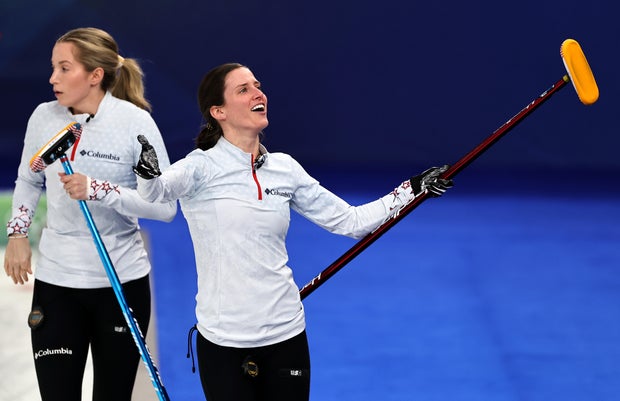
Athletes from other countries also hold second jobs to support their athletic careers. For example, the IOC highlighted Mexico’s Regina Martínez, the country’s first Olympic cross-country skier, who works as a Miami, Florida-based emergency room doctor. Martinez said she also walked dogs to finance her Olympic journey, according to a social media video.
The IOC does not award Olympians prize money, even when they make the podium. Countries’ national Olympic bodies do offer incentives, though, including cash bonuses. The U.S. Olympic and Paralympic Committee awards athletes $37,500 for a gold medal, $22,500 for a silver medal, and $15,000 for a bronze medal.
This year, Ross Stevens, CEO of Stone Ridge Holdings Group, pledged to give every U.S. Olympian $200,000 in financial benefits for each Olympics in which they compete.
“The Olympic and Paralympic Games are the ultimate symbol of human excellence. I do not believe that financial insecurity should stop our nation’s elite athletes from breaking through to new frontiers of excellence,” Stevens said in a statement last year when the gift was announced.
While some Olympic athletes can struggle financially, there’s a wide discrepancy between their circumstances and those of the top-earning U.S. athletes. For example, American snowboarder Chloe Kim earns millions annually, while Eileen Gu, an American freestyle skier, earned $23 million over the past 12 months, according to Forbes.
Summer Olympians, including basketball, golf, and tennis pros, are also among the highest-paid athletes in the world, in part because of the popularity of such sports, in contrast to less visible winter sports, like curling, for example.
Here are some of the other jobs Olympians hold while also going for gold in Italy.
Hard on the body
American snowboarder Nick Baumgartner, 44, who placed seventh in the snowboard cross in Milan, calls himself the #BlueCollarOlympian on social media — a nod to his work pouring concrete in the off-season. His day job helped finance his professional snowboard career, according to his U.S. Ski and Snowboard team profile.
“It’s always been tough. But you either believe the excuses, or your find a way to make it happen,” he told CBS News’ Kelly O’Grady Wednesday. “And for me, concrete, which is a terribly hard job, it’s hard on the back, it’s hard on the body, but for me, it was my way to do this.”
Hannah Peters / Getty Images 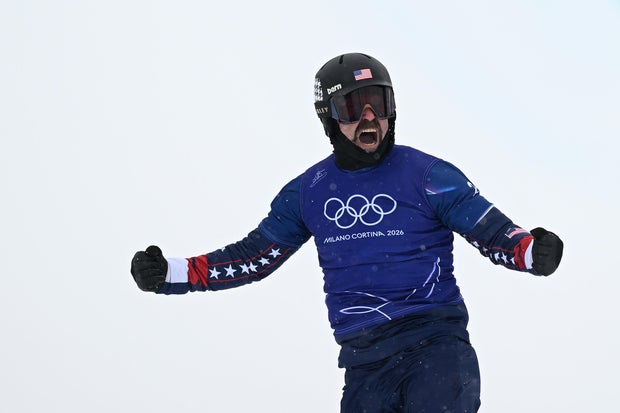
Baumgartner, who won gold at the 2022 Winter Olympics with teammate Lindsey Jacobellis in mixed snowboard cross, said that winning the top prize in the event allowed him to give his body a bit of a break.
Before that, he said he would “work really hard and make a lot of money in the summer, and when it started to snow, they would shut it down. I would get laid off, and I’d get unemployment. Then I’d get paid, and I would go snowboard.”
Holding an Olympic gold medal catapulted him to the ranks of keynote speaker at corporate events, so he could make money “without destroying my body.”
“Because pouring concrete and staying young … they don’t mix,” he said.
He acknowledged the physical — and financial — challenges of being an Olympian.
“It’s tough. It’s definitely not easy …. you either find a way to fight for it, or it doesn’t happen,” he said.
A silver medal with a side of maple syrup
Alpine skier Ryan Cochran-Siegle, 34, who won a silver medal in the Super-G event in Milan, holds two other titles, in addition to Olympic medal winner.
He is currently studying engineering at the University of Vermont, and also works at his family’s maple syrup farm and shop, Cochran’s Slopeside Syrup, in Vermont, according to his U.S. Ski and Snowboard team bio.
Studies give “balance” to life on the slopes
U.S. Olympic ski jumper Paige Jones also studies biomedical engineering at the University of North Dakota. She told UND Today, the university’s online news source, that working toward a degree while training and competing in the Olympics actually complements her athletic pursuits, as she looks down the road to life beyond the slopes.
“I always think of school as a balance to my life as an athlete. It gives me something to think about when I’m not on the hill. I don’t want to be ruminating about ski jumping all the time — it’s so easy to get in your head, especially when the jump only lasts about five seconds,” Jones told UND Today.
Costs aren’t covered
American alpine ski racer Keely Cashman, who placed 15th in Super Giant Slalom, also works as barista at The Serene Bean, her family’s coffee shop in Pinecrest, California, during the off-season, according to her U.S. Ski and Snowboard Team bio.
On her website, she advertises merchandise, including stickers and t-shirts, for sale. Proceeds subsidize her training and travel costs. She described the financial challenges that come with training at the elite level.
“Unfortunately, some of the costs that come with training and competing at the highest level are not covered by the national governing body,” she said. “By supporting me, you’re helping me chase this dream and allowing me to continue competing at the highest level. Thank you for being part of the journey.”
Cashman told CBS News this week after she had returned home from Milan that her Serene Bean earnings are modest, but that her star power helps boost sales.
“I worked there a lot growing up, and it definitely helped fund my skiing career,” she said.
Mattia Ozbot / Getty Images 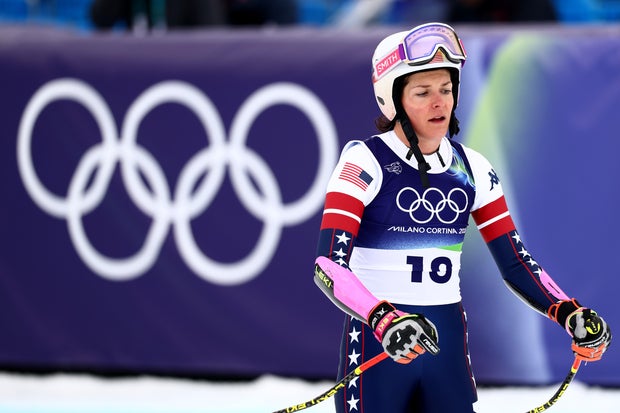
The U.S. Ski and Snowboard team now covers her training and travel expenses, but she pays for her dad, her personal coach, to travel with her when she practices and competes, with income she earns based on her results at races throughout the competitive season.
“I cover his costs as well, so it’s not cheap,” Cashman told CBS News. “If you’re skiing fast and having great results, it’s good, but if you’re not skiing fast, you can be making absolutely no money.”
You may be interested
U.S. women’s hockey team vs. Canada at Winter Olympics
new admin - Feb 19, 2026U.S. women's hockey team vs. Canada at Winter Olympics - CBS News Watch CBS News The U.S. is competing for…

The AI security nightmare is here and it looks suspiciously like lobster
new admin - Feb 19, 2026A hacker tricked a popular AI coding tool into installing OpenClaw — the viral, open-source AI agent OpenClaw that “actually…
King’s statement on former Prince Andrew’s arrest shows how grave this crisis is for U.K. royals
new admin - Feb 19, 2026LONDON — King Charles III does not usually sign his name on statements about his brother. Thursday was different.The king’s…