



New COVID-19 variant called “Cicada” is on the rise. Here’s what to know.

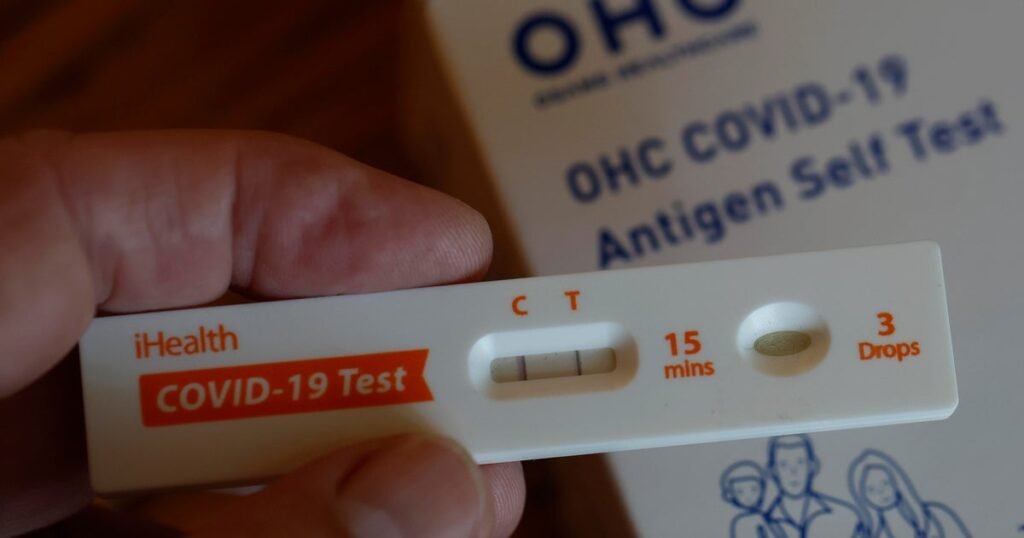
“Cicada” is trending, but not because it’s the season for the noisy insects to appear. The Centers for Disease Control and Prevention and the World Health Organization are both monitoring a COVID-19 variant called BA.3.2, which is nicknamed “Cicada.”
Where is it?
BA.3.2 was first identified in November 2024 and has since spread to at least 23 countries. It’s also been detected in at least 25 states in the U.S. as of February, according to the CDC.
But while the variant is spreading here, it’s not the dominant strain.
“Whether it will push itself to the front of the line remains to be seen,” Dr. William Schaffner, a professor of infectious diseases at Vanderbilt University, told CBS News “We’ll have to wait and see.”
What is it?
The variant is a member of the Omicron family and is highly mutated, with 70 to 75 mutations. A recent study in the journal Lancet found the current COVID-19 vaccine is less effective against BA.3.2 compared to the current dominant strains, although it does provide some protection.
“These are still early days, ” Schaffner said. “But at the moment the conclusion seems to be there is this capacity for this new variant to evade some of the protections we have all acquired over the years.”
Is it more severe?
Currently the CDC is not reporting a nationwide increase in severe disease from COVID-19. Case rates, emergency visits and hospitalizations are trending downward. But state rates can vary. Massachusetts and Florida are estimated as likely having an increase in cases.
“We haven’t seen evidence of this variant causing more severe disease or an increase in hospitalizations elsewhere,” according to CBS News medical contributor Dr. Celine Gounder, editor-at-large for public health at KFF Health News.
What to know about symptoms
Symptoms of COVID-19 include fever, cough, shortness of breath, sore throat and congestion.
The CDC says it’s important to get the current COVID vaccine if you are ages 65 and older, have never received a COVID vaccine or are at high risk for severe illness from COVID. The high-risk group includes people younger than age 65 with a chronic medical condition like heart disease, lung disease or diabetes, as well as those who are immunocompromised.
“Get a dose of the vaccine towards the end of May, beginning of June in order to provide some protection against the summer increase,” Schaffner advised. “We anticipate that will happen because that’s what’s happened in the past.”
You may be interested

Kia’s compact EV3 is coming to the US this year, with 320 miles of range
new admin - Apr 01, 2026At the New York International Auto Show on Wednesday, Kia announced that its compact electric SUV, the EV3, will be…

Megan Thee Stallion Hospitalized for ‘Exhaustion,’ Now Recovering
new admin - Apr 01, 2026[ad_1] Megan Thee Stallion is on the mend after suffering “extreme exhaustion” during a performance of Moulin Rouge! The Musical…

Supreme Court appears skeptical of Trump administration birthright citizenship arguments
new admin - Apr 01, 2026Supreme Court appears skeptical of Trump administration birthright citizenship arguments - CBS News Watch CBS News The Supreme Court is…